
time runs in the family
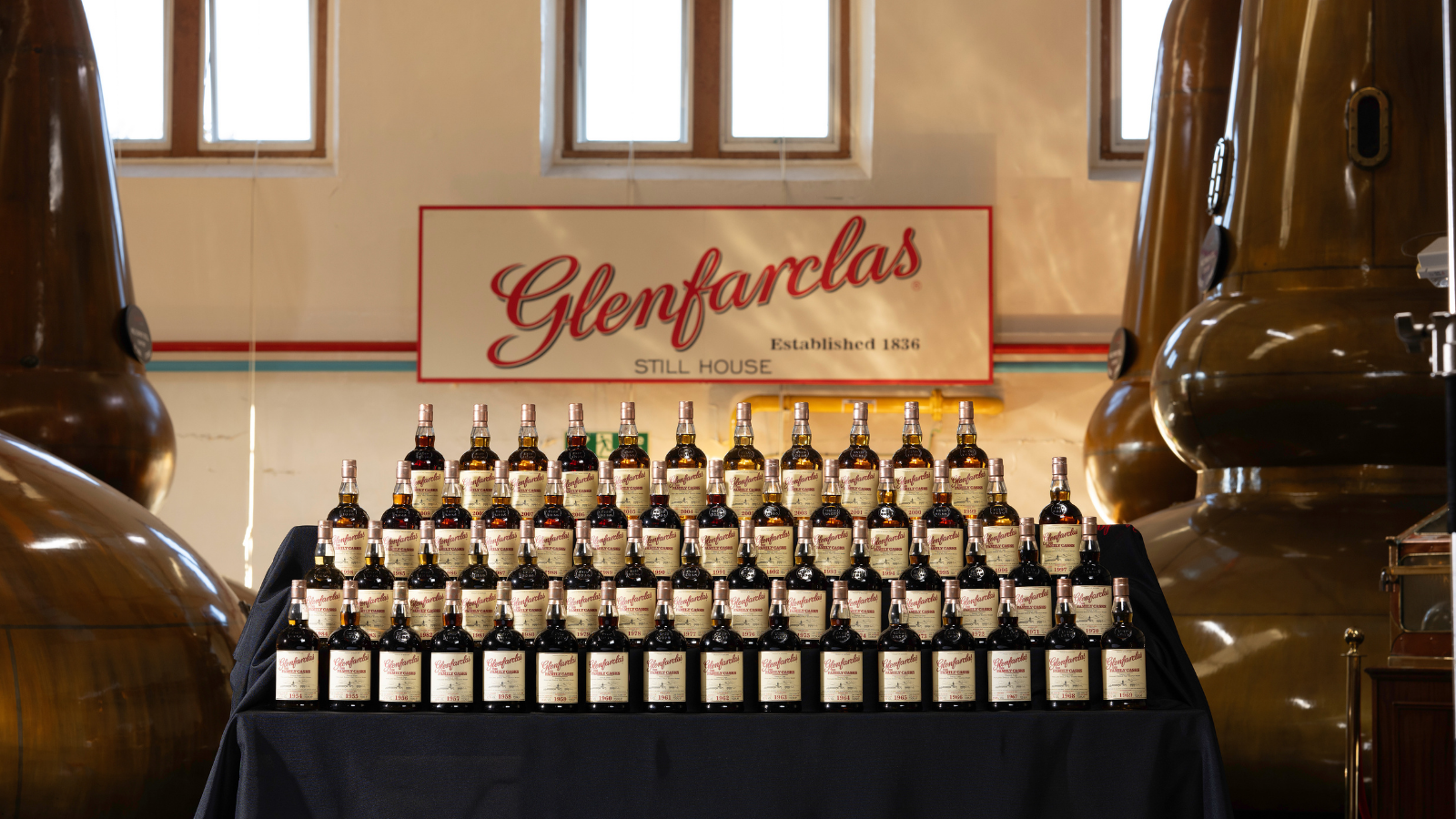
Inside the Glenfarclas Family Cask Series, where the date on the bottle may also be one of your own.
Somewhere in Speyside, a grandfather is quietly collecting bottles of whisky, each one marking a family member’s birth year. He had already acquired bottles from the distillery for the years his own children were born.
Earlier this year, his son joined a select group of Spirit of Speyside attendees at Glenfarclas to taste six expressions distilled in 2011 and vote on which one would become that year’s Family Cask bottling. For everyone else in the room, it was a rare whisky tasting. For the son, 2011 was the year his daughter, the grandfather’s granddaughter, was born.
"It's really lovely," says Deborah Stewart, who has worked at Glenfarclas for eight years and now oversees much of the distillery's brand and export work. "His dad had already bought his and his sister's years, and now he wants to buy his grandchildren's years as well. So he came and helped us select it."
It's a small story, but it captures something essential about what the Family Cask Series actually sells. It isn't really whisky. It's time, bottled and dated, waiting for someone to claim the year that matters to them.
sixty vintages, one family
The Grant family has owned Glenfarclas for more than 160 years, and the distillery has always leaned on that continuity rather than apologizing for it. Where much of the industry has consolidated under multinational ownership, Glenfarclas has stayed small, independent, and, by Stewart's account, refreshingly free of process. "We don't have seven layers of bureaucracy," she says, comparing it to her previous job at a larger drinks company. "We can decide things quickly for ourselves. We don't have to do fourteen PowerPoint presentations to justify why we want to do something."
That independence is what made the Family Cask Series possible in the first place. Launched in 2007, the range originally spanned vintages from 1952 to 1994, a full run of single casks, each one a different year, each one telling a slightly different story about what was happening at the distillery when it was filled. The 1952 and 1953 casks were eventually retired from the lineup once stock ran low; the last of the 1953s are now kept aside as the distillery's oldest standing product, and every year since, Glenfarclas adds a new vintage, always the equivalent of a 15-year-old, always a single cask, never blended.
The way that new vintage gets chosen is charmingly low-tech. Each year, during the Spirit of Speyside festival, around thirty ticketholders sit down in the tasting room with six unmarked samples and a paper ballot, ranking their favourite from one to six. Stewart counts the votes by hand. "Literally a sheet of paper: this person said four, one, two, three, five, six," she says. "Lowest score wins." The winner isn't always the one she'd expect. "There was one year the cask that came in second overall was actually the winner, because while opinions on first place were scattered, almost everyone agreed it was their number two."
built for the long haul
Ask Stewart what allows Glenfarclas to be still producing whisky worth drinking sixty or seventy years after it was distilled, and she doesn't point to a single secret. It's a handful of choices, most of them made decades before she ever set foot on site. The stills are unusually large and heated by direct fire rather than steam, a method that's largely disappeared elsewhere in the industry because it's harder to control. “There's something about that spirit which holds up really well to longer aging," Stewart says. "It's a big, full-bodied, meaty spirit, which means it's not overwhelmed by sherry casks." A lighter spirit left in sherry wood for fifty or seventy years tends to come out tasting like little more than the cask. Glenfarclas doesn't.
The casks themselves are almost exclusively first-fill Spanish oak, sourced for decades from a single supplier: Bodegas José y Miguel Martín, near Jerez de la Frontera in Spain. John Grant, chairman and fifth-generation family owner, has worked with Miguel personally for years, as part of a relationship that stretches back to around 1990. Older vintages occasionally used American oak, or wood whose origin was never carefully logged, in which case the distillery defaults to calling it fourth-fill rather than risk overstating it. "We'd rather say it's fourth fill and it turns out to be third," Stewart says, "than say it's second and it's actually fourth."
Then there's the peat, or the near-absence of it. Glenfarclas malted its own barley on site until 1972, using a small amount of peat, never enough to dominate the whisky. It shows up today only as the faintest thread in the oldest expressions, like the 70-year-old. And then there's the matter of who actually gets to put the Glenfarclas name on a bottle, which is almost nobody. The distillery guards its casks fiercely, rarely selling spirit onward and refusing to let independent bottlers use its name at all, with one long-standing exception: Cadenhead’s won the right only after a legal dispute and is allowed to release just one bottling per year. Everyone else, including the well-known Scotch Malt Whisky Society, has to sell Glenfarclas anonymously, identified only by a distillery number rather than a name. Outside of the distillery's own releases, genuine single-cask Glenfarclas essentially doesn't circulate, which is exactly what makes the Family Cask Series unusual: it's close to the only place a collector can buy one at all.
the year in a glass
Ask Stewart to describe, in a single sentence, what someone is really purchasing when they buy a bottle from the Family Cask range, and she doesn't reach for tasting notes. "It's a moment in history," she says. "Because it is a single cask, all the details are there—the year it was distilled, the day it was bottled. You have this little piece of what was happening here that year."
That's not a marketing flourish so much as a literal description of the product. Because every bottle comes from a single cask and year, the whisky reflects the specific conditions of that vintage rather than an averaged house style. Some years were dramatic at the distillery itself (Stewart mentions a collapsed still and a fire in the spirit safe, both from the early 1980s), and those years show up, in their own quiet way, in the glass. "There's very few years where nothing was going on," she says. "And that whisky you now get to drink is whisky from another time, a lot of the time."
The late 1970s produced one of Stewart's own favourite pockets in the range, for reasons unrelated to prestige. It was a down period for the whisky industry, and Glenfarclas, never one to stop producing but cautious with spending, didn't invest in new sherry casks that year. Everything distilled then ended up aging in third- or fourth-fill wood instead. "I love some of those fourth fills," Stewart says.
“It's not very sherried, instead there’s so much tropical fruit, sweetness, and vibrant flavour for a forty-year-old whisky. There's something about that contrast I really like."
It's a reminder that the Family Cask Series isn't a showcase for a single signature flavour. It's sixty-plus years of a distillery reacting, cask by cask, to whatever was actually available and affordable at the time, which means every bottle is a small, honest record of a decision made decades ago, for reasons that had nothing to do with the person who'd eventually drink it.
511 pounds, 19 shillings, and not a penny more
Nowhere does that idea land harder than in the distillery's newest experience: a guided tasting of five whiskies from the 1950s, offered as the highest-tier tour Glenfarclas runs. The unusual price of £511.19 isn’t arbitrary. It nods to the valuation of £511 and 19 shillings placed on the distillery in 1865, when John Grant’s great-great-grandfather acquired it as part of a larger farm purchase.
"We were looking at that tour going, how much are we going to charge for this?" Stewart recalls. "It's got to be around five hundred pounds, because that's a hundred pounds a whisky for casks that are fifty-five to fifty-nine years old, that's actually really good value. And then we thought, wait, there's an obvious number staring us in the face."
A full bottle of the same vintage would run between £8,000 and £9,000 (depending on the vintage), putting it out of reach for all but a handful of collectors. The tour turns those same years into something a serious whisky drinker can actually afford to experience, even if they'll never own the bottle.
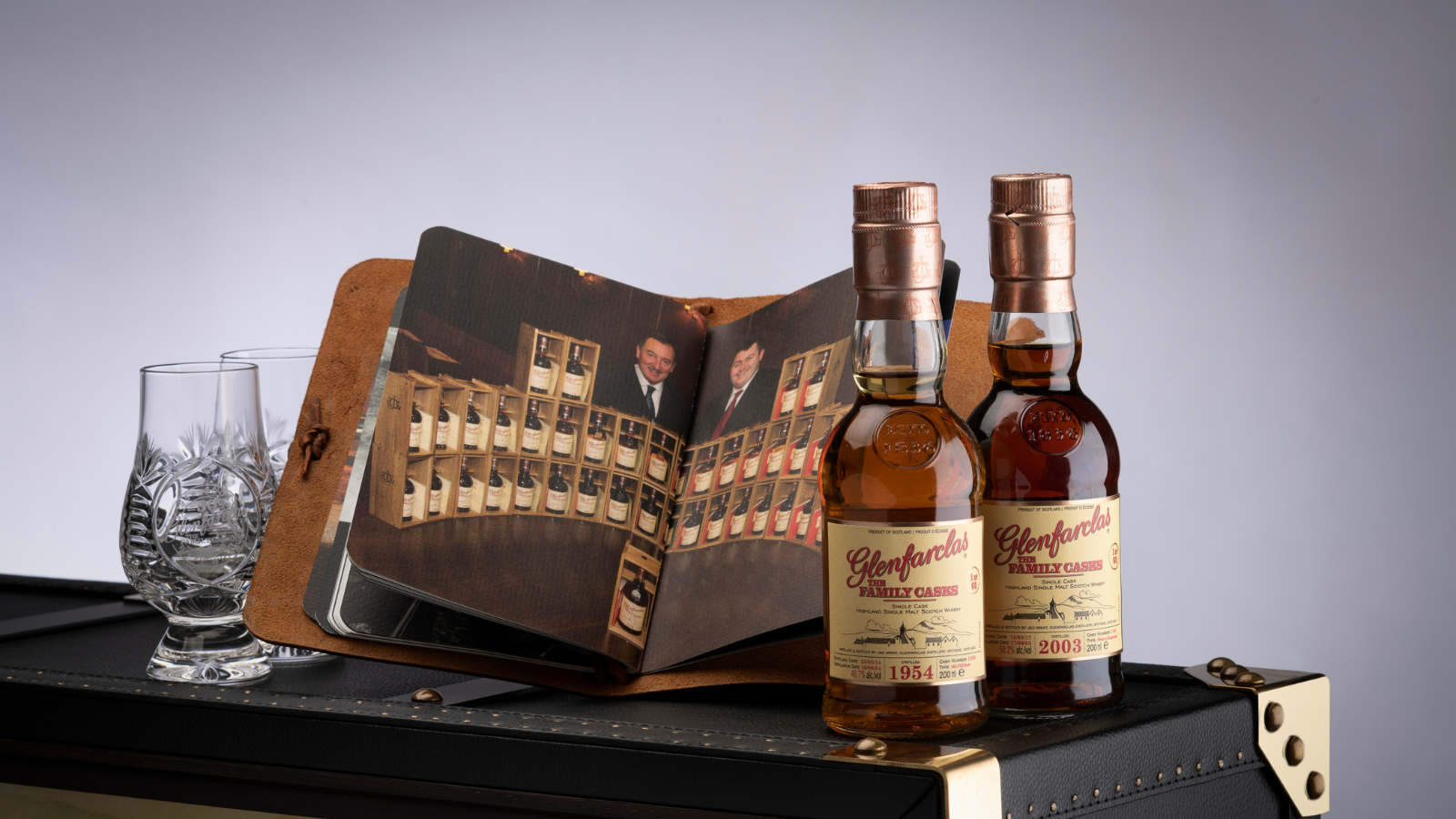
If the Family Cask range is a library of time, the closest thing to its rare-books room was a run of shipping trunks Glenfarclas produced a few years ago: sixty of them, ever, each one packed with fifty different vintages in 200 ml bottles, running from 1954 up through 2003. Every trunk came with a set of hand-bound, hand-calligraphed notebooks, one covering the distillery's history, one holding Glenfarclas's own tasting notes, and one left blank for the owner's. They retailed at roughly £120,000 apiece and most of them sold surprisingly quickly. "There may be one left," Stewart says, "but there's definitely not two." A true library of time, sold one shelf at a time.
the past is still being written
Glenfarclas isn't sentimental about all of this, exactly: Stewart is quick to point out that plenty of the range's charm comes down to accident and inventory management rather than grand design. But the distillery does seem to understand, better than most, that whisky's real product is time. It's the only thing a distillery can't manufacture faster, and it's the only thing a bottle can actually give back to the person drinking it.
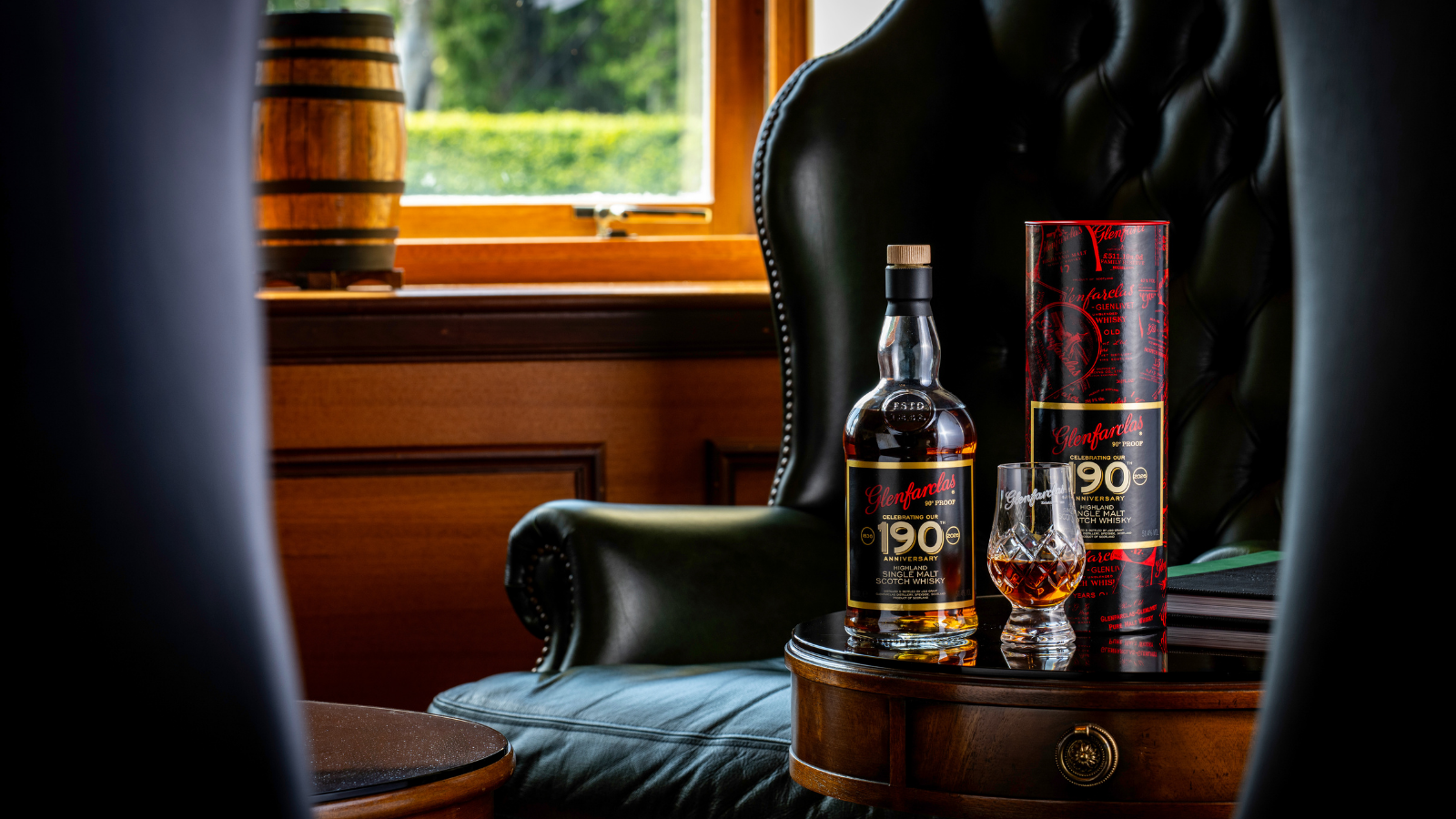
The next major milestone on that timeline is already set: a special bottling for the distillery's 190th anniversary was just released, ahead of another in 10 years’ time for its 200th in 2036. This is following similar releases at 175 and 185 years. "I need to last here for ten more years," Stewart says, "because I want to be at that party."
The date has been in her diary since 2024.
It's a fitting way to think about the Family Cask Series as a whole. Every bottle on the shelf is closed history: a year that's already happened, sealed, and dated. But the range itself is still being written, one vintage, one ballot, one birth year at a time.