conversation list: the many ways spirits tell time
Some bottles capture a moment. Others contain many at once. For this edition of the Conversation List, we explore six curated spirits shaped by the blending of different ages, vintages or generations of liquid. While time is typically one of the most expensive ingredients in the spirits industry, none of these featured spirits were priced more than $300 CAD upon release.
These curated bottles capture decades differently: through fractional or perpetual blending, the marriage of multiple ages and vintages, or stocks passed between generations of one family. They are not inexpensive, exactly, but they make an unusual amount of time accessible and are sure to leave a lasting impression when shared.
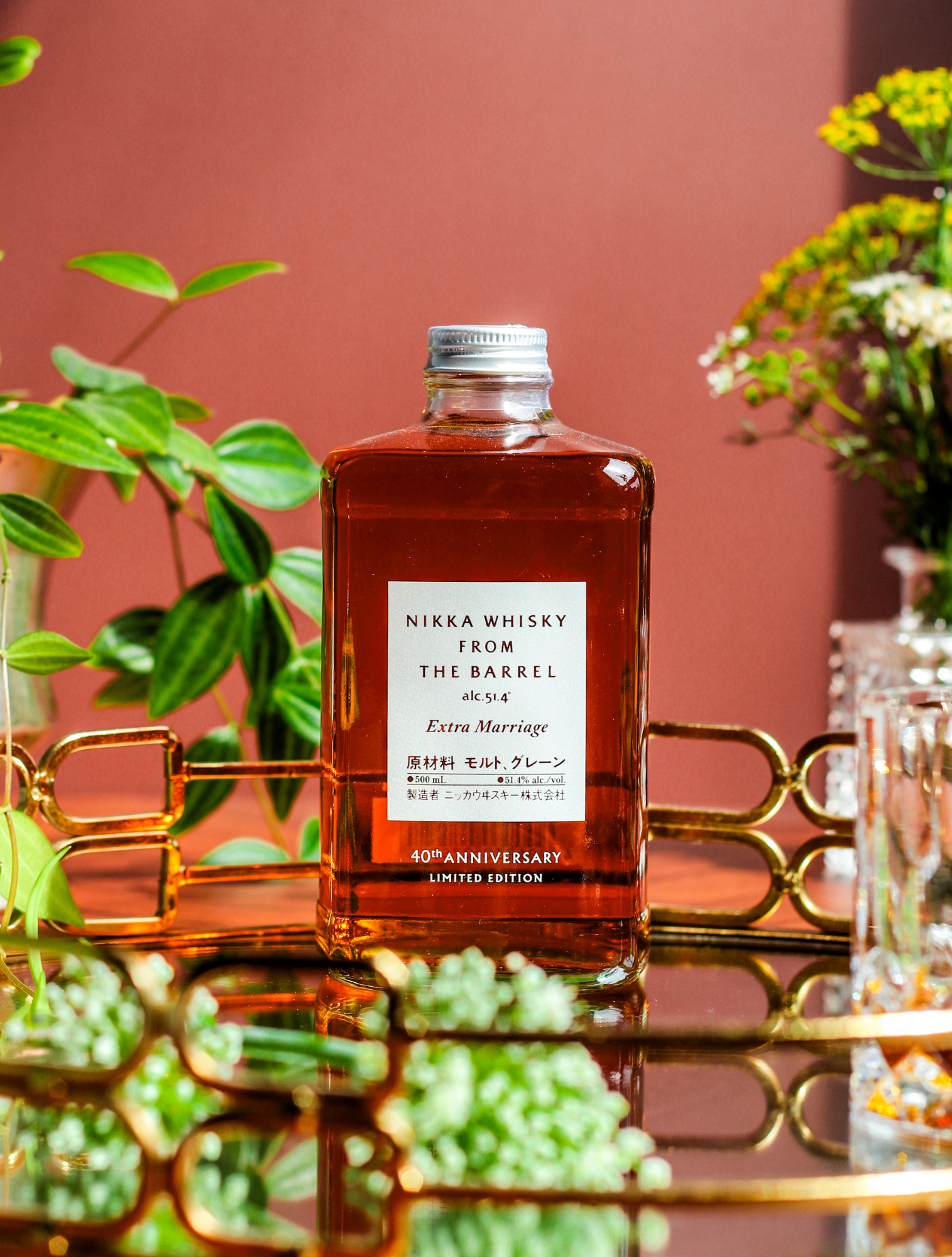
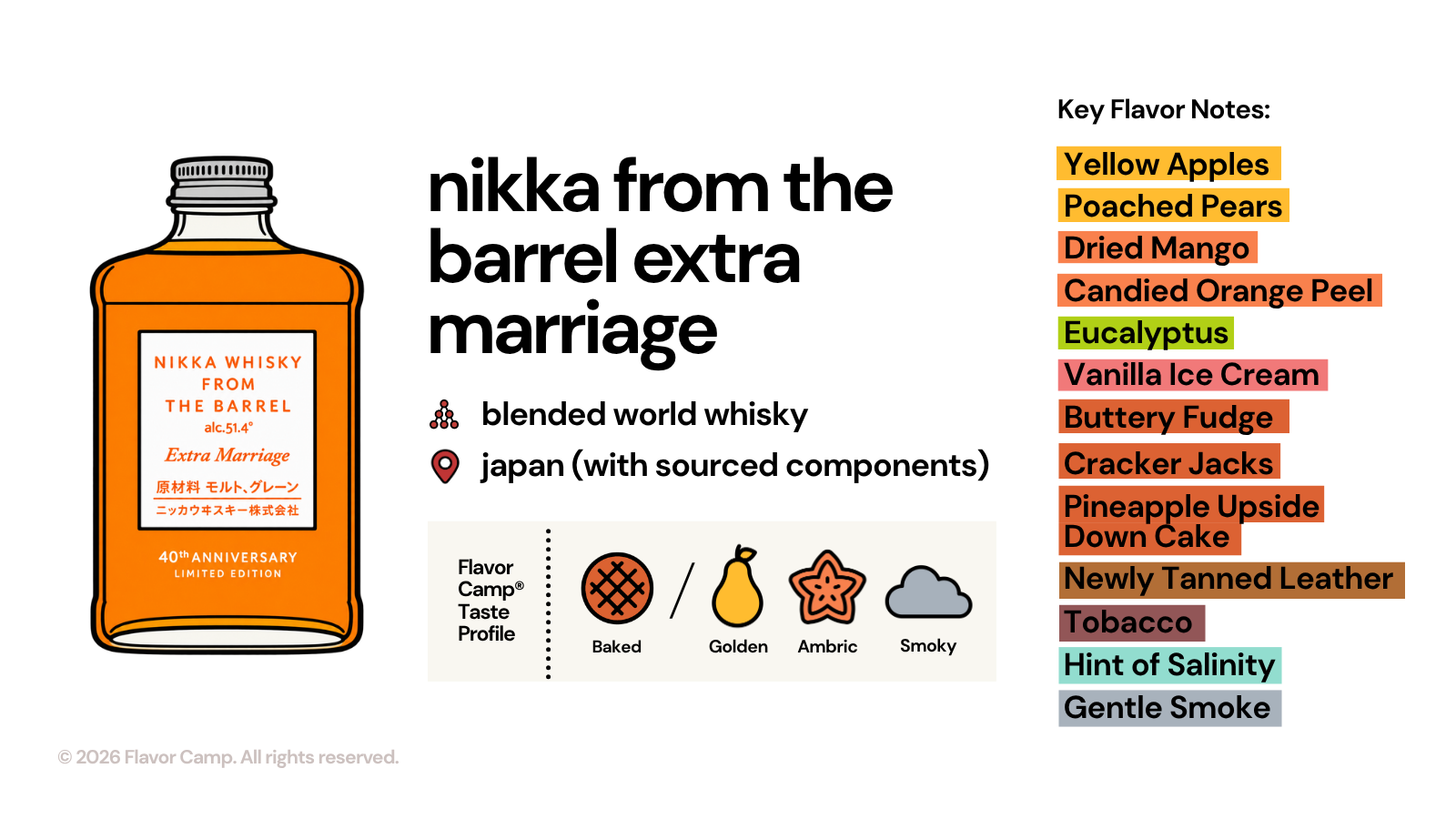
nikka from the barrel extra marriage
the conversation starter
If blending brings more than 100 whiskies together, what happens when the cask gives them three more months to settle in?
the timepiece
For Nikka From the Barrel, blending is not the final act. The completed recipe is returned to used puncheon casks at Nikka’s Tochigi Aging Cellar, allowing the components to rest together for three months before bottling. Extra Marriage doubles that period to six. By whisky standards, an additional three months sounds almost incidental. Here, however, time is applied after more than 100 batches have met, giving the blend an opportunity to become something more coherent than the sum of its parts.
behind the bottle
Nikka From the Barrel began in 1985 with Takeshi Taketsuru’s desire to bottle the concentrated intensity normally encountered by whisky blenders. Master blender Shigeo Sato answered with an intricate formula combining more than 100 batches in the now-iconic square bottle. Extra Marriage was created as a limited release for the whisky’s 40th anniversary in 2025, revisiting its defining production step rather than reinventing the recipe.
house style
Nikka’s range spans far more ground than a single house style suggests. Yoichi produces robust, sometimes peated malt whisky, while Miyagikyo offers a generally lighter, more elegant counterpoint. The company also operates Coffey stills for grain and malt whisky, alongside blended, blended malt (referred to as ‘pure malt’), and single malt releases. From the Barrel draws from that broad library rather than representing one distillery. Extra Marriage demonstrates Nikka’s real house specialty: using blending to make dramatically different styles feel intentionally connected.
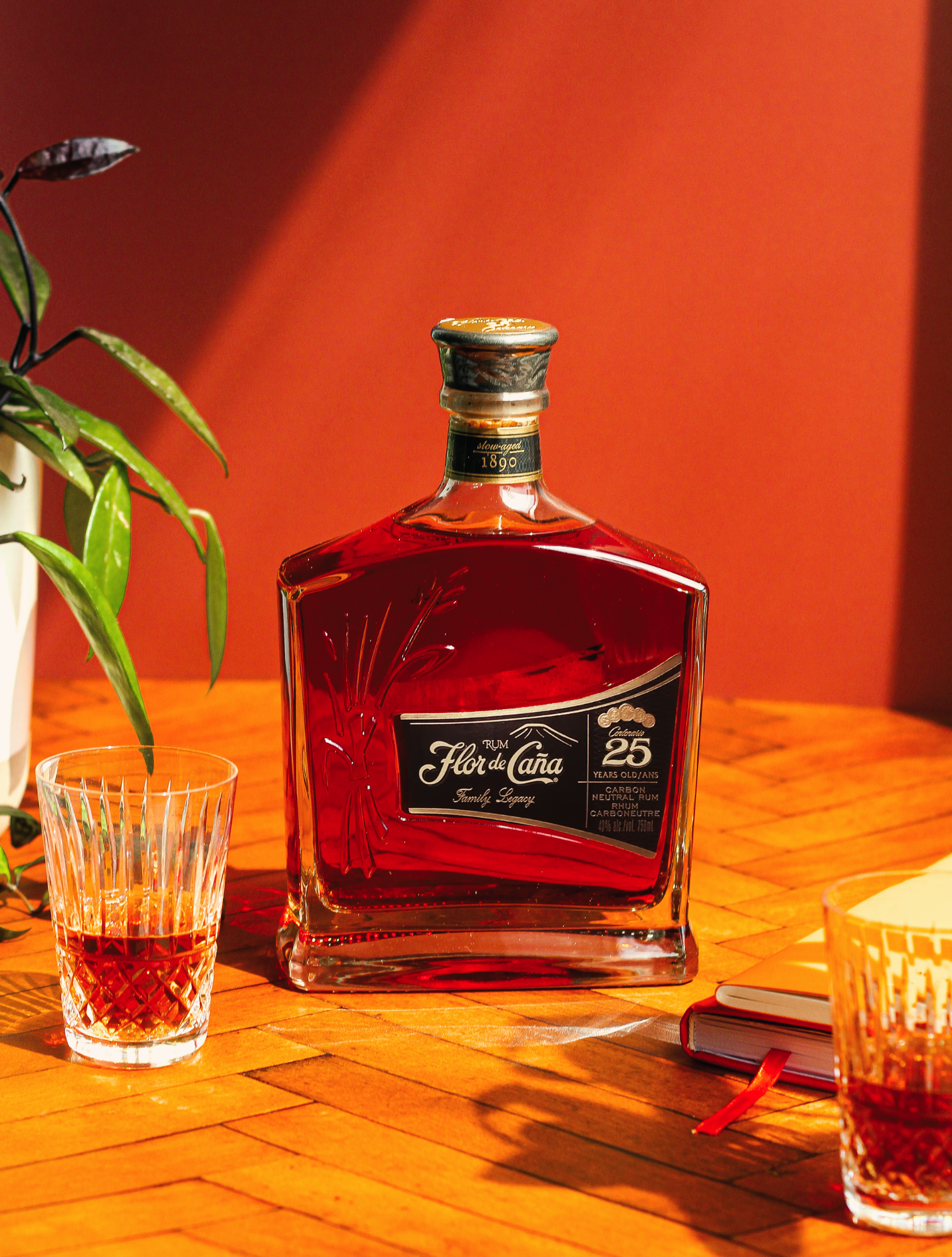
flor de caña 25 year old
single estate rum
the conversation starter
At the foot of an active volcano, even patience carries a little heat. Twenty-five years in oak unfolds in tropical Nicaragua, where time rarely takes things slowly.
the timepiece
In a tropical climate, maturation is usually discussed in terms of speed. Flor de Caña, however, has built its flagship rum around patience. It matures naturally in ex-bourbon barrels, without artificial ingredients or accelerated aging techniques. At a time when numbers on rum bottles may refer to the oldest component in a solera or the average age of a blend, the 25 carries unusual weight: every rum in the bottle has matured for at least a quarter-century.
behind the bottle
Flor de Caña’s story began in 1890 at the foot of Nicaragua’s San Cristóbal volcano, where five generations of the Pellas family have since shaped its distinctly Nicaraguan style of rum. The 25 is the most premium expression in its core range, positioned above the 12- and 18-year bottlings. While rarer releases such as V Generaciones and the 35 Year extend beyond it, the 25 remains the flagship expression of Flor de Caña’s established house style at its most mature.
house style
Flor de Caña’s house style begins in the sugarcane fields of the San Antonio estate, which supply the molasses used at its nearby Chichigalpa distillery. Five-column distillation creates a clean, light-bodied spirit before ex-bourbon barrels and Nicaragua’s tropical climate begin building texture and depth. In the 25, that relationship produces considerable maturity without sacrificing the clean, dry line that defines the house, allowing age to deepen the spirit rather than overwhelm it.
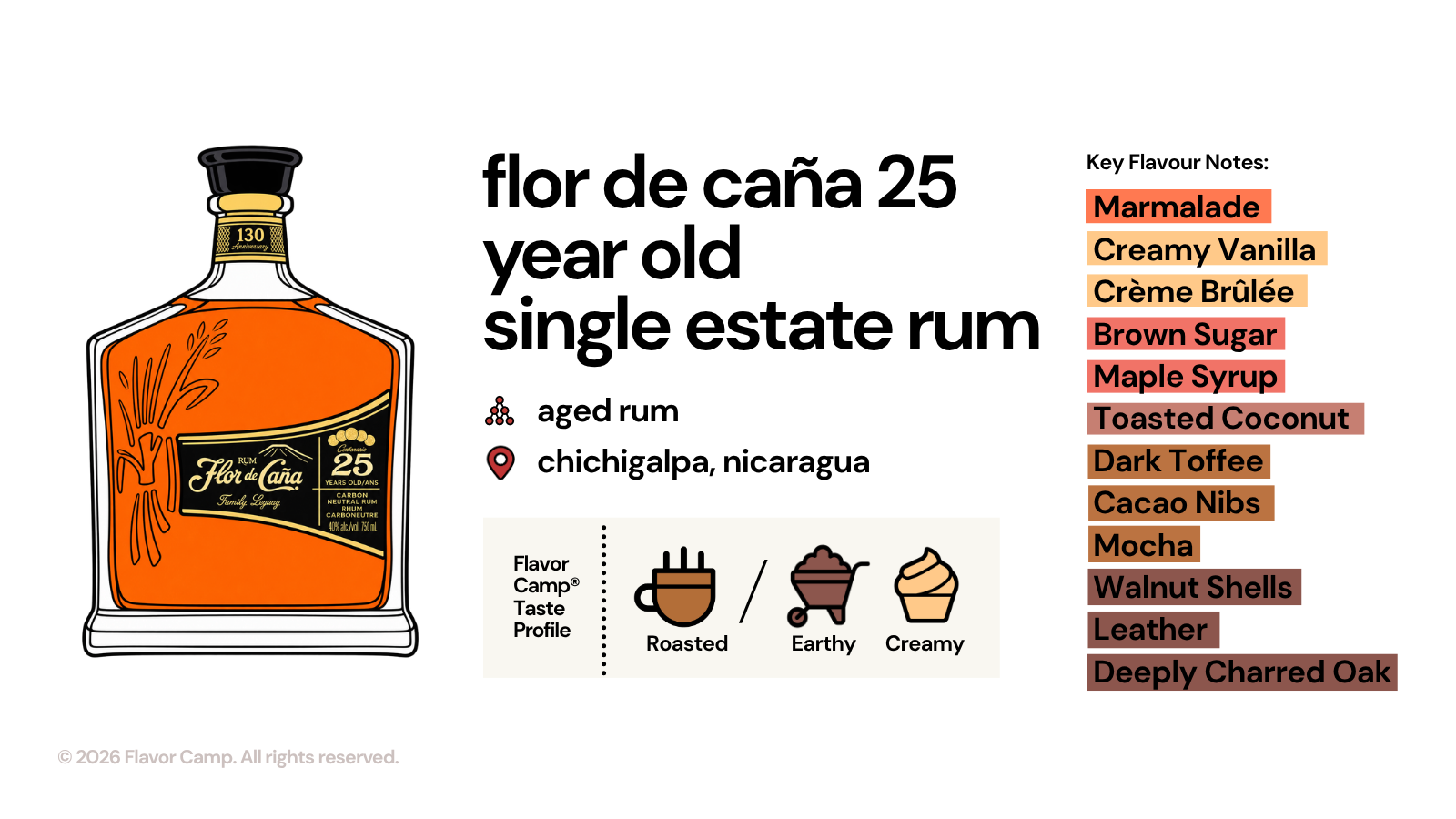
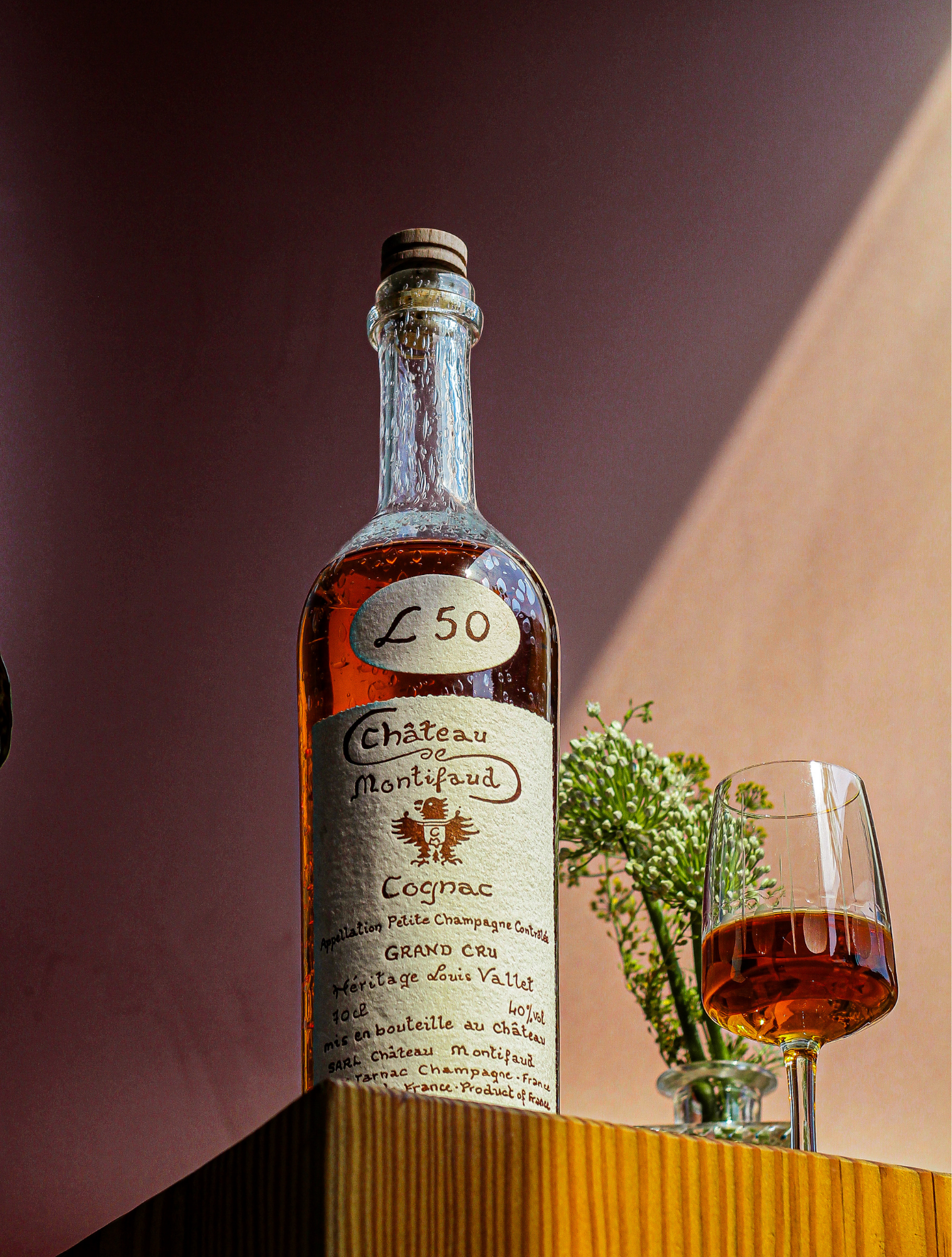
château montifaud 'héritage louis vallet'
L50 cognac
the conversation starter
Château Montifaud’s L50 is not simply an old Cognac; it is a generational archive, blending eaux-de-vie distilled across decades into one shared inheritance.
the timepiece
Despite how it is often listed by retailers, L50 is not presented by Château Montifaud as a conventional 50-year age statement. It is a marriage of very old Petite Champagne eaux-de-vie, with published descriptions identifying components distilled between 1935 and 1982. The “50” is generally understood to represent an approximate average age rather than the youngest liquid in the bottle. Here, age is not one birthday, but a meeting point between several generations of spirit.
behind the bottle
Château Montifaud has remained in the Vallet family since Augustin established the vineyard in 1837. Six generations later, the family still manages the journey from vine to cellar. Héritage Louis Vallet L50 belongs to its Trésors de Famille collection and honours the fourth generation, who introduced estate bottling at Montifaud. It is among the house’s most prestigious blends, made even more personal by the inclusion of the first Cognac that Louis Vallet distilled himself.
house style
Château Montifaud’s style begins with estate-grown grapes from chalk-rich Petite Champagne. The wines are distilled with their lees, slowly and over a low flame, building roundness into the eau-de-vie before oak enters the picture. New Limousin oak is used sparingly, with longer maturation shifting into older barrels that encourage oxidation without piling on tannin. In L50, those choices allow several decades of age to register as integration and texture rather than simply more wood.

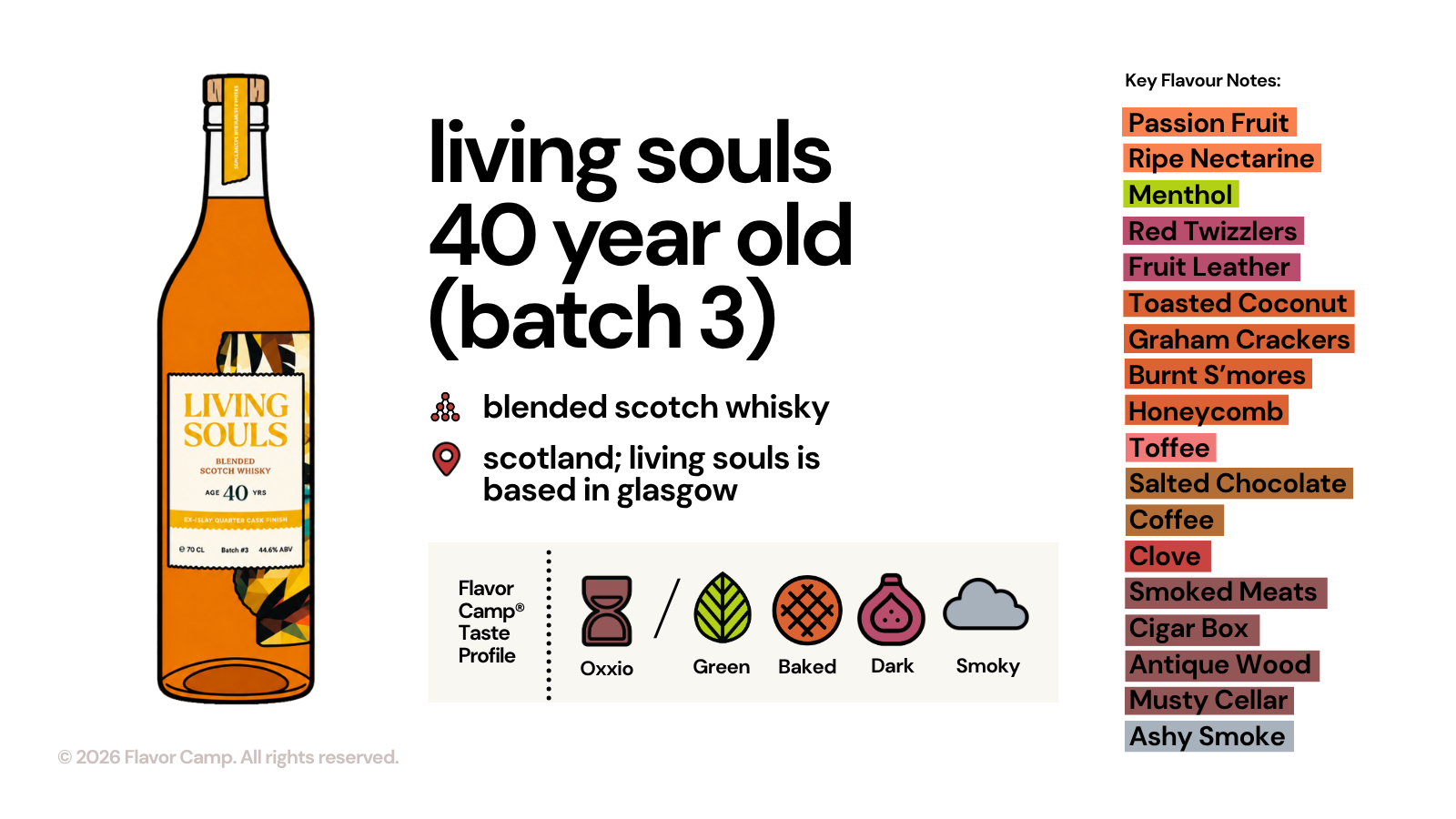
living souls 40 year old (batch 3)
the conversation starter
Living Souls 40 year old (Batch 3) layers forty years into three distinct chapters: separate maturation, a decades-long marriage, and a final smoky imprint from Islay.
the timepiece
The age statement identifies the youngest whisky, but not the shape of those years. Batch 3 spent roughly fourteen years maturing as components, followed by a quarter-century resting together. Its passage through ex-Islay quarter casks added a final layer. This is neither a solera nor a blend of different age statements. Instead, it shows how time can be built through sequence: maturation establishes character, marriage creates integration and finishing introduces an echo of the whisky’s past.
behind the bottle
Batch 03 began with whisky distilled in 1984 and matured until 1998, when the components were blended and laid down to marry in refill sherry butts. Twenty-five years later, the blend entered four quarter casks that had previously held Islay whisky. It was then reunited and bottled at a natural cask strength of 44.6 per cent ABV. This 40-year-old blended Scotch is shaped by maturation, an exceptionally long marriage and a final smoky finish.
house style
Founded in Glasgow in 2024, Living Souls is led by veterans Calum Leslie, Jamie Williamson and John Torrance. The independent bottler seeks out unconventional parcels, reshaping them through blending, extended marrying and chosen finishes. Its small-batch malts, grains and blends share a flavour-first philosophy. Each is presented at natural colour, without chill filtration and at a strength chosen to express its character.
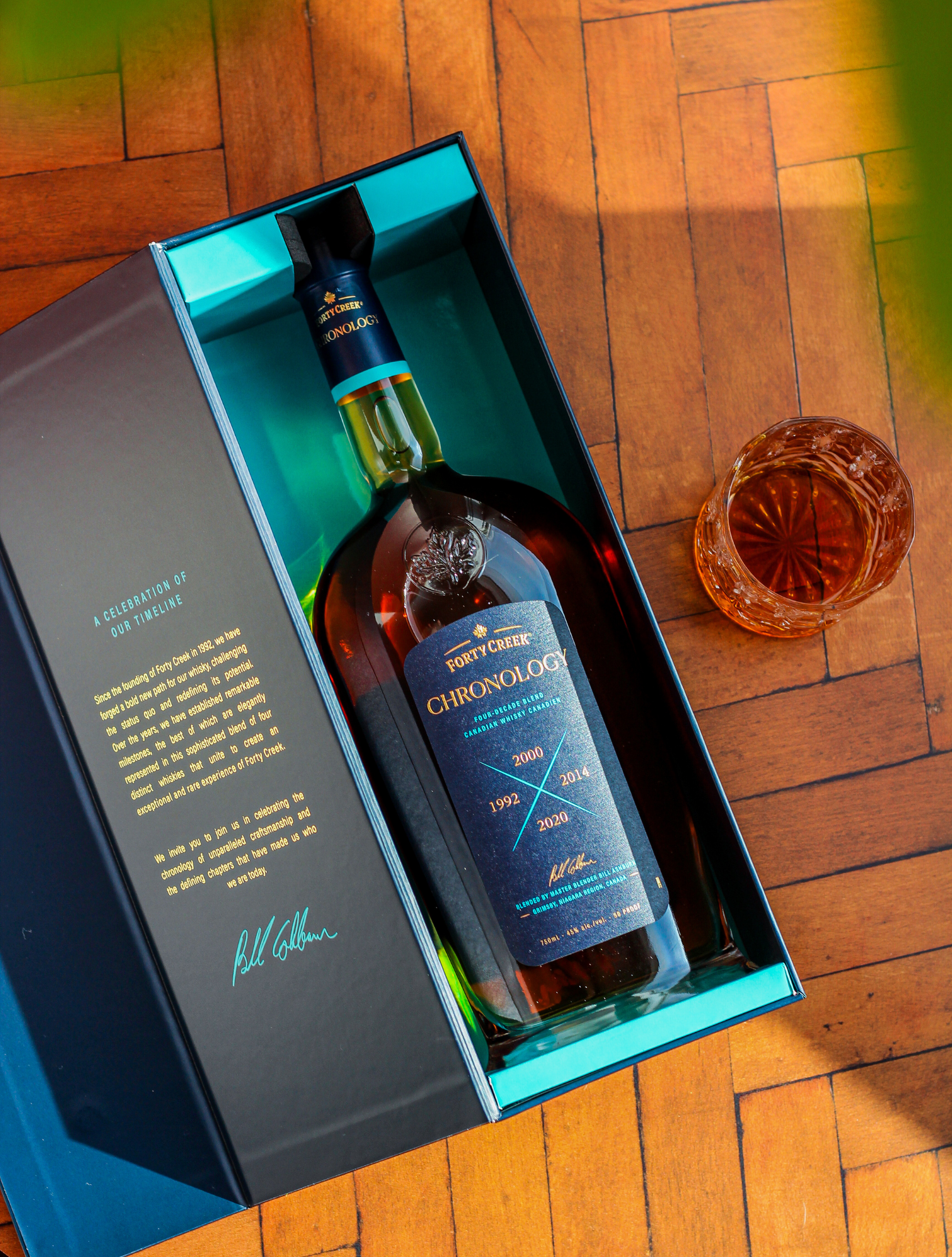
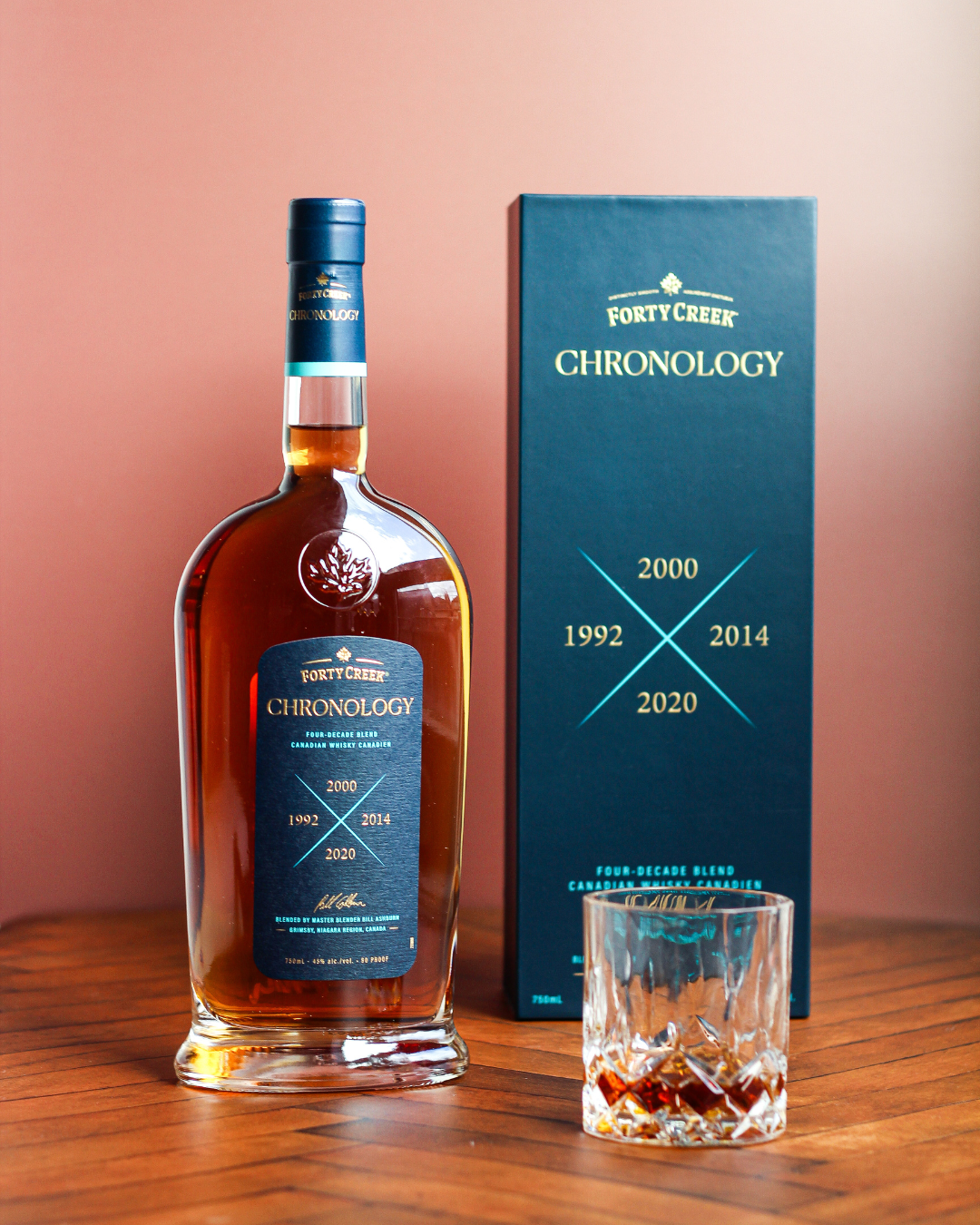
forty creek chronology
the conversation starter
Four decades, three styles of whisky and one final blend: Chronology turns Bill Ashburn’s career into something you can taste.
the timepiece
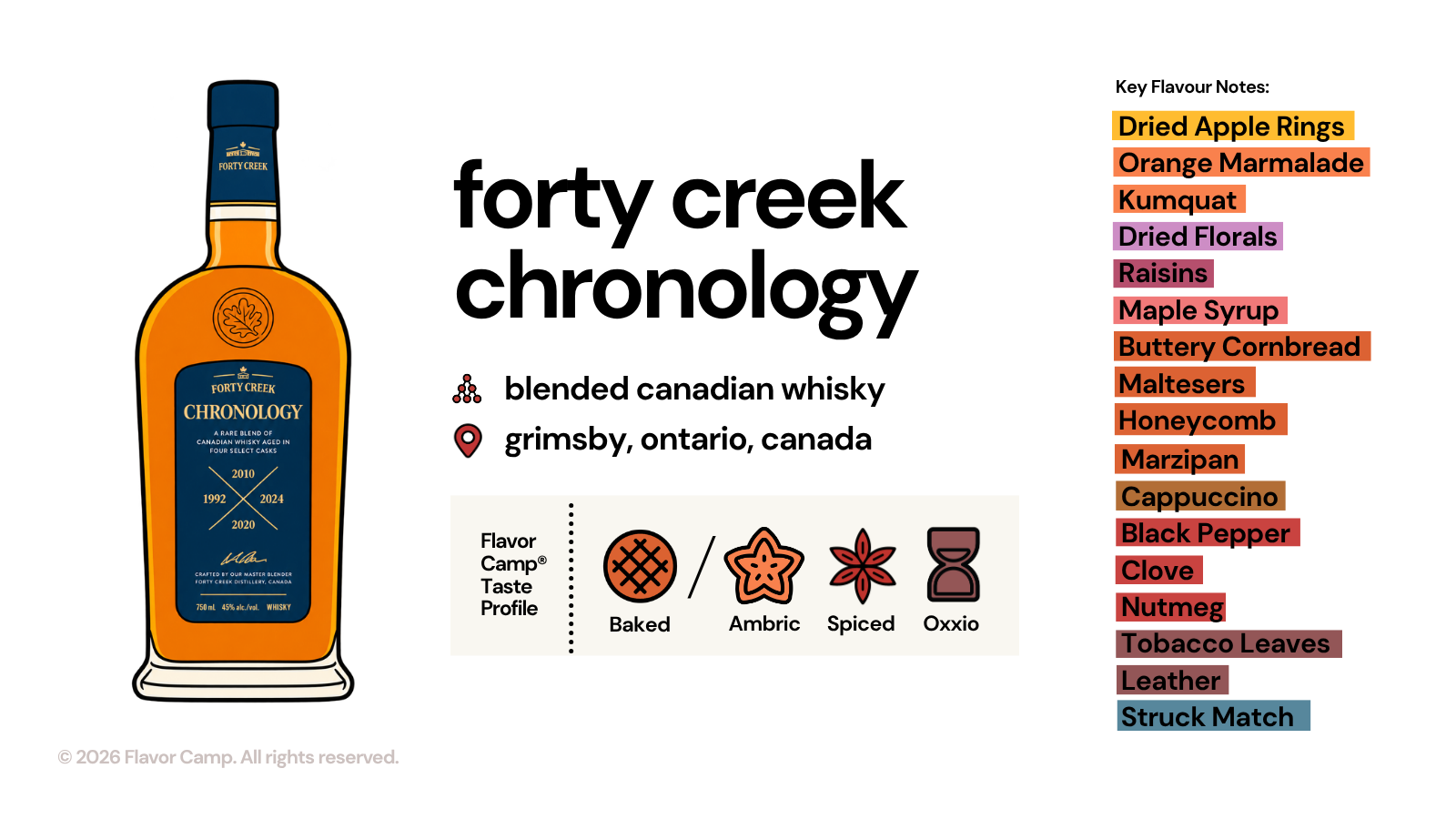
Chronology does not tell time with a single age statement. Its four components function more like dates on a timeline: 31-year-old barley malt from 1992, 20-year-old corn whisky from the early 2000s, nine-year-old rye from the 2010s and five-year-old corn from 2020. Legally, the youngest component would make this a five-year-old whisky, but that misses the point. The five-year-old corn whisky does more than bring youth to the blend: it rounds out the older stocks and pulls Chronology forward toward Forty Creek’s familiar house style.
behind the bottle
Bill Ashburn arrived at the Grimsby distillery in 1987, five years before he and winemaker John Hall began building what would become Forty Creek. When he retired in December 2025, he had spent 38 years shaping whisky on the same site. Chronology was created as both a retrospective and a farewell, blending one whisky from each decade of his tenure. Limited to 2,208 bottles, it does not simply recount Forty Creek’s history. It organizes Ashburn’s career into four liquid chapters.
house style
Forty Creek’s house style comes into focus at the blending table. Corn, rye and barley typically act as complementary building blocks, each fermented, distilled and aged separately before being brought together. Chronology follows that logic, but it is also something of a departure. At its centre is the last single malt barrel laid down during the distillery’s infancy, a rare piece of inventory that pulls the blend away from its familiar corn-led profile and gives malt a much more prominent role.
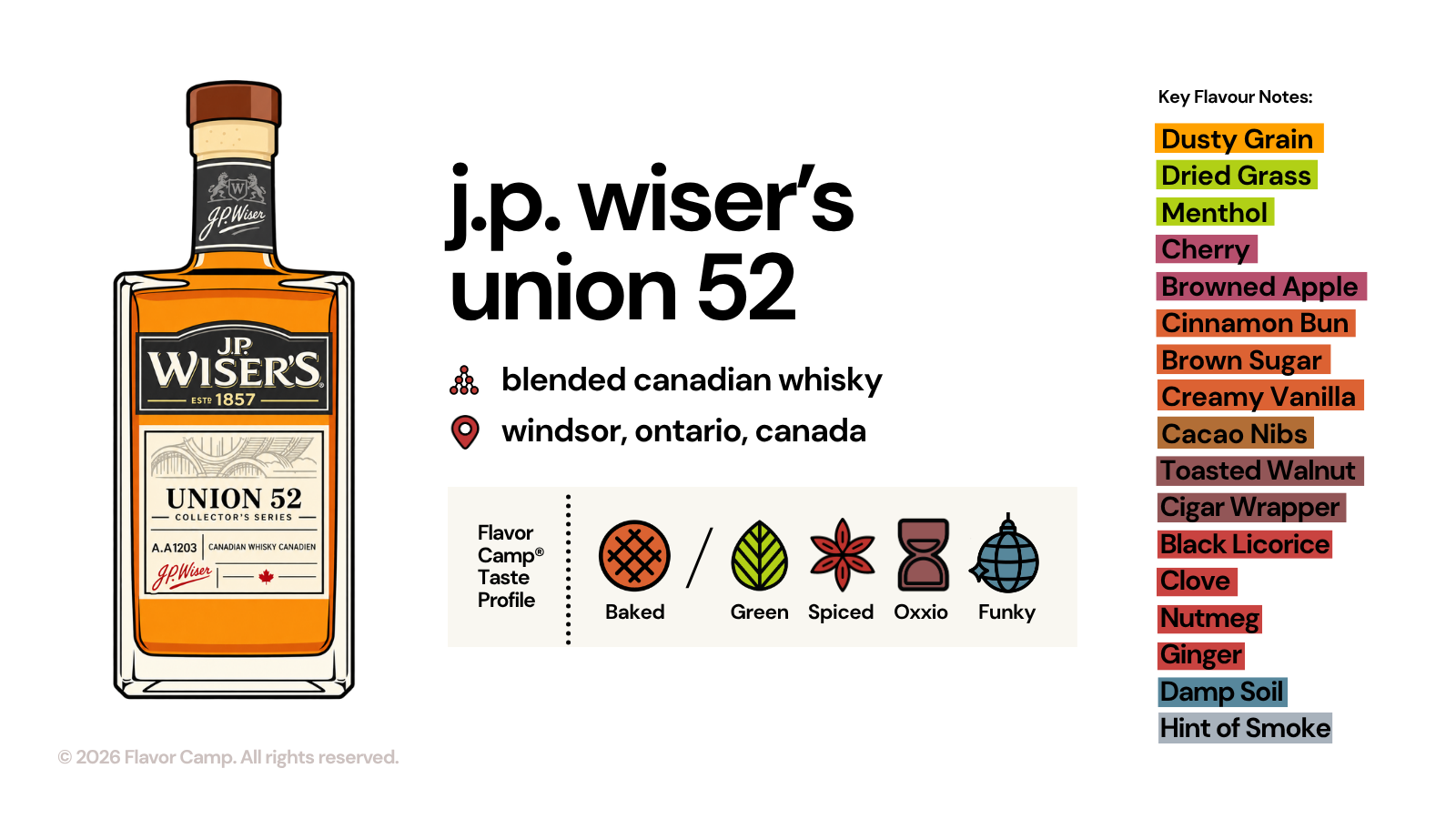
j.p. wiser’s union 52
the conversation starter
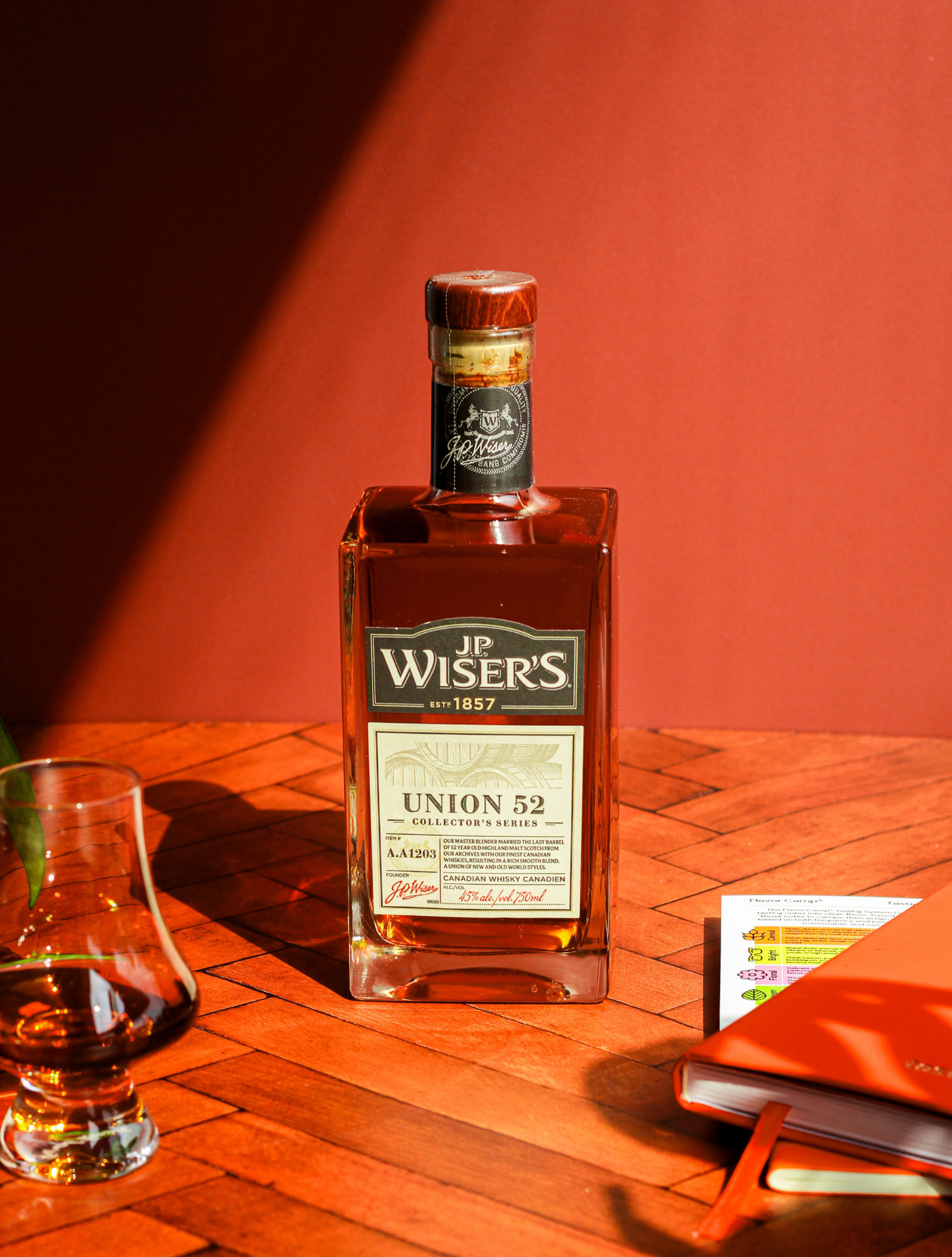
Union 52 was released only once, nearly a decade ago, but we pulled it from the archives to revisit one of the cleverest uses of Canada’s unique blending rules: putting 52-year-old Scotch into thousands of glasses for less than $70 a bottle.
the timepiece
Despite its name, Union 52 is not a 52-year-old Canadian whisky. The number refers to the Highland single malt used in the blend. The Scotch had been aging in Hiram Walker’s Windsor warehouses since 1964. By the time the parcel was considered for Union 52, only 18 barrels remained, and draining them yielded roughly one barrel’s worth of highly concentrated whisky. Canada’s ‘9.09 per cent rule’ permits aged wine or another spirit to make up as much as 9.09 per cent of a Canadian whisky. J.P. Wiser’s master blender, Dr. Don Livermore, tested the malt at different proportions in Red Letter, Wiser’s premium long-aged Canadian whisky. Four per cent was the sweet spot.
behind the bottle
Released as a one-time British Columbia exclusive in late 2016, Union 52 was created by J.P. Wiser’s master blender Dr. Don Livermore. Its foundation was Red Letter, a premium Canadian blend, but its defining component came from a parcel of Highland single malt held in Windsor since 1964. At $69.99, it placed genuinely old Scotch inside an unusually accessible Canadian whisky. Nearly a decade later, it remains a singular demonstration of what Canadian blending rules make possible.
house style
Hiram Walker is one of North America’s largest whisky distilleries, producing the whisky behind J.P. Wiser’s, Lot No. 40, Pike Creek and Gooderham & Worts, among others. Across those brands, it works with corn, rye, wheat and barley, multiple distillation styles and an enormous inventory of maturing stock. Union 52 was a rare departure for a house built on Canadian grain distilled and matured on Canadian soil: an imported Highland malt introduced into the blend.