
where flowers fall, india’s heritage spirits flourish
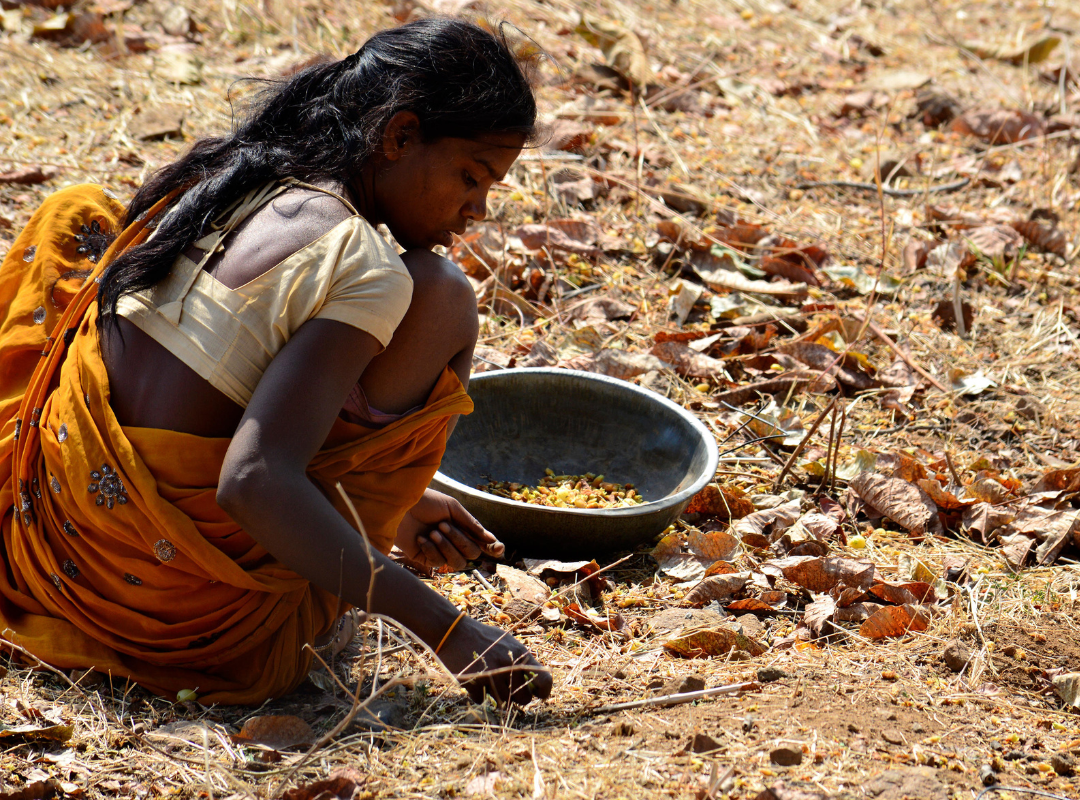
Tribal woman collecting Mahua Flowers. Photo by NK Sareen / Alamy
There is a particular kind of knowledge that lives not in books but in hands: the hands of a woman gathering white blossoms from a forest floor before sunrise, the hands of a man climbing a 60-foot palm before the world has woken, and the hands pressing cashew fruit in stone basins that have held the weight of centuries.
India's heritage spirits, such as mahua, feni, arrack and toddy, are not simply beverages. They are living calendars, encoding a community’s relationship to land, season and ceremony. Yet they have long been relegated to cheap ‘country liquor’ status.
Aniruddha Mookerjee, journalist and heritage liquor advisor to the Madhya Pradesh state government, captures this relationship best, saying: "So deep is the tribal connection with mahua that it's sometimes used to wash the umbilical cords of newborns and bless tombstones for the departed, so they are not deprived in the afterlife." One flower. A whole cosmology.
Vikram Achanta, founder of drinks consultancy Tulleeho and 30 Best Bars India, envisions a future where local spirits assume a prominent role on the international stage, deeply tied to cultural identity. "I want people to associate India with native Mahua or Feni in the same way Tequila and Mezcal represent Mexico," he explains. That association, so long denied, is finally beginning. But not without complexity, contradiction, and occasional grief.
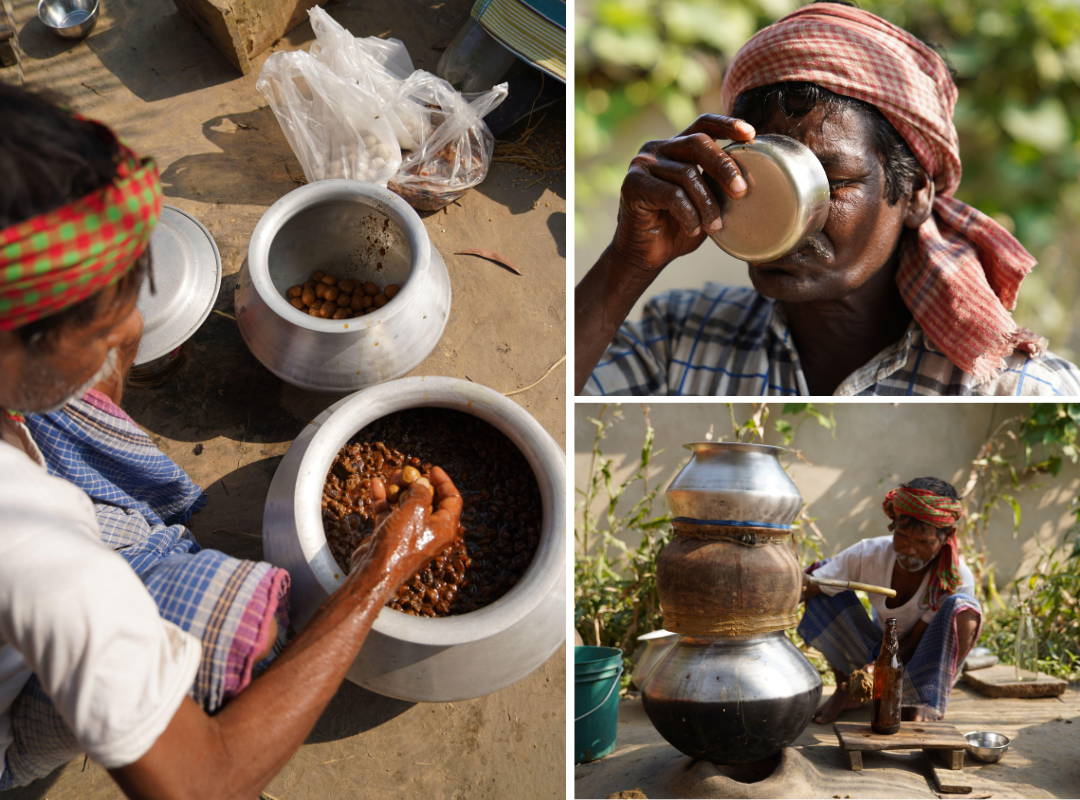
Images, clockwise from left: Members of the Santal community in Birbhum, India, prepare fermented mahua flowers, sample the resulting floral liquor and operate a traditional fire-heated home still. Photo: Biswarup Ganguly/Alamy.
mahua: the tree that fed, blessed, and was silenced
In the forests of Madhya Pradesh, a state in central India, spring begins with a memorable scent. The mahua tree flowers in late February and March, its cream-white blossoms dropping to the forest floor in the early hours. Sweet, heady, almost narcotic in the humid air. For the Gond, the Bhilala, the Baiga and dozens of other Adivasi (indigenous and tribal) communities across central India, this flowering has functioned as a ritual calendar event for millennia. Ayurvedic texts over 2,000 years old reference the flowers. For these communities, the mahua tree is the Kalpvriksh or wish-fulfilling tree. Every part of the tree is used: fruits for cooking oil, flowers consumed as gruel, vinegars, syrups, and, ultimately, one of the world’s rare flower-based spirits.
The flower collection itself is ceremonial. Women and children rise before dawn to gather blossoms that have fallen naturally. No plucking. The flowers are dried, rehydrated, fermented for three to five days, then distilled. Think of these resulting liquids as the distilled memory of a sweet flower nourished by earth mixed with notes of forest fruit and Indian spice boxes.
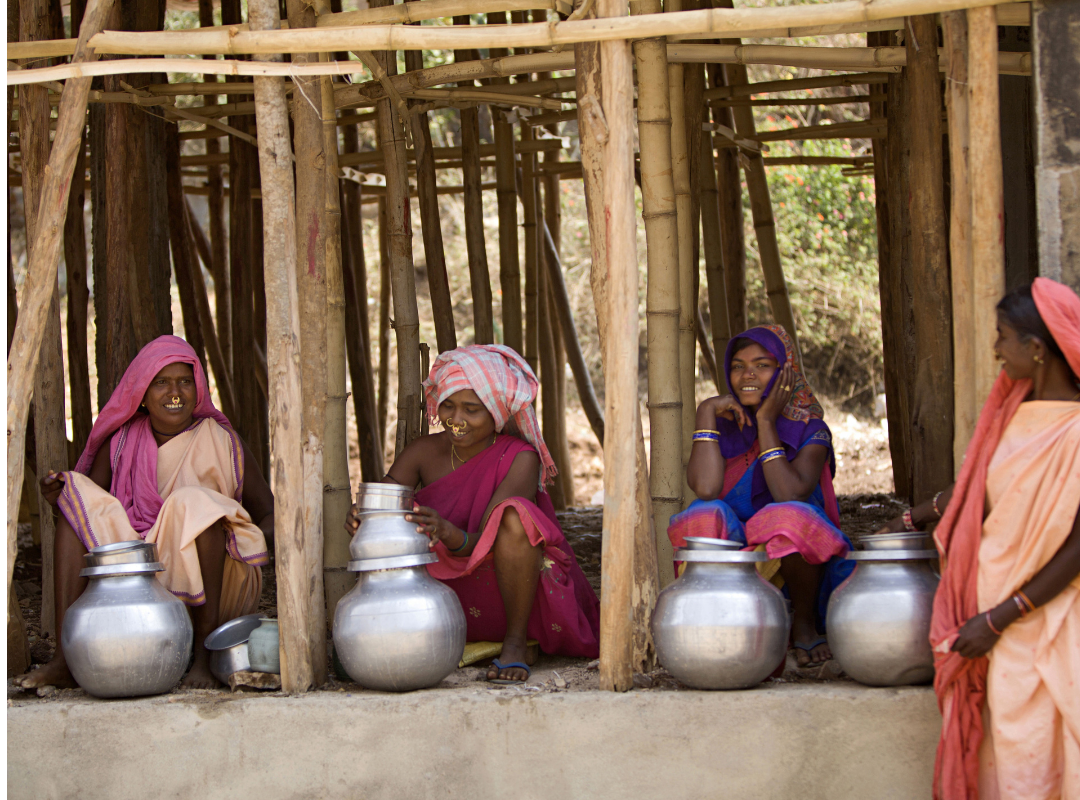
Women sell traditional mahua liquor from metal vessels in Odisha, India. Photo: Ephotocorp/Alamy.
The British passed the Mhowra Act in 1892, banning production to protect the imported alcohol market, devastating tribal economies for over a century. When Madhya Pradesh declared mahua a Heritage Liquor and tribal self-help groups launched Mond and Mohulo (an all-female-run distillery) in 2021, it was restitution of sorts. Mohulo production team member Anarkali Bai captures the stakes: "It has been our guiding spirit. Very often, our husbands can't support us—but mahua can."
Six Brothers Mahura, the most widely distributed premium expression of the spirit, has helped elevate mahua’s stature and earn it a place in some of India’s leading cocktail bars. Its presence stretches from Bar Sokhi in Bangalore to Bandra Born in Mumbai, where a dedicated mahua bar was developed in collaboration with chef-partner Gresham Fernandes. Double-distilled in copper pot stills, the spirit then undergoes platinum filtration, a final polishing step that enhances clarity, softens its texture and creates a clean, crisp finish without erasing the flower’s earthy, mineral character.
Then there is Mah, a France-based brand co-founded by anthropologist Rahul Srivastava, who imports dried mahua flowers from Madhya Pradesh and distills in France. He is candid: "Licensing fees for distillation in India are so expensive; it was just much easier and affordable to do it in France," citing regulatory failure, not cultural appropriation. Red tape is not the only reason he chose to distill in France. He knew distilling internationally would cause a stir. "I was fully aware that by bringing it to France, I would get much more traction in the media in India." He is simultaneously pushing for Adivasi (indigenous community) cooperatives, so communities eventually control the supply chain, not just collect the flowers.
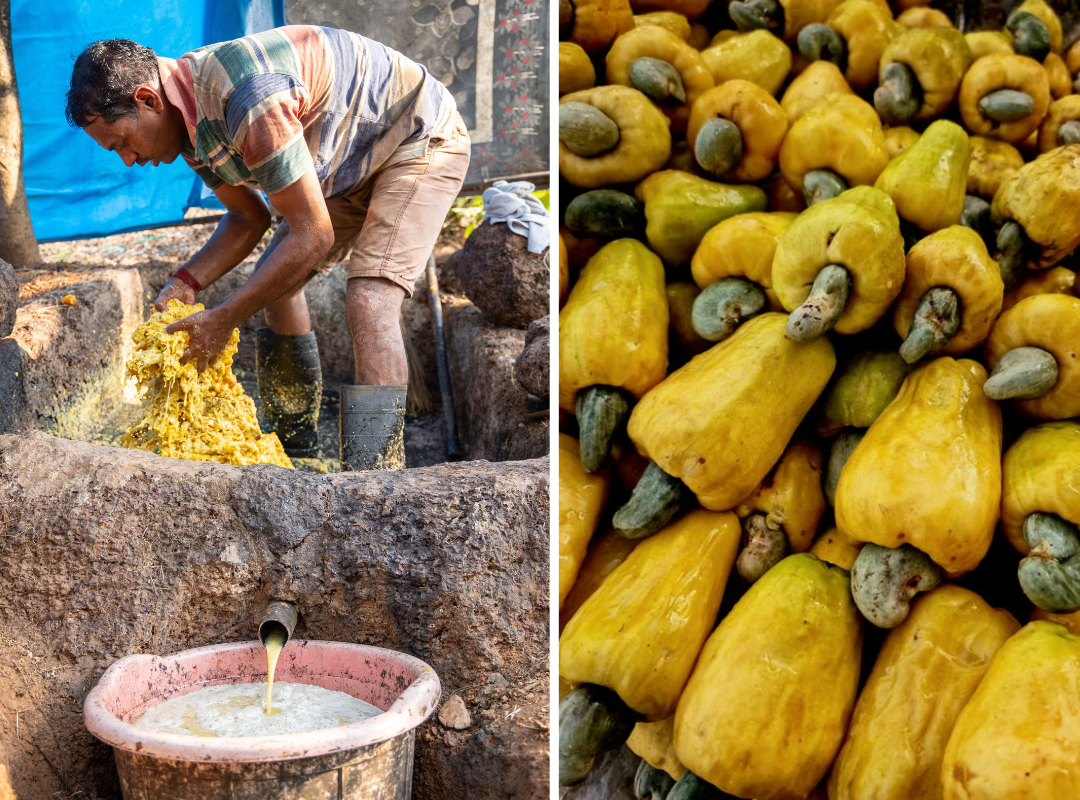
Left image: Mashed cashew apples are gathered for a final pressing to produce niro, or neero, a non-alcoholic juice. Right image: Fresh cashew apples with their distinctive external nuts. Photos: Arunabh Bhattacharje / Alamy.
feni: the froth of goa, the complexity of one glass
Few spirits carry as layered an identity as Goa's feni. In a single bottle you find the indigenous Konkani coastline, centuries of Portuguese rule, Catholic syncretic ritual, and a cashew tree that arrived from Brazil as an erosion-control measure and became the soul of a region. The word feni means froth in Konkani, and the first recorded mention of cashew-based nasha pani, or ‘intoxicating water’, dates to around 1584. The Portuguese began taxing it by the 1750s. Make of that what you will.
Production follows the rhythms of season and ritual. As with mahua flowers, cashew apples are never picked—only the fully ripened fruit that has fallen naturally is used. Women press these fruits in stone basins called colmbi, and the juice is collected in clay vessels buried underground to ferment with wild yeast. Achanta observed a production cycle, describing it as ‘like driving six buffalos at the same time’, diligently monitoring every variable to identify the precise moment to transfer the liquid to the still.
That first distillation yields Urrack, a light, fruity, slightly sweet and tangy spirit that sits around 20 per cent ABV. Urrack has dramatically overtaken feni in cultural cachet among locals and visitors alike.
"Everybody now is familiar with Urrack–Urrack pop-ups, Urrack takeovers, bragging rights over sources."
"Everybody now is familiar with Urrack–Urrack pop-ups, Urrack takeovers, bragging rights over sources," says Achanta.
The classic serve: soda, a splash of Limca, a slit green chilli. Goa in a glass.
The second distillation produces feni proper. Richer, more complex at 40 to 45 per cent ABV. Hansel Vaz, founder of Cazulo Premium Feni, left his career as a geophysicist in New Zealand to return to his family's feni roots near Margao, Goa. He pioneered the premiumization of Indian heritage spirits. Cazulo’s Dukshiri, a coconut feni infused with Indian sarsaparilla, with its notes of vanilla, peanut, lavender and forest floor, has often been compared to the sultry, smoky depths of premium mezcal.
Cazulo has since secured GI protection, a designation that safeguards goods linked to a certain region, for both cashew and coconut feni. This has proven to be a double-edged sword: protecting provenance and raising value, while risking imposing commodification standards on a tradition lived in ritual rather than regulation. Vaz's goal: broaden appeal without locals feeling the product is no longer theirs.
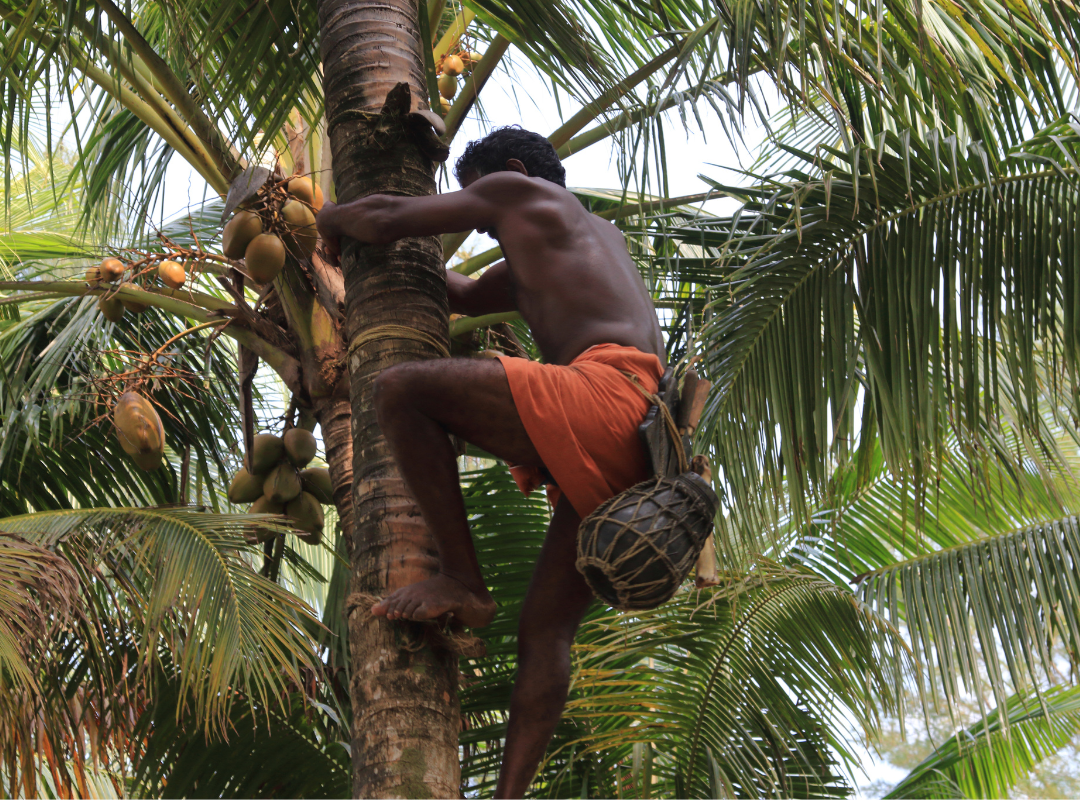
A toddy tapper collects coconut sap in Alleppey, Kerala, India. Photos: ajijchan/iStock
arrack & toddy: the palm's ancient offering
South India's relationship with the palm tree is as old as civilization itself. The Sangam poets wrote of kallu, or fresh toddy, and the temples of Tamil Nadu received it as an offering. Made from palm sap collected at dawn, the drink was warm and slightly sweet, with wild fermentation just beginning. It was a democratic drink: the tapper's wage, the labourer's morning, the village's
communion. By midday, it was gone. This ephemerality—a drink that cannot be preserved, that demands you be present—is both its poetry and its fragility. Arrack is toddy's distilled form, and its history stretches across India, Sri Lanka, and Indonesia through centuries of Indian Ocean trade.
In India today, both toddy and arrack are broadly illegal to produce domestically. Manavatty Indian Arrack, founded by Kochi-native John Xavier, is produced in Poland and now sold in Kerala duty-free: an Indian heritage spirit, made outside India, once again returning home as an import, much like Mah.
Ary Ganeshalingam, a Sri Lankan-Tamil, is about to launch Tappa, a Palmyra and coconut palm arrack from Jaffna, infused with 16 local spices. Displaced by war, he reconnected with a cousin in Sri Lanka who had spent years quietly distilling and preserving the knowledge of local arrack. "I was fascinated by the incredible men and women climbing 60-foot trees, collecting the sap," says Ganeshalingam.
Tappa takes its name from these Sri Lankan toddy tappers whose numbers have fallen from 21,000 to roughly 7,000.
"Arrack reminded me of 17th century whisky in Scotland–banned, illicit, and bastardized,” he says, “and then the remarkable journey back to respectability."
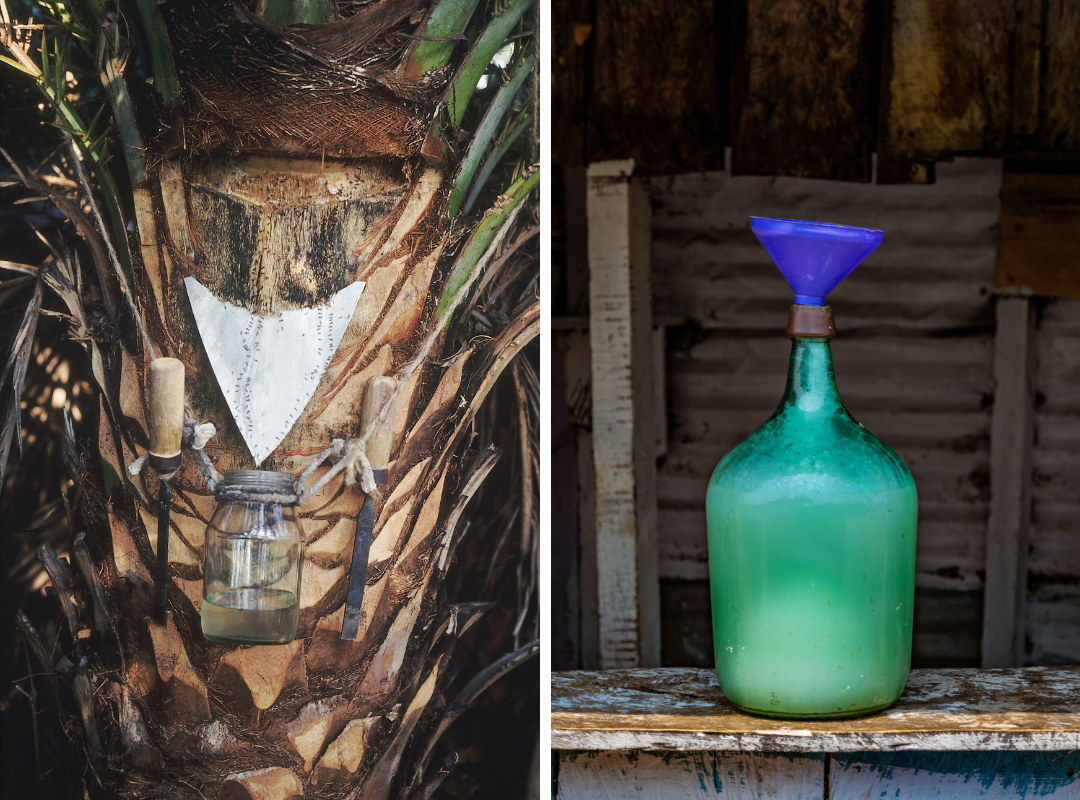
A traditional bottle used to make local palm wine; and sap being collected from a wild date palm. Photos: Denis Mentz/Alamy; Ephotocorp.
what disappears when no one collects the flowers
The thread running through all these stories is accountability. Diageo India is heavily investing in The Good Craft Company to help preserve the nation’s fermented footprint. Srivastava, barely breaking even in Paris, talks about an Adivasi cooperative as non-negotiable. Mookerjee is continuing his fight for GI status and heritage spirit recognition.
These spirits are national archives. Archives require custodians. Achanta puts the challenge plainly: "I don't think you can go from zero to one hundred. International success has to be backed by domestic interest."
India’s heritage spirits may be ready to bloom, but their future begins at home, where the flowers fall.