What Makes Ontario Whisky Taste Like Ontario?
Dana Dickerson of Grain Farmers of Ontario makes the case for looking beyond the bottle to the fields, farmers, and growing conditions behind the spirit.
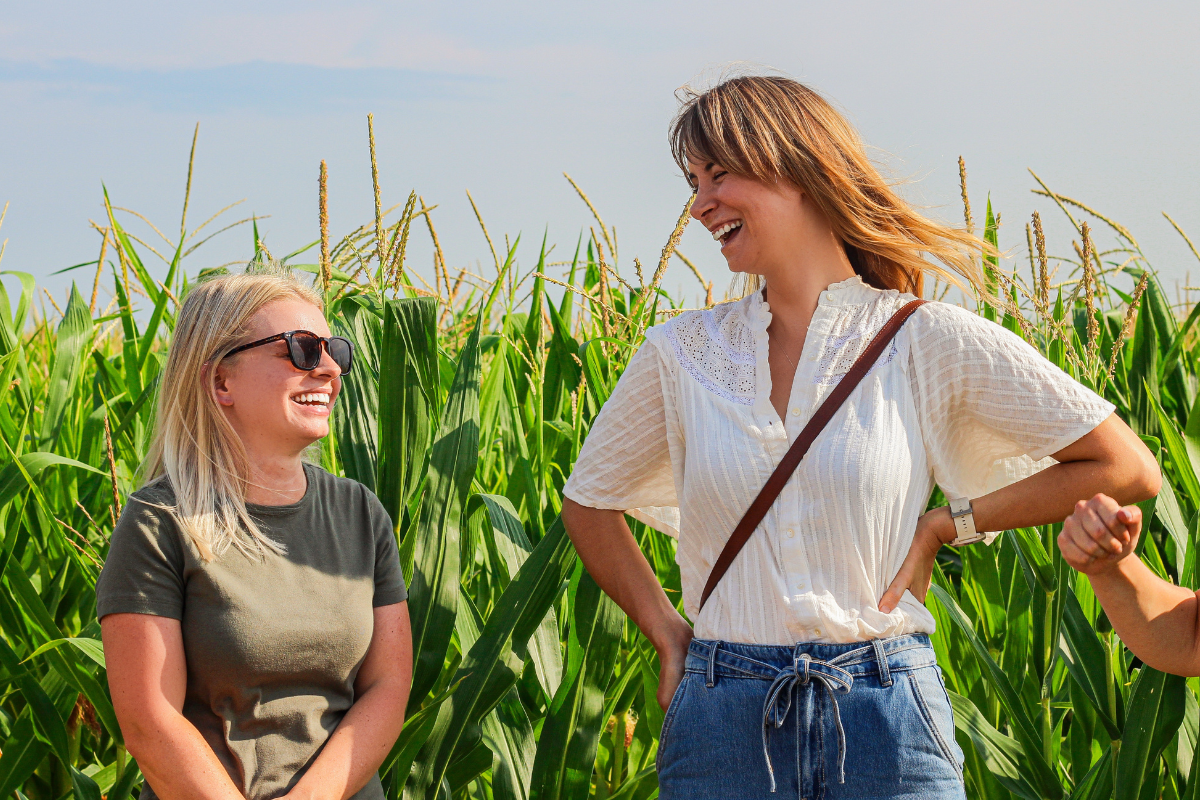
Grace Mullen, owner of Graceland Farms and Dana Dickerson, Director of Market Development and Sustainability for Grain Farmers of Ontario discuss agriculture on site.
Every glass of whisky begins in a field. In Ontario, that story starts with corn and the conditions that help it thrive. Ask Dana Dickerson, Director of Market Development and Sustainability for Grain Farmers of Ontario, what shapes the province’s grain, and she points to soil, climate, drainage, and geology. Here, the relationship between land and flavour isn’t simply language borrowed from wine. It is the growing environment that shapes the corn long before that grain becomes the whisky in the glass.
"I don't personally take ice in my whisky, but Ontario corn whisky owes a lot to the last ice age," Dickerson says. Thousands of years ago, retreating glaciers dragged sand, silt, clay, and organic matter across the province, leaving behind soils with what Dickerson calls "excellent water holding capacity." The same ice sheets carved the basins that became the Great Lakes.
That geology still runs the show. The lakes act as enormous heat reservoirs, moderating regional temperatures, stretching the growing season, and cutting the risk of frost before corn hits full maturity. And because those lakes generate such consistent precipitation, Ontario's corn crop is almost entirely rain-fed. No irrigation infrastructure required.
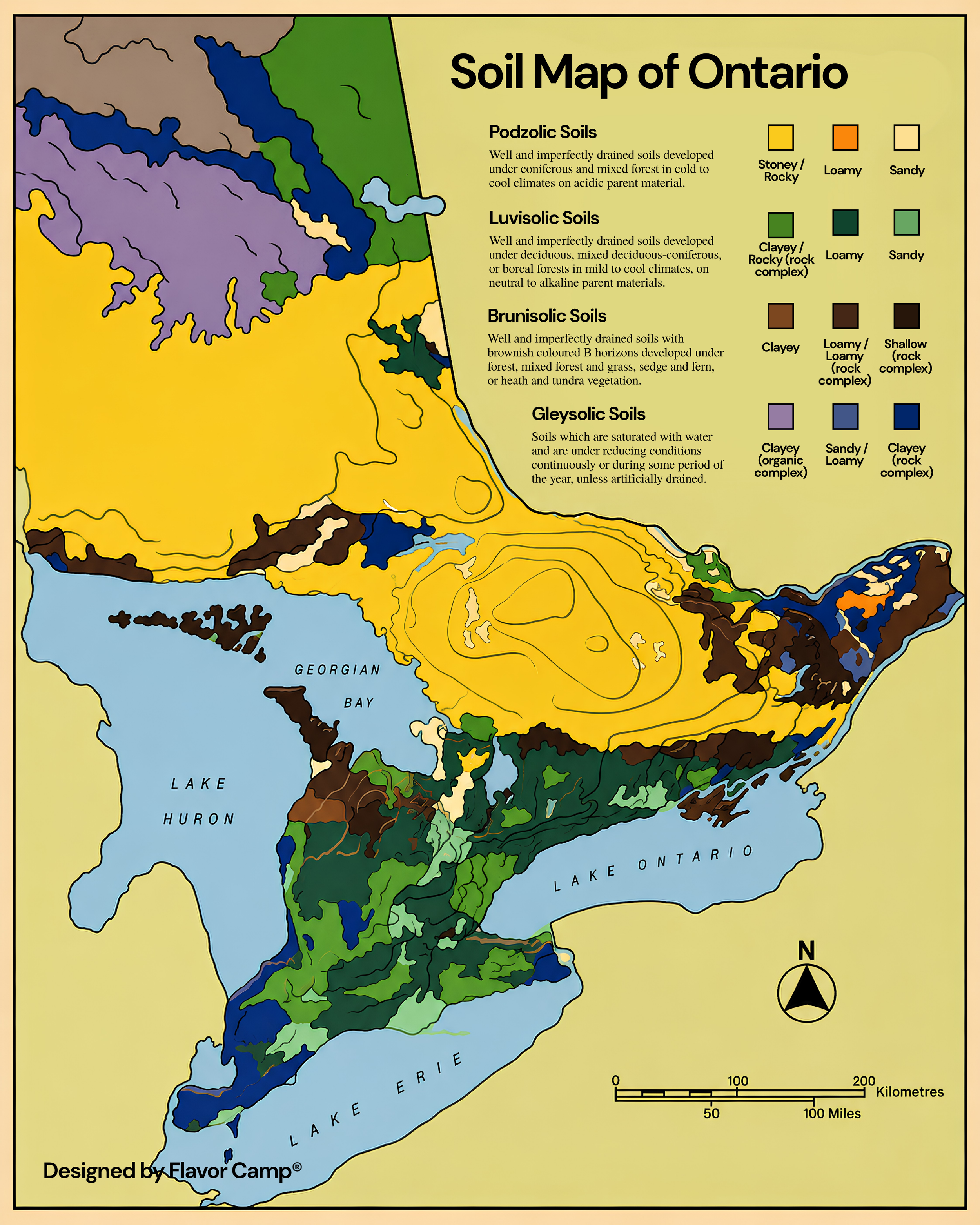
Built by Ice, Lakes, and Heat
Ask Dickerson whether there's a legitimate terroir case for corn, and she's precise about where her expertise ends and the data begins. What she'll speak to directly: "Ontario benefits from having a large volume of growers in a relatively concentrated geography, combined with relatively consistent growing seasons and very strong crop quality and food safety measures." The flavour debate itself, she leaves to others: a distinction worth respecting rather than reading as uncertainty.
Translation for distillers: less about a single dramatic terroir marker, more about consistency at scale. That consistency is measured in Crop (Corn) Heat Units, or CHUs, the metric Ontario farmers use to track how much heat is available in a growing season to bring corn to maturity. Grain corn becomes viable around 2,500 CHUs. The province's highest-yielding regions clear 3,000. Southwestern Ontario, the heart of the province's corn belt, can reach 3,600 CHUs, which is why that region produces so much of the crop.
Move north past the Canadian Shield, roughly toward the Timiskaming region, and the math changes. Rockier soils and shorter seasons make corn harder to grow, though Dickerson notes seed developers are actively breeding varieties suited to lower-CHU regions further north, gradually pushing the map.
Underneath the CHU data sits something more granular still: soil series. Ontario has hundreds of named soil classifications, the most detailed practical tier farmers use to describe what lies beneath their feet. Whether individual soil series leave a detectable flavour signature in the glass remains an open question, but their practical value to distillers is more immediate. “You’re going to see strong consistency in the grain, both within a given year and from year to year, which can help distillers manage the transition from old crop to new crop and build a reliable, recognizable flavour profile,” Dickerson says. The province’s soil diversity is documented, mapped, and real, but so too is the dependable grain it produces: a consistent foundation from which distillers can shape a whisky’s identity.
That consistency is backed by volume. Corn is Ontario's largest crop by tonnage, at roughly nine million tonnes a year, and the province grows more than 60 percent of Canada's total corn crop. Corn is Canada's third-largest crop by volume overall. Scale like that funds plant breeding, disease research, and agronomic extension work that smaller-volume regions simply can't sustain. It also underwrites a processing sector broad enough to serve spirits, snacks, biofuels, and functional food ingredients out of the same supply chain.
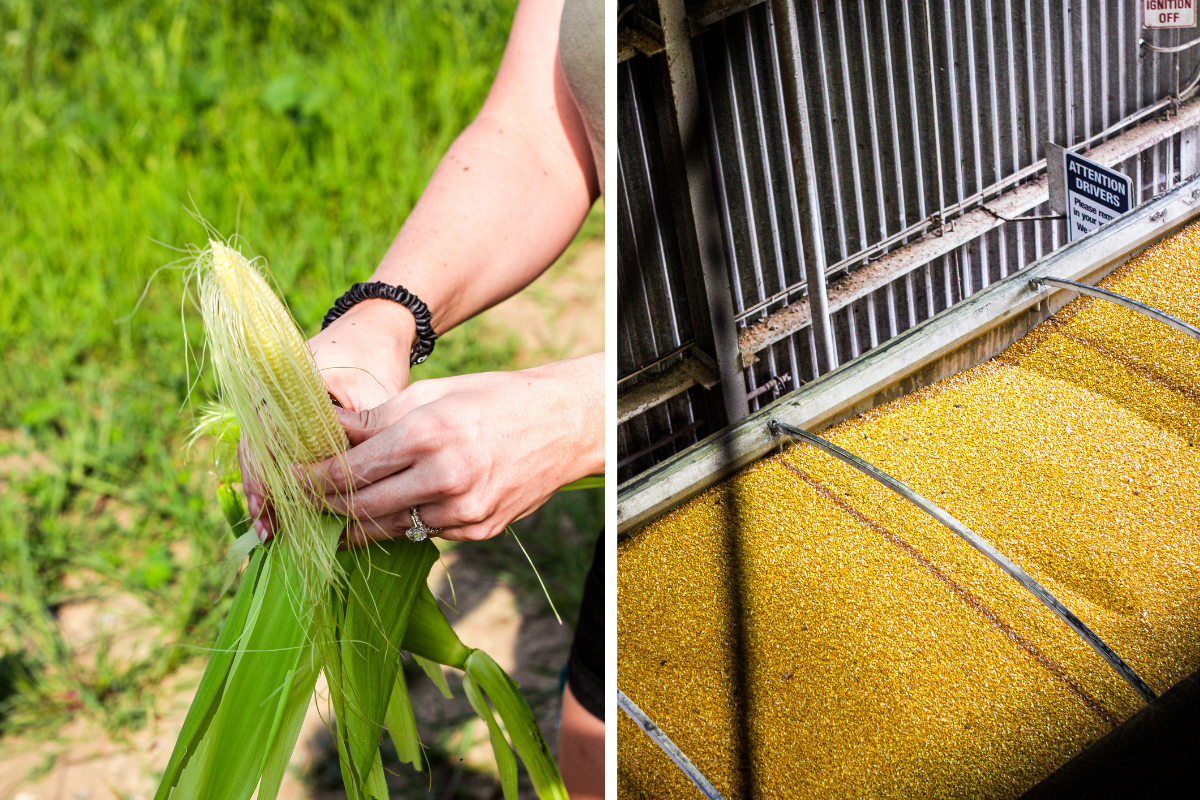
For sweet corn eaters, the raw material might sound counterintuitive. Grain corn isn't bred for summer sweetness. It's bred to hang in the field until autumn, when kernels dry down and sugars convert to starch. Dickerson has tasted it straight off the stalk at that stage. "It makes delicious whisky," she says, "it's definitely not as palatable off the cob as sweet corn."
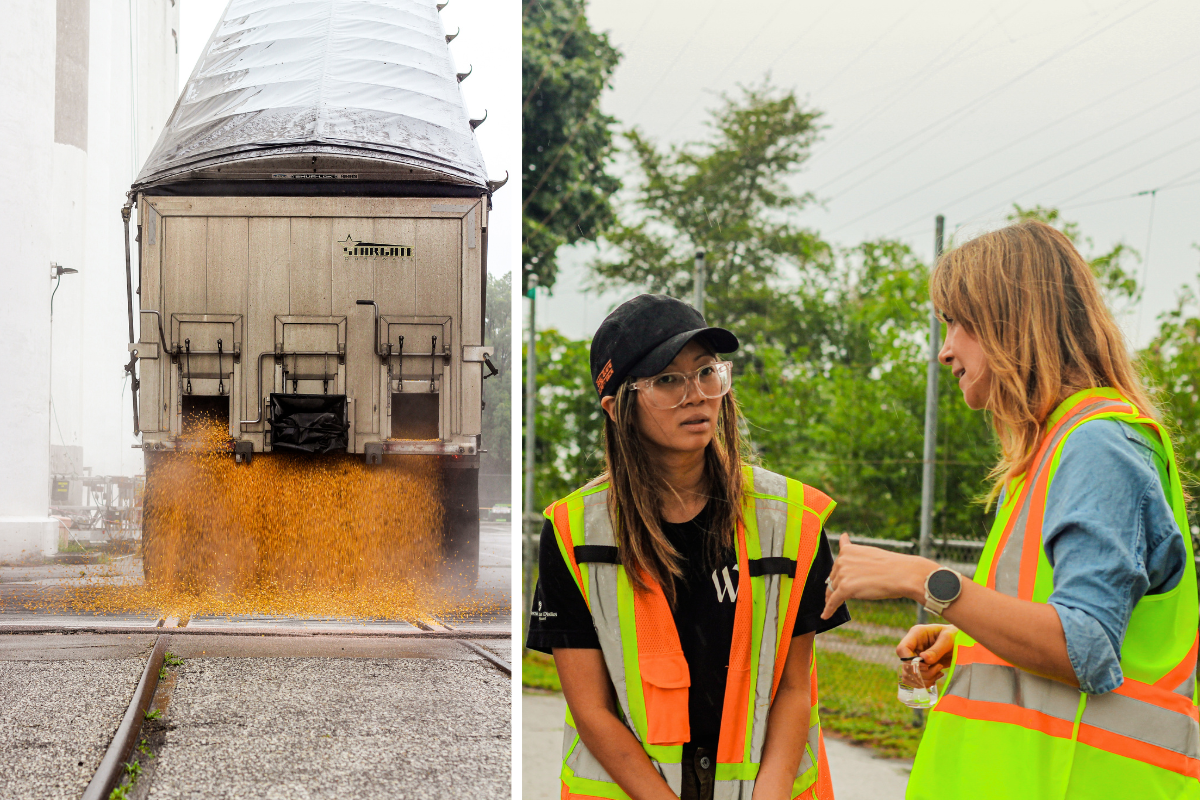
Left: Corn is released into an underground storage containers at Hiram Walker. Right: Alice McLeod, Grain Operations Supervisor at Hiram Walker & Sons Ltd and Dana Dickerson deep in discussion on corn.
From Provenance to Possibility
None of this hands corn a tidy, single-note terroir story the way limestone gets credited in Kentucky bourbon country or Islay peat gets credited in Scotch. What Ontario offers instead is a slower-burning case: an entire province of glacially seeded, lake-moderated, rain-fed soil, growing corn at a scale that makes flavour consistency — not flavour novelty — the actual selling point.
Whether that's terroir in the classic sense is still, by the account of the person closest to the crop, unsettled. But the raw ingredients for the conversation are all sitting in the ground: the ice age soils, the hundreds of soil series, the CHU maps, the rain-fed reliability. They're waiting for someone in whisky to take the question as seriously as wine already has.
And Dickerson thinks whisky is overdue to catch up with bourbon on this front. "I would love to see more awareness around Ontario corn as a leading Canadian grain and spirit ingredient, the way corn is celebrated in bourbon in the US," she says. Few Canadians know that corn is the country's third-largest crop by volume, or that Ontario alone consistently grows over 60 percent of it. That's a bigger story than most spirits marketing gives it credit for.
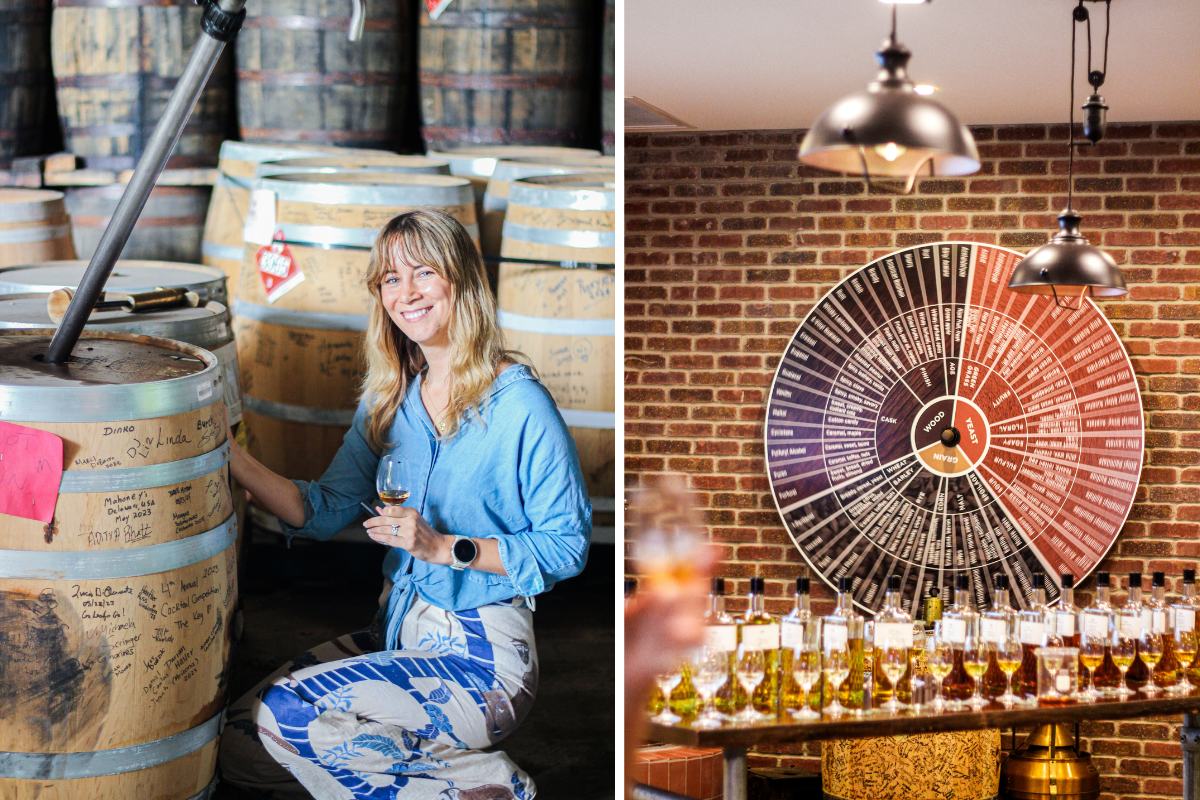
Left: Dana Dickerson poses beside a freshly poured sample of whisky at Hiram Walker. Right: Dr. Don Livermore’s Whisky Flavour Wheel
Dickerson is also seeing brands push past flavour and into farming practice itself. "We're also seeing continued interest from food and beverage companies who want to communicate on the sustainable farming practices their farmer suppliers use," she says, with a caveat. Farms vary wildly, across climate, soils, cropping systems, scale, technology, and market conditions, so brands need to actually understand their farmer suppliers before building a sustainability story around them. Grain Farmers of Ontario built a resource for exactly that gap: its Principles of Sustainability Programs guide, designed to help food and beverage companies build value chain initiatives that work for farmers and customers alike. It's available atgfo.ca.
Getting More From the Grain
For Dickerson, the future opportunity for Ontario corn goes beyond putting more grain into bottles. It also means finding more value in what remains after distillation.
Distillers grains have long been part of a circular relationship between distilleries and farms, returning to growers as livestock feed. Now, new technologies are finding additional uses for that material. In 2024, Grain Farmers of Ontario’s Grains Innovation Fund supported Terra Bioindustries in developing a platform that breaks down the tough outer layer of spent grain, separating its protein from its sugars.
The protein can then be dried into a plant-based food ingredient, while the sugars are concentrated into a fermentation feedstock. “I think we’ll be getting more out of the grain in the future,” Dickerson says. “We’re seeing some really neat initiatives around upcycling and extracting more value from distillers grains.”
It offers a broader way to think about corn’s role in beverage alcohol. Its value does not necessarily end once the starch has been converted into spirit. The same grain can contribute to whisky, livestock feed, food ingredients, and future fermentation, extending the relationship between farms and distilleries well beyond the mash tun.
Final NoteWe Asked Dana: Tell us one thing about corn that might sound boring but is actually fascinating?
“I’m fascinated by crop rotation. Something that surprises people about Ontario grain farming is how rarely a field grows the same crop year after year.
A typical rotation in Ontario will see the farmer grow corn one season, switch to soybeans the next year, then plant winter wheat right after harvesting their soybeans. The wheat overwinters and is harvested the following summer, after which they might plant a cover crop like red clover to protect and add further nutrients to the soil. The following year, they will return to corn. So if a farmer planted corn in a field in 2026, they might not return that field to corn until 2029.
That rotation helps manage pests naturally, control weeds, build soil health, and make better use of nutrients over time – leading to higher yields across all of the crops.”