
Building Bright Without Citrus & Expanding Migraine-Conscious Hospitality
Karen Tartt of Clear Spirit & Mind, asks what happens when bartending’s favorite shortcut to freshness is off the table. The answer is not less flavor, but a more expansive way of building it.
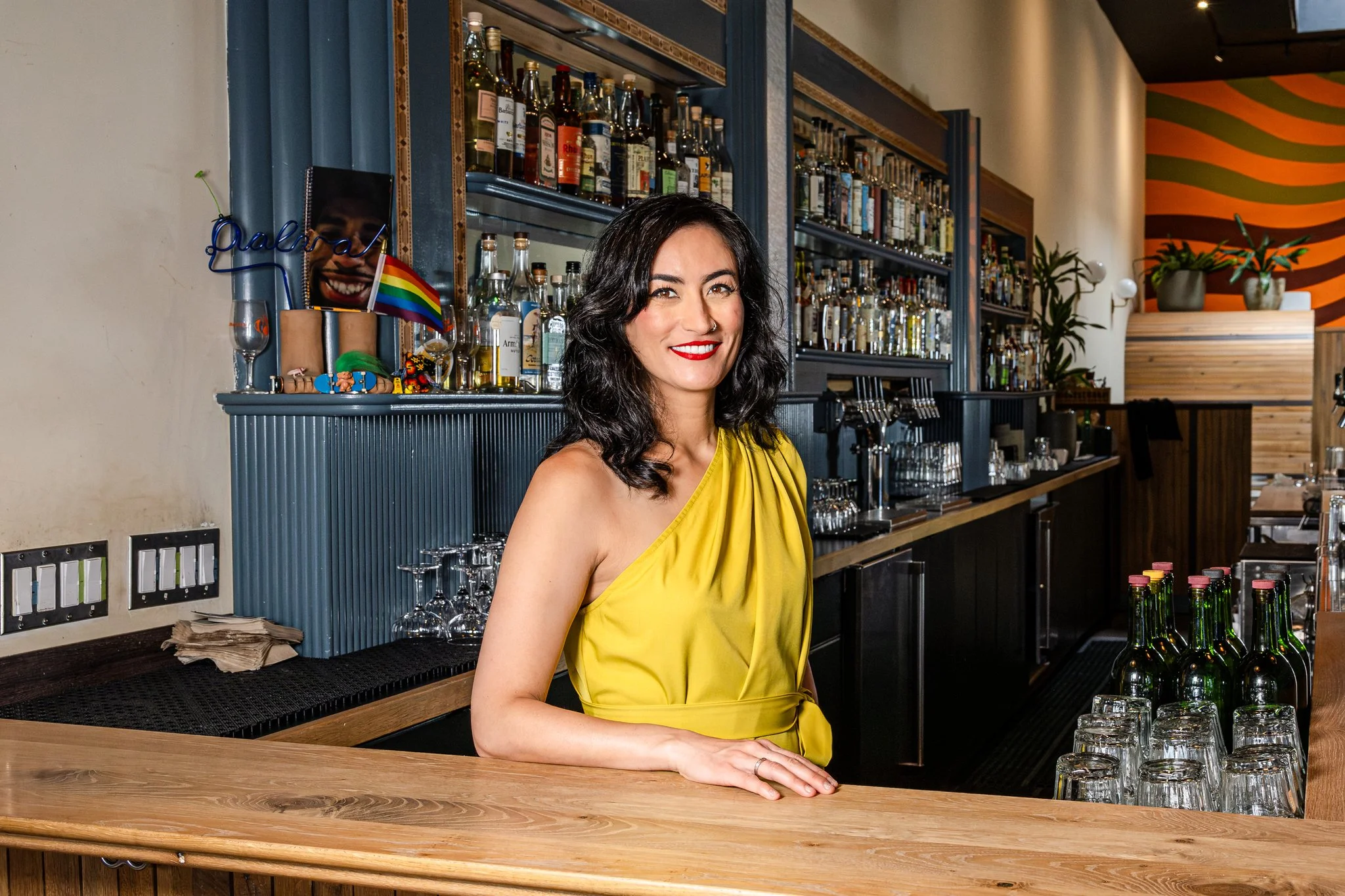
Ask most bartenders how to make a cocktail feel brighter and the answer will probably arrive in the form of a lemon or lime. Citrus is so foundational to modern cocktail construction that it can seem almost inseparable from freshness itself. It supplies acidity, aroma, color and lift, often all at once. Take it away and the usual architecture of a drink suddenly becomes much less certain.
For Karen Tartt, founder of Clear Spirit & Mind, that uncertainty became an invitation.
Tartt was diagnosed with chronic vestibular migraine (CVM) a little over seven years ago, after an 18-month search for answers. Because she lived with constant dizziness, she did not initially recognize it as dizziness at all. It registered as a general sense of being unwell, and several doctors attributed it to anxiety. A severe vertigo attack eventually led her to a physical therapist who helped connect the symptoms.
By then, Tartt had already spent more than a decade in hospitality. She was working long shifts behind a small bar, supported by a coworker who quietly stepped in when she needed a moment. Others, including members of her medical team, suggested she consider leaving the industry entirely.
“This is my home,” she remembers thinking. “I’ve been doing this for over a decade. I’m not going to leave.”
Instead, the diagnosis gave her work a new focus. Tartt began following an elimination protocol based on the Johns Hopkins migraine diet, gradually reintroducing ingredients to better understand her own triggers. The process reshaped what eating and drinking could look like for her. When people online began asking what they could drink, she realized few people were exploring the question from behind the bar.
Elimination to Exploration
Clear Spirit & Mind grew from the drinks she was already making for herself. In 2021, after a mentorship with Dana Cowin of Food & Wine helped her see how those ideas could become a full, programmable menu, she launched the project through a series of pop-ups. It has since expanded to include drinks informed by other dietary protocols and inflammatory triggers.
Her work is not built around the promise of a universally “migraine-safe” cocktail. Migraine triggers vary significantly from person to person, and Tartt’s approach begins with that individuality. She thinks of the drinks as migraine-conscious: options created with greater transparency, specific needs and informed choice in mind.
People often assume that migraine-conscious drink making must mean mocktails. Tartt can make non-alcoholic drinks, but she deliberately calls herself a “drink maker” because the work is broader than one category. Some people with migraines choose to drink alcohol. Her goal is not to make that decision for them, but to offer clearer information and more thoughtful options.
Rebuilding Brightness
Tartt’s creative breakthrough came when she stopped treating citrus as a single flavour and started breaking down the jobs it performs. Acidity could be built with citric and malic acids, which are permitted within her own protocol. But acid alone could not reproduce the fragrant oils, bitterness and botanical nuance that make fresh lemon or lime feel complete.
To understand what was missing, Tartt began studying gas chromatograms, charts that separate and identify the chemical components behind an aroma. She looked for those same aromatic compounds in other organic materials, then used ingredients such as hops and lemongrass to create hydrosols. Blended with acids, those aromatic waters give her substitutes dimension instead of simply delivering sourness.
Pineapple and grapefruit presented another problem: the drink also had to look right. “We drink with our eyes,” she says. Her pineapple alternative combines peach and Granny Smith apple to create both a familiar golden color and a balance of lush and tart flavours. For grapefruit, she uses multiple varieties of hops and unsweetened cranberry, which contributes a pink hue along with the fruit’s gently tannic quality.
This is where restriction becomes something closer to reconstruction. Tartt is not merely searching for a one-to-one replacement. She is asking which sensory cues make an ingredient recognizable, then rebuilding those cues from different sources.
That process can also shift attention back to the base spirit. In a Daiquiri-style drink, for example, a simple acid blend is not enough. The hydrosol adds aromatic complexity, but Tartt also becomes far more exacting about rum selection. An expressive unaged agricole rum can bring grassy, tropical and fermented notes that a more neutral, highly rectified white rum cannot. When one familiar component disappears, every other choice becomes more visible.
While the cocktails she serves may not contain citrus, she believes that reconstruction requires reference. Tartt still tastes citrus cocktails and aged spirits (in very small portions) to understand what she is trying to simulate. For example, a rye’s dill note might become dill in an infusion and mugicha (barley tea) may emulate the spirit’s foundational character, helping pieces of the flavour puzzle fall into place.
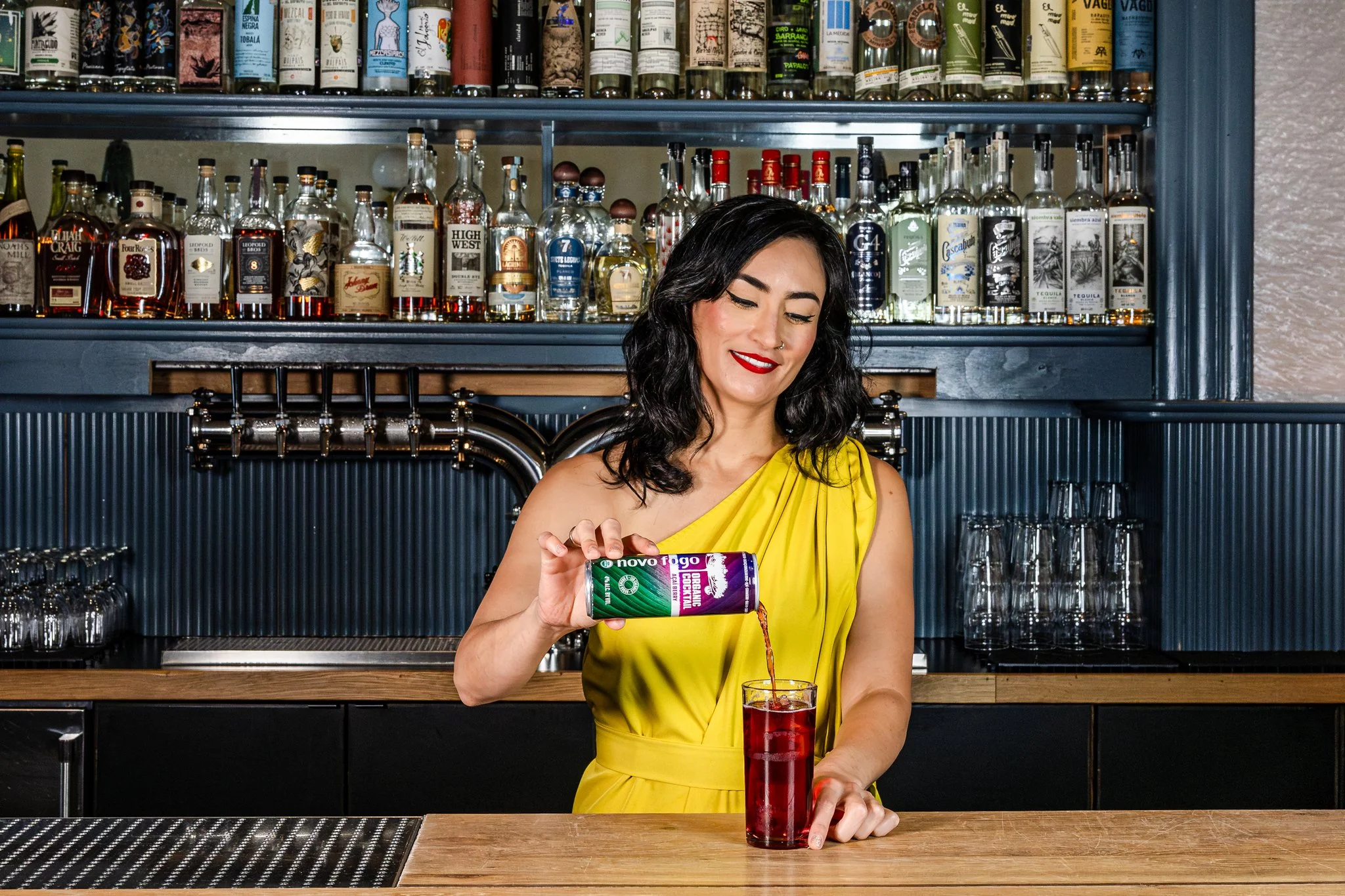
Karen Tartt recently collaborated with Novo Fogo to create its citrus-free Açaí Berry RTD, bringing her bright, flavor-forward approach to drink making beyond the bar and into a can.
Curiosity is Hospitality
When a guest raises a dietary concern, Tartt’s advice to bartenders is simple: “Get curious.” A person may already have been dismissed, questioned or made to feel like an inconvenience. Rather than reacting with judgment, she begins a conversation about what they enjoy and what they need.
One of her favorite phrases is, “Let’s get you something you can feel good about.” It shifts the interaction away from restriction and toward collaboration. It is also, she argues, simply good hospitality. Guests remember the places where their needs are met without resistance, and they return, which isn’t just good hospitality, it’s also good business.
That kind of care, however, is difficult to understand only from behind the bar. Just as Tartt believes cocktail reconstruction requires a sensory reference, she believes hospitality requires one too. She encourages bartenders to visit other bars as guests: “To give good service, you need to understand what receiving good service feels like.” Both flavour and hospitality are reference-based skills.
For Tartt, curiosity links her approach to hospitality with her approach to flavour. It shapes both the questions she asks guests and the way she develops drinks. What began as a way to stay connected to her industry has become a new language for drinks, one built through experimentation and care. Removing citrus did not narrow her understanding of flavour. It forced her to study it more closely. “This has been the coolest exploration into flavour,” she says. “Trying to synthesize it out of other materials, trying to appreciate it, trying to build it. It’s made me more curious and creative.” ■