Tinted by Nature: The Botanicals Brightening Your Glass
From blue gin to yellow chartreuse, this is your guide to the natural colours that make your spirits bright.
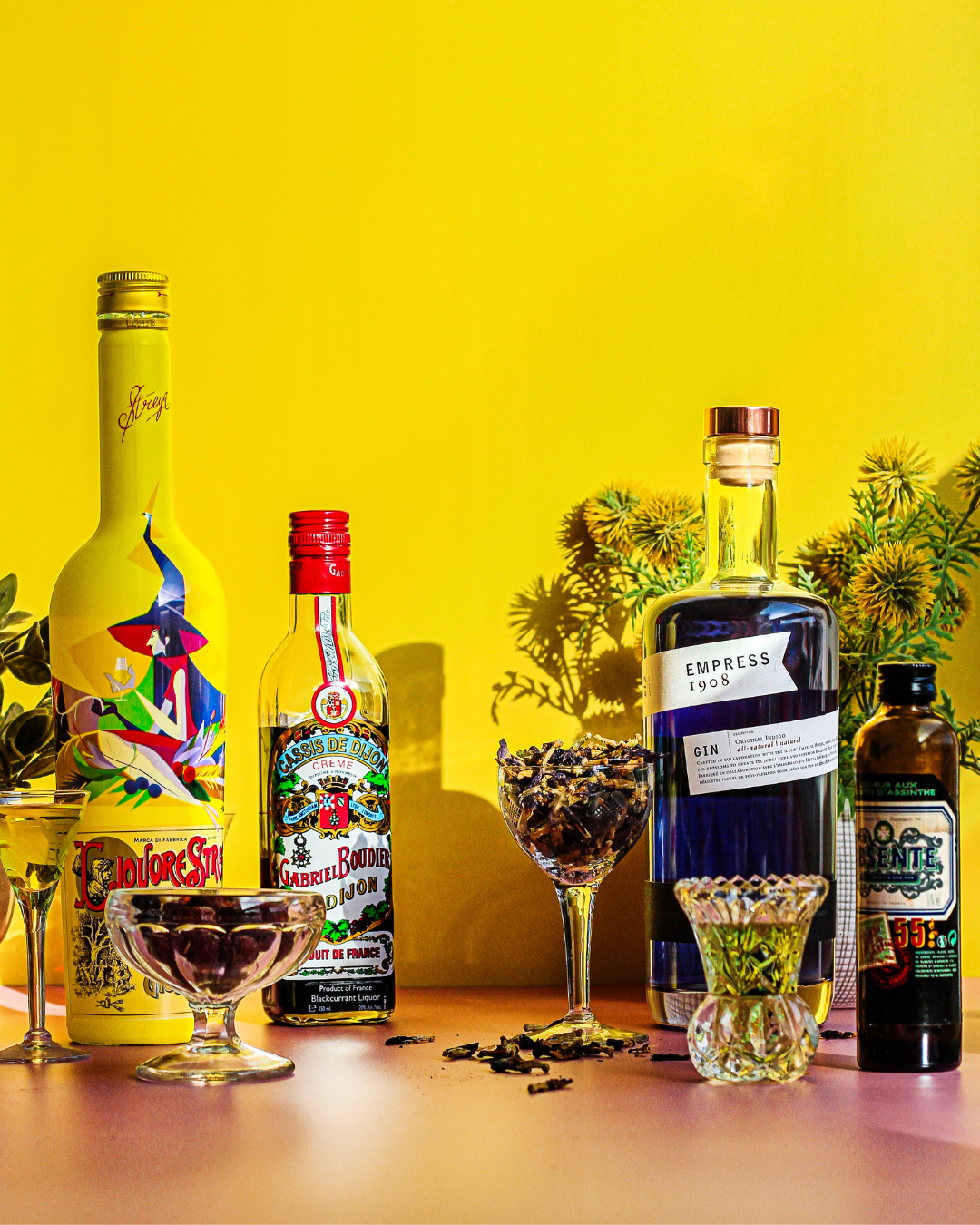
Liquor shelves are brimming with brightly coloured bevies, but not all food dyes are alike. While most major distilleries use artificial colouring for its intensity and stability, many smaller distilleries are opting for a natural approach, using flora and fauna to add colour and flavour to their spirits.
Furthermore, most botanicals have a long history with humanity, which goes beyond colour and taste. Many hold medicinal and spiritual meaning for present and past cultures. Although these plants are safe to consume, it is important to do your homework before using them at home. After all, plants are powerful!
Yellow Botanicals
Saffron
Crocus sativus
Saffron is considered the world's most expensive spice, not because it's hard to grow, but because its red-orange threads, or"stigmas," are super high-maintenance. They demand to be harvested only by hand, a few weeks after the flowers bloom, and only in mid-morning, when the flowers are fully open to the sun.
When distilled, saffron gives off a beautiful yellow hue and a unique, earthy, floral, and sweet flavour. Saffron has been used for millennia for various treatments and was considered a panacea—a remedy for all ailments—by Pliny the Elder in Roman times. Even today, it is being studied for everything from serving as a potent anti-inflammatory to improving memory in those with neurodegenerative disorders. For those who imbibe, saffron is a key ingredient in many up-and-coming gins as well as longstanding herbal liqueurs like Liquore Strega and Yellow Chartreuse.
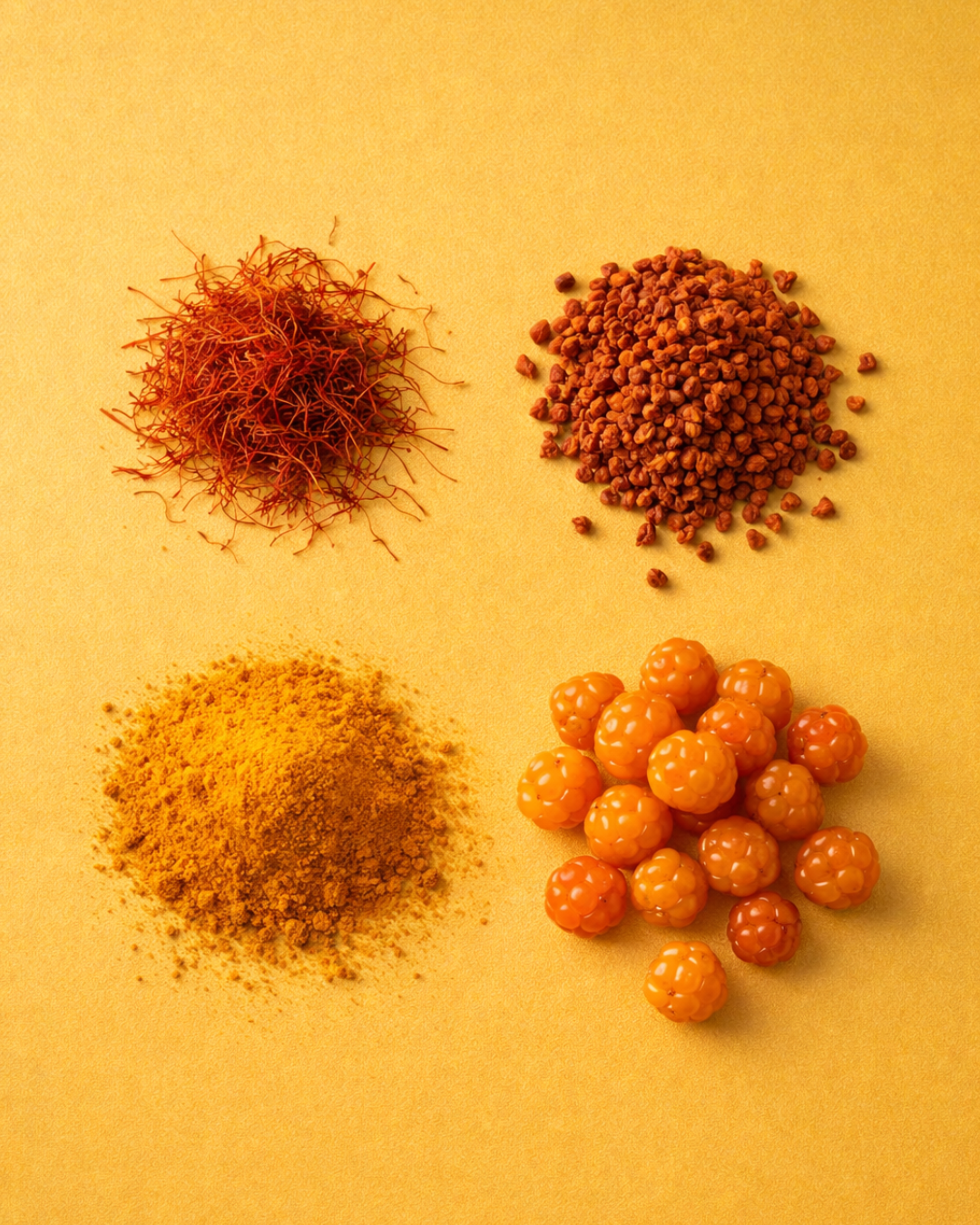
Clockwise from top left: saffron, annatto, cloudberry, turmeric
Annatto
Bixa orellana
Annatto is a widely used natural colour derived from the seeds of the achiote tree, ranging from yellow to deep orange. Native to Central and South America, it has long been used in Indigenous cultures as body paint, sunscreen, and dye, as well as in ritual practices. The ingredient now appears in spirits such as Melaza Annatto Liqueur, where it lends both colour and an earthy character.
Turmeric
Curcuma longa
Turmeric has been used as a food and dye in India for millennia. Its colour is so potent it stains everything it touches (including your fingers). Its earthy root flavour and well-documented anti-inflammatory properties have driven its popularity among the health-conscious consumers, and it’s showing up in more bottled drinks like Tayton Bay’s Turmeric Tea Infused Vodka Cocktail.
Cloudberry
Rubus chamaemorus
Native to Arctic and subarctic regions, cloudberries ripen from pale red to a glowing amber-orange and have long been harvested across Northern Canada and Scandinavia. The fruit’s vivid colour may also help explain the bright yellow hue of Ungava Gin, which is made with Arctic botanicals including cloudberries, rosehips, and crowberries.
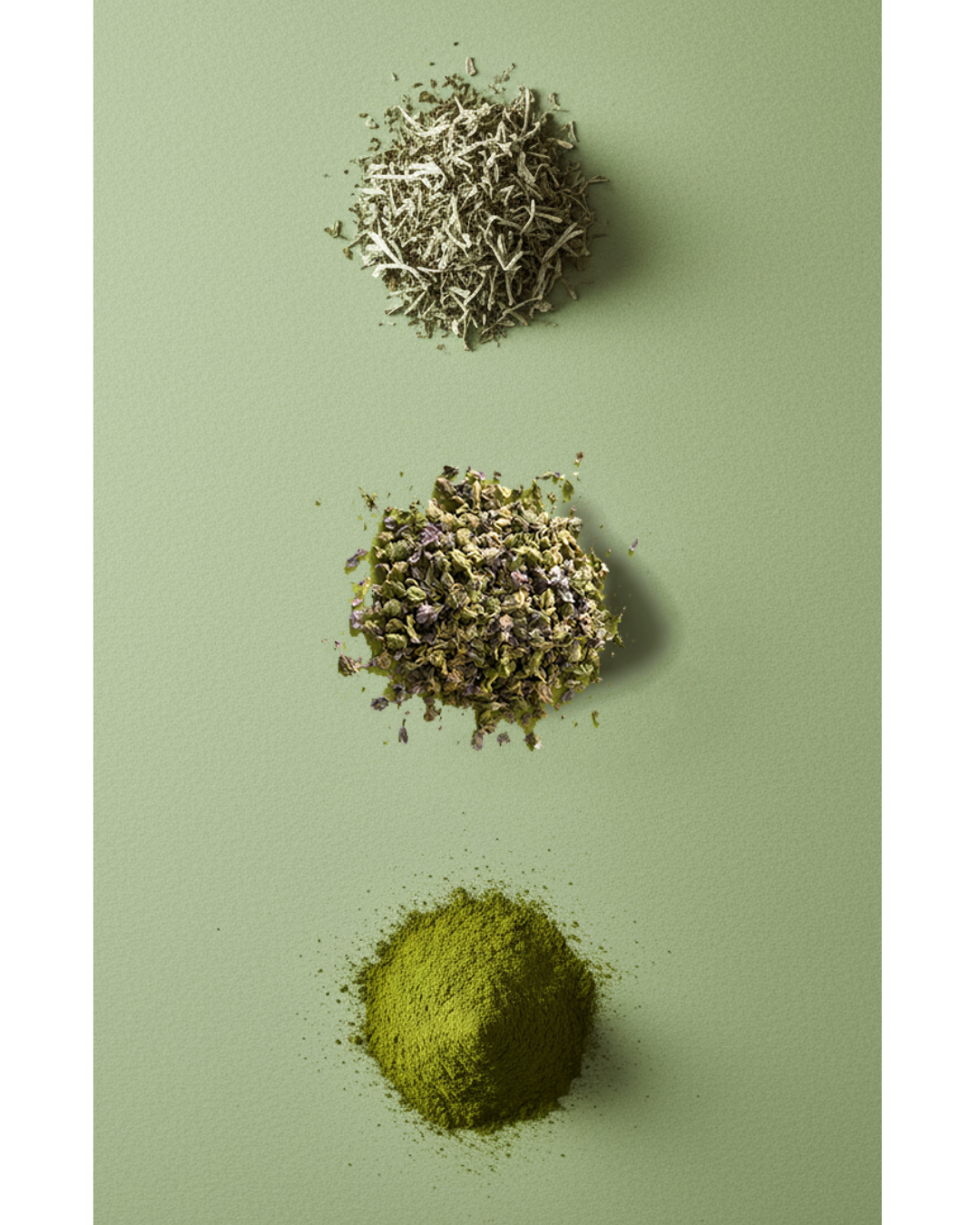
Top to bottom: wormwood, hyssop, matcha
Green Botanicals
Wormwood
Artemisia absinthium
Wormwood is one of the herbs that gives absinthe its infamous green hue and bitter taste. In ancient Egypt, wormwood was used in spiritual practices due to its hallucinogenic properties. A compound in wormwood called thujone causes hallucinations when consumed in large quantities. Absinthe became known as “The Green Fairy,” and was banned in most of Europe and the US in the early 1900s, as its consumption was linked to crimes, including some horrific murders.
However, modern studies have found that there was not enough thujone in 18th and 19th-century absinthe to cause hallucinations that would provoke uxoricide. The crimes were likely driven by overconsumption. The ban was lifted in most countries by 2011, and wormwood-based absinthe is back in production worldwide.
Hyssop
Hyssopus officinalis
Part of the mint family and traditionally used to treat coughs and colds, hyssop has long been considered a “holy herb” and appears in biblical purification rites meant to cleanse homes and people. In the spirits world, it plays an important role in traditional green absinthe, where it is often added during a secondary maceration to contribute both complex herbal flavour and the spirit’s natural emerald-green colour.
Matcha
Camellia sinensis
Matcha, a shade-grown, stone-ground green tea powder traditionally used in Japanese tea ceremonies, is rich in chlorophyll, which gives it its signature green colour. Today, matcha is showing up in modern liqueurs such as Tia Maria Matcha Tea Liqueur.
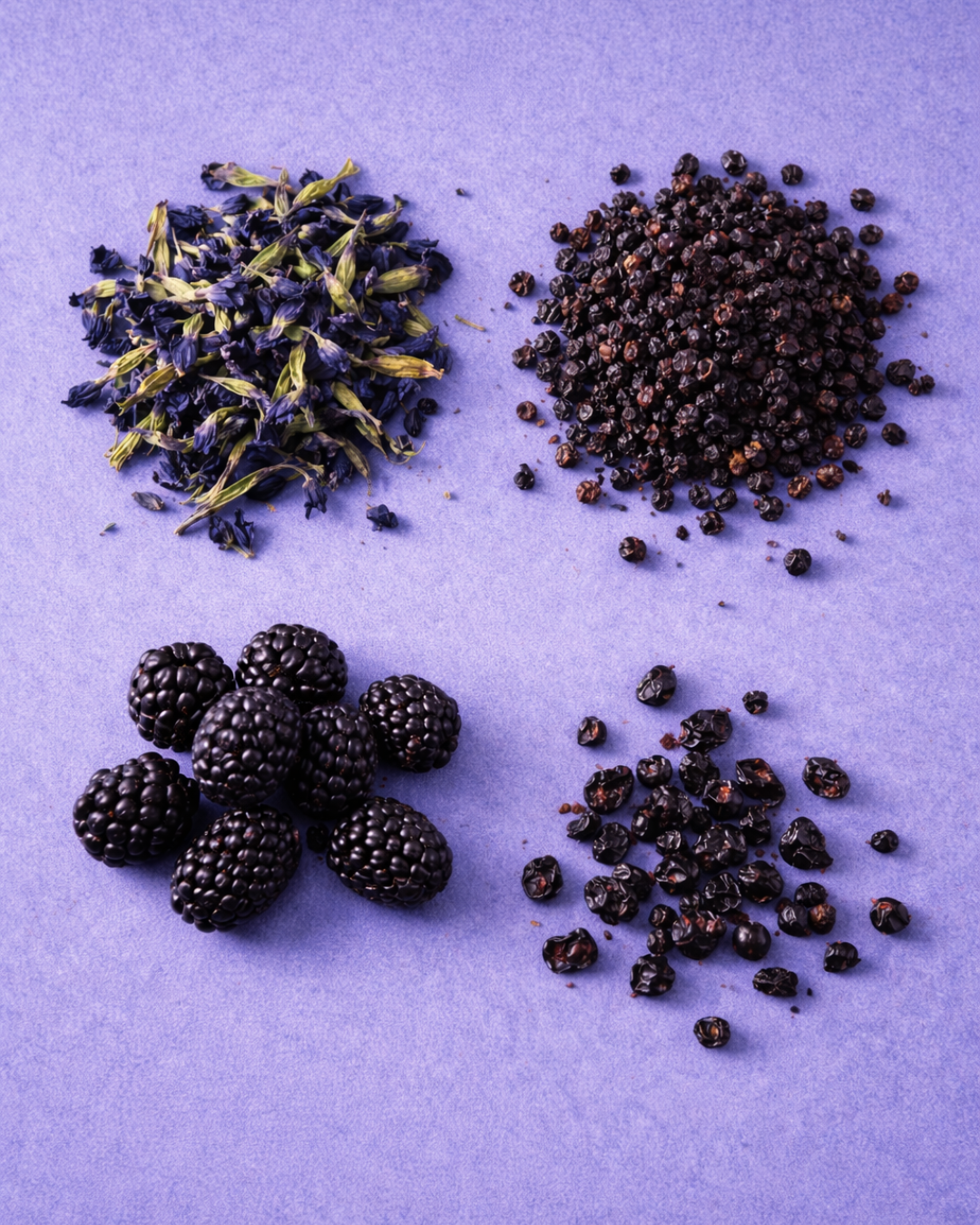
Clockwise from top left: butterfly pea flower, elderberry, blackberry, black currant
Blue & Violet Botanicals
Butterfly Pea Flower
Clitoria Ternatea
Butterfly Pea Flower’s blue hue has charmed gin drinkers since it started showing up in “blue gins” around 2017. Beyond the bar, Butterfly Pea Flower has been used in Southeast Asia as an adaptogen to help reduce stress and enhance memory. It’s also believed to brighten skin and reduce redness due to its high antioxidant content. What’s striking about Butterfly Pea Flower is its ability to change colours. That’s due to a compound called anthocyanin, which is a natural pH detector. Citrus changes the pH, which changes the colour from a beautiful indigo blue to a vibrant pink.
Elderberry
Sambucus
Elderberry juice casts a deep, dark purple hue that can look almost black in low light. Native to both Europe and North America, elderberries have a long medicinal history dating back to Roman times and were, and continue to be, used by Indigenous healers to treat fevers, swelling, and induce sweating. The berries taste similar to blackberry and black currant, but with a deeper, more earthy flavour. Because raw elderberries are toxic and must be cooked or processed before consumption, they are most often found in syrups, wines, and spirits such as Arbutus Distillery’s Elderberry Gin.
Blackberry
Rubus fruticosus
Blackberries lend spirits a deep purple hue and a flavour that balances jammy sweetness with a gentle tartness. Long foraged across Europe and North America, the berries have been used in everything from wines and cordials to traditional hedgerow preserves. Today they’re showing up in more gins, including Stillhead Distillery’s Wild Blackberry Gin, which took home gold for “Best Canadian Flavoured.”
Black Currant
Ribes nigrum
Black currants are prized for their inky purple colour and bold, tangy flavour that sits somewhere between blackberry, plum, and red wine. The berries are the foundation of crème de cassis, the classic French black currant liqueur used in cocktails like the Kir Royale. In Canada, Dillon’s Black Currant Liqueur showcases the fruit’s rich colour and bright, juicy character.
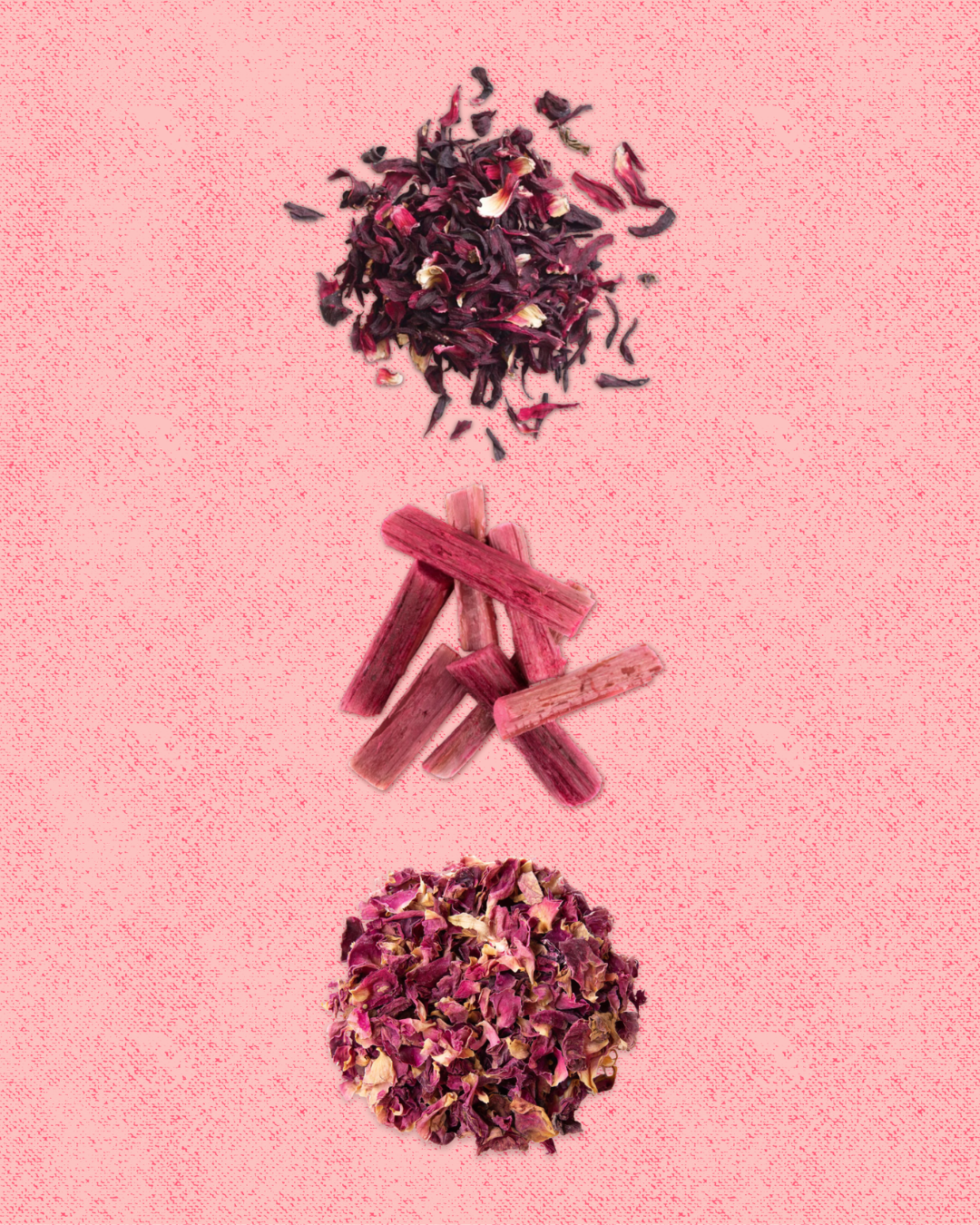
Top to bottom: Hibiscus, Rhubarb, Rose Petals
Pink Botanicals
Hibiscus
Hibiscus rosa-sinensis
Although the hibiscus flower is commonly associated with Hawaiian culture, it originated in Africa, India, and the South Pacific. Its history is deeply intertwined with the Caribbean slave trade and colonialism, as it was brought to the Caribbean by enslaved Africans and planted in subsistence “kitchen gardens.” Hibiscus is consumed in beverages across the African continent, particularly in drinks like sobolo (just one of many names). It has long been used in spiritual practices, especially those connected with the feminine, and medicinally, to support the liver and kidneys while helping manage blood pressure and blood sugar. Distillers love hibiscus for the vivid pink colour and tart, cranberry-like flavour it lends to drinks, which is why it appears in spirits like Collective Arts’ Rhubarb and Hibiscus Gin, Tofino Distillery’s Rose Hibiscus Gin, and even non-alcoholic options like Crossip Pure Hibiscus.
Rhubarb
Rheum rhabarbarum
Rhubarb is in the same family as buckwheat and sorrel and is traditionally used to improve bone and heart health and to treat digestive issues. It can also be found in many spirits, including Sheringham Distillery’s Rhubarb Liqueur.
Rose
Rosa
Rose is another pretty-in-pink flower that’s popped up in mostly gins of late. Besides looking stunning, rose is common in skincare and is said to have anti-aging properties. We’ll drink to that! A few rose-based spirits include Dillon’s Rose Gin and Empress’s Elderflower Rose Gin.
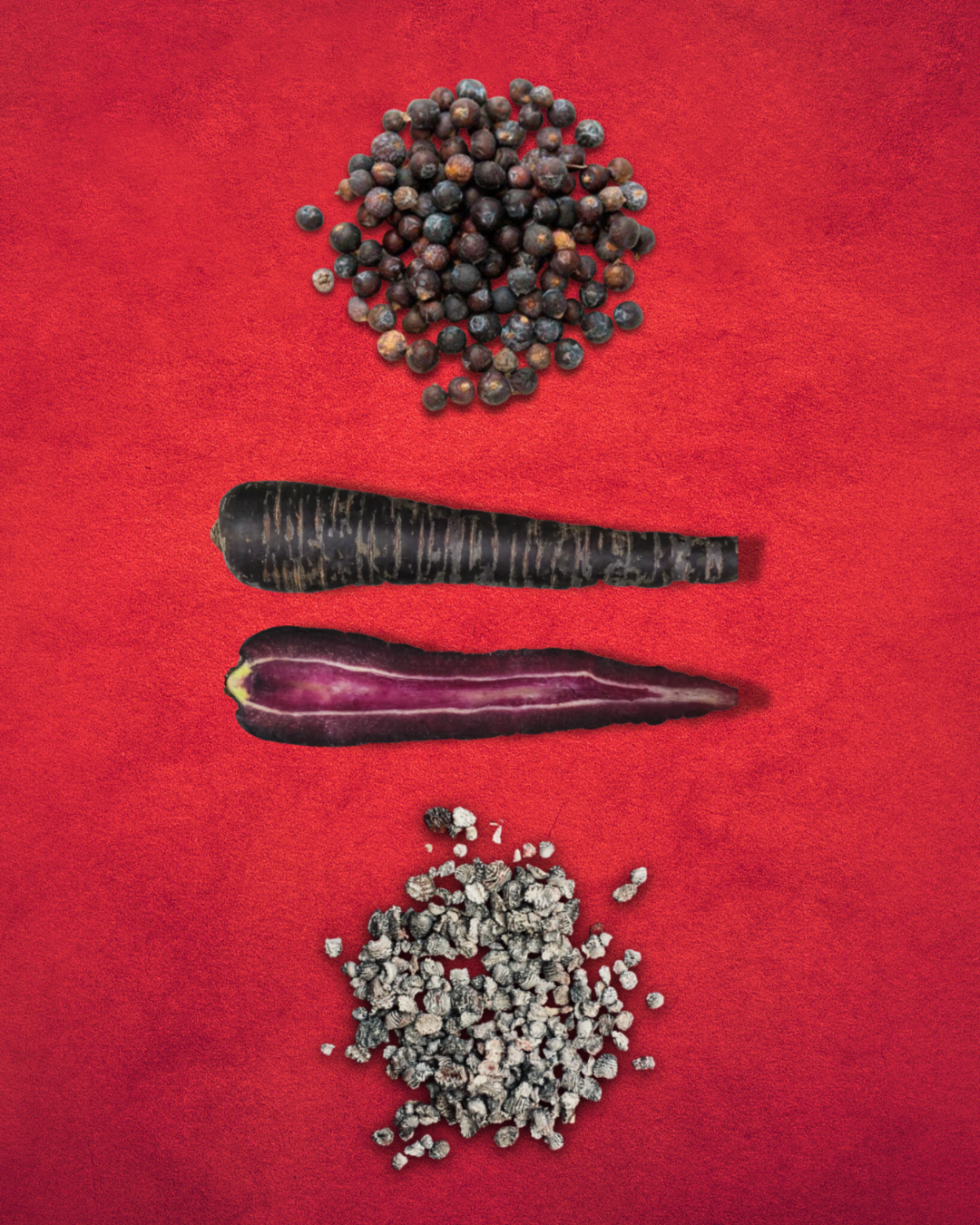
Top to bottom: Sloe berries, Black carrot, Cochineal
Red Botanicals
Sloe Berries
Prunus spinosa
In the 18th century, farmers planted dense blackthorn bushes as hedgerows to keep cattle in and nosy neighbours out. The thorny shrubs also happened to produce an abundance of tart, plum-like sloe berries, and with little desire to waste them, people began steeping the fruit in gin. The ruby-red drink soon made its way to London during the height of the city’s infamous “gin craze,” when one in four households was said to be distilling their own spirits. The berries conveniently masked the flavour of rough, poor-quality gin, helping Londoners continue to guzzle it down. The scene must have been particularly bleak, given that sloe berries can act as a laxative in larger quantities, which Londoners likely discovered the hard way. Thankfully, modern versions such as Hayman’s Sloe Gin and Elephant Sloe Gin showcase the berry’s rich colour and tangy fruit character with far more refinement.
Black Carrot
Daucus carota
Black carrot is popping up as a natural food colouring due to its neutral taste, pink-to-purple hue, and vegan status. It’s one of the key ingredients that gives Empress Elderflower Rose Gin that bright red colour. But it’s not just nice on the eyes; black carrots are high in vitamin K, which is good for your eyes.
Cochineal
Dactylopius coccus
You could write a thousand-page book on this little red beetle. It played a major role in ancient Mexican and Peruvian cultures, where the beetle was originally cultivated to produce a bright red dye. The Spanish coveted it as a symbol of power and, until 2006, it gave Campari its red hue. Cochineal is the basis of food colouring carmine, so whether you like the thought of eating bugs or not, you’ve probably already consumed a few.