Curaçao: Should Blue be Taboo?
The color blue is a controversial topic in the world of spirits and cocktails. This is largely because very few natural coloring agents can create a stable, vibrant hue that resembles our favorite shades of blue—such as the clear summer sky, a stunning sapphire, or even a brand new pair of Levi's jeans.
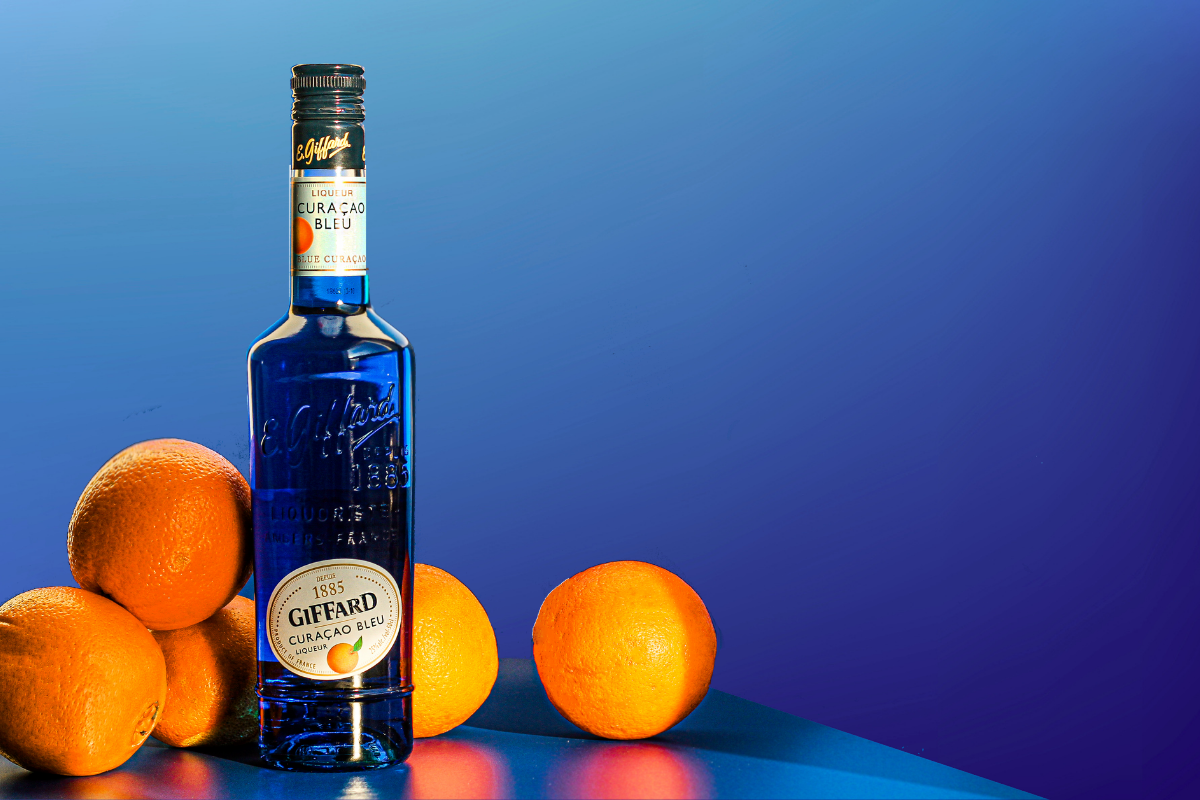
Over the millennia, the colour blue has earned a high-end reputation and a hefty price tag.
From ancient Egypt, to Han China, to Prussia, dazzling ceruleans and ultramarines were used as paint pigments and clothing dyes. These colours were primarily derived from plant and mineral compounds such as indigo, copper, cyanide, and lapis lazuli, many of which are toxic if consumed. As a result, very few blue foods or drinks graced tables until the turn of the 20th century, when food-safe dyes were developed and first regulated.
These days, you’ll come across the occasional bottle of blue spirits naturally coloured with the extract of the butterfly pea flower, native to Southeast Asia. These products, like the popular Empress Gin, perform a nifty parlour trick by shifting from deep indigo to a vibrant blush pink the moment acids like lemon and lime juice hit the glass. Unfortunately, spirits coloured with butterfly pea flower are notoriously prone to fading, especially when the bottles sit on the shelf at the liquor store for too long, exposed to UV light.
But in the cocktail world, there is one true blue bottle that everyone reaches for when a cocktail calls out for a splash of sky or a notion of ocean. That product is, of course, Blue Curaçao, and despite its ubiquity, it remains one of the most misunderstood ingredients on the back bar.
Curaçao Crash Course
Curaçao liqueur is a Dutch invention, originating on its eponymous island territory, by way of Spain. In 1527, the Spanish transplanted Seville orange trees on the island of Curaçao, but the arid climate and nutrient-poor soil caused the trees to produce green, inedible fruit. In 1634, the Dutch West India Company (WIC) captured the island from the Spaniards, and it was likely Dutch settlers who discovered that they could extract a fragrant essential oil from the dried peels. Lucas Bols used the essential oils of these Curaçaoan Laraha oranges to develop an orange-flavoured liqueur in Amsterdam sometime in the late 17th or early 18th century. Although there is uncertainty about whether the Lucas Bols Company was the first to manufacture the product, there is no question that it has done more than any other producer to spread its influence.
Originally, Curaçao was a clear or lightly orange-coloured liqueur that had little to no impact on the colour of the drinks in which it was used. Some producers added spices or botanicals to their recipes to infuse the mellow citrus profile with added flavour and complexity. This stands in stark contrast to its successor, triple sec, which is clear and normally doesn't contain flavours.
except orange. Until the late 1800s, when breakout brands like Cointreau and Grand Marnier pushed it out of the limelight, Curaçao remained the orange liqueur de rigeur in traditional punches and cocktails of all sorts, starring in numerous recipes in Jerry Thomas’ 1876 classic, The Bar-Tender’s Guide. In this sense, it is the original orange of the cocktail canon. It is directly or indirectly responsible for certified bangers like the Brandy Crusta, Sidecar, Margarita, Mai Tai, and many other iconic mixed drinks.
Excuse Me While I Taste the Sky
Curaçao’s colourful identity change was prompted by several factors, beginning with a revolution in food safety and ingredient transparency. In 1906, a flurry of regulations in the United States' food, drug, and cosmetic sectors prompted similar reforms worldwide. Although the regulations imposed many new constraints, they also provided clarity about which substances were safe to consume, allowing many manufacturers to use food-grade dyes in their products for the first time. These included approved substances that are still in use today, such as Indigotine and Brilliant Blue FCF (Blue 1).
One year later, in 1907, a musical play called Miss Hook of Holland made its debut in London. The plot involved the accidental theft and eventual return of a popular liqueur recipe, developed by the daughter of a wealthy Dutch distiller. The fictional product that the play hinged upon was whimsically named “Crème de Ciel,” meaning “Cream of the Sky,” and just a few years later, in 1912, Bols adopted that very name for its inaugural Blue Curaçao expression.
It’s not entirely clear when “Crème de Ciel” was dropped in favour of a more plainly descriptive name, but the change certainly took place sometime before 1957, when a Bols rep strode into the Hilton Hawaiian Village in Waikiki and asked bartender Harry Yee to come up with a signature drink for the product. The result is the Blue Hawaii, a rum (and optionally, vodka) sour with a splash of pineapple juice and a healthy dose of blue Curaçao. This iconic tropical cocktail was served on the rocks to flocks of tourists before Hawaii even became an official U.S. state. Allegedly, it sold so well that a spinoff was derived by Don The Beachcomber in Los Angeles—a lookalike piña colada riff called the “Blue Hawaiian.”
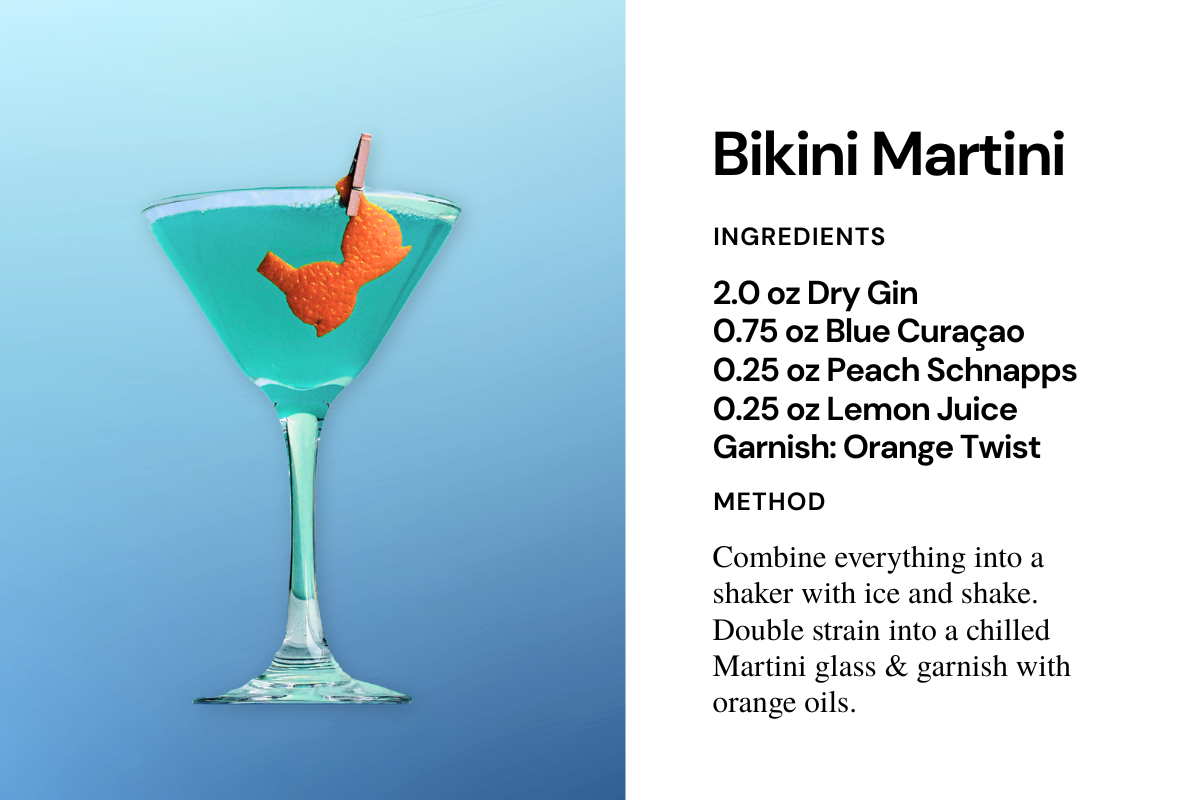
These poolside sippers cemented blue Curaçao’s legacy as a tropical drink mainstay, and it rode that wave of momentum straight into the era of disco cocktails, where flash and expedience became more important than subtlety and balance. As it turns out, you can mix orange liqueur and sour mix with pretty much any clear spirit, then serve the drink up, on the rocks, blended, or in a highball, and folks will be happy with the outcome. This template is responsible for a host of creations worldwide, like the “Blue Lagoon” (1980), “China Blue” (1990s), and Dick Bradsell’s “Bikini Martini” (1999).
The New Blue Retinue
In the early 2000s, the suspendered stalwarts of the cocktail renaissance spurned blue Curaçao as an ingredient, associating it with questionable party shots and the speed rail at TGI Fridays. But after a decade or so of heavy breathing about “the classics,” the search beam
of a new generation of bartenders suddenly swung back toward colourful, lighthearted libations. Most notable among the new guard of blue cocktails is New York bartender Nicholas Bennett’s “Gun Metal Blue,” a peach-perfumed Margarita riff inspired by the colourful “hand grenade” tourist cocktails of New Orleans. By using smoky mezcal in place of tequila, Bennett flipped the script on the flavours most people associate with blue drinks.
Even in 2026, global interest in blue Curaçao remains high. In honour of its 450th anniversary last year, The Lucas Bols Company launched Blue 1575, a premium expression infused with vanilla, cardamom, and grains of paradise. It was developed with input from tasting room visitors and bartenders, making it a well-rounded and incredibly cocktail-friendly addition to the category. The Curaçao-based distiller Senior & Co. also offers a premium blue Curaçao (plus a whole rainbow of other colours). Tasted side by side, the Blue 1575 is a touch sweeter but delightfully complex, with vanilla and spice notes harmonizing on the palate, whereas the Senior & Co. presents a bright, incredibly vivid orange profile due to its local access to the best Laraha Oranges.
So the next time you see someone sipping a neon-blue cocktail at a bar or nightclub, remember that it’s not necessarily a fruity sugar bomb of a drink. Hiding behind that food colouring could be a grassy Rhum Agricole or a vibrant Pisco. And if you still find yourself struggling to take that bottle of blue Curaçao seriously, consider locating a mirror and…
Inhale confidence.
Exhale judgement.
Repeat affirmation.
“Drinking should be fun. Blue drinks look cool.
I deserve a blue drink.”