The Taste of Sound, The Colour of Smell, and the Shape of Flavour
There are more than 80 types of synesthesia, or ways the human brain can cross its sensory wires. Experts who “taste” spirits through sound, vision and other sensory cues are speaking out—and changing the industry.
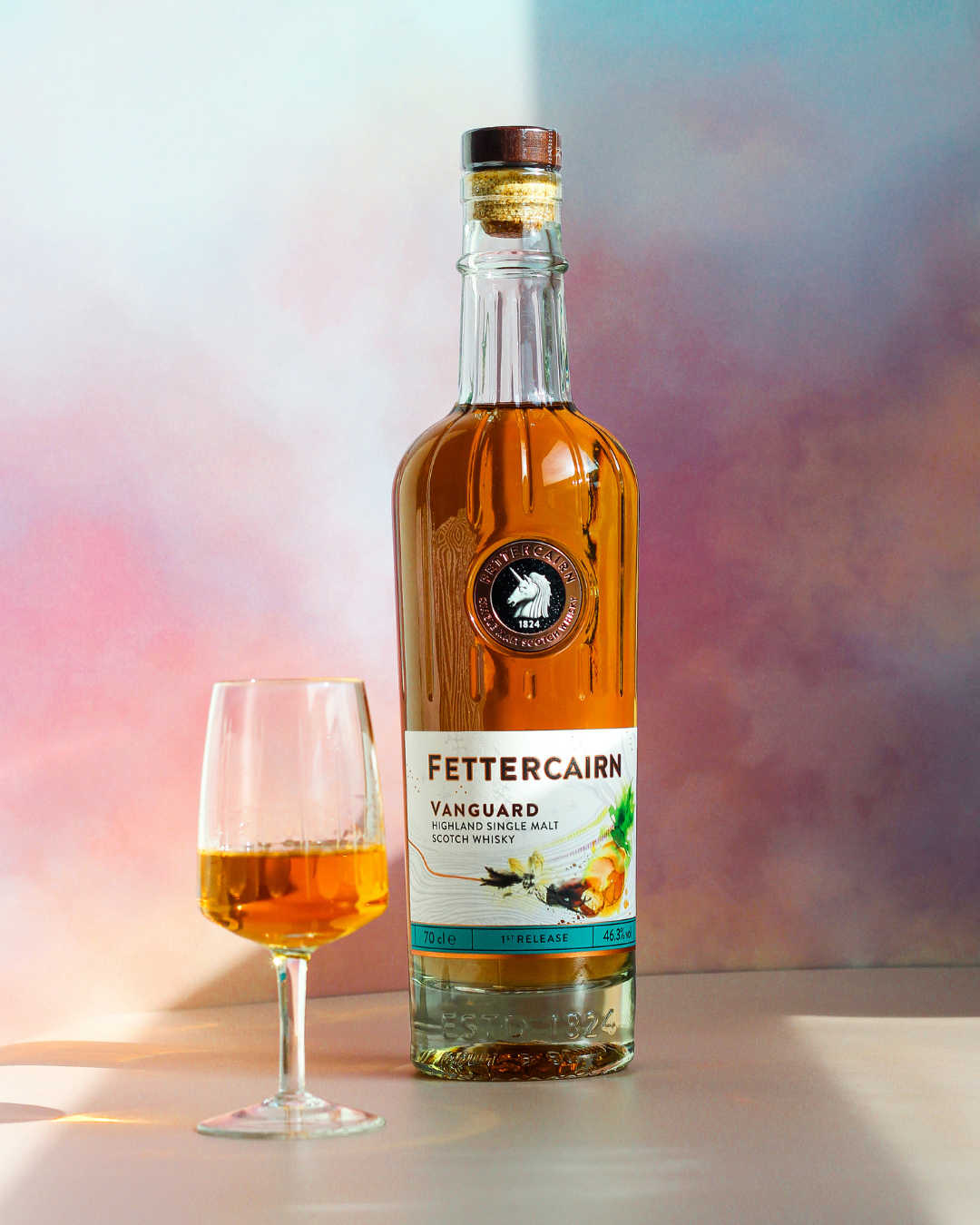
In this private room within a luxury hotel, there’s a satin eye mask laid out for each guest. We slip them on, and rousing music swells, as we’re invited to sip from two glasses. I get a pink flush behind my closed eyelids, and from one a whiff of rose petal, and from the other a tropical breeze and an orange glow. I often conjure colour when I nose and taste, but this is not just a blind tasting. It’s taking up temporary residence in someone else’s brain.
That brain belongs to Fettercairn’s master whisky maker Gregg Glass, whose synesthesia was celebrated at the brand’s Vanguard Series launch. He perceives flavour and texture through other sensory pathways: his “tasting notes” are drawings, and he’s influenced by music he listens to while tasting. From glorious, illustrated labels for Vanguard Rare bottlings to the commissioned score for Lorica, it’s a demonstration of a fresh way of embracing tasting.
Glass isn’t the only one with similarly unusual talents. Synesthesia is a form of neurodivergence, and similarly to other ways individuals’ brains can differ from the neurotypical norm (such as ADHD and the autism spectrum), it can be perceived as a blessing or a curse.
“It’s beautiful, but it’s challenging at times, too,” says Mel Hack, an Australian bartender and whisky maker currently based in Canada, who tastes in “colour maps,” with some spirits also prompting sounds, foot-tapping and other sensory cues. Hack, who was diagnosed with ADHD and autism in 2024, speculates that people with “spicy” brains uniquely contribute to the drinks industry.
“We are the outliers; we are people who don't make sense in the middle, so we have to figure it out on the ends of the spectrum. We’re forced to look at things in a very unique and different way.”
With flavour exploration (not brain science) in mind, we spoke to spirits professionals about how their synesthesia, and sharing multi-sensory spirits experiences with others, can make tasting less elitist, and the spirits industry more approachable, for all cohorts of drinkers.
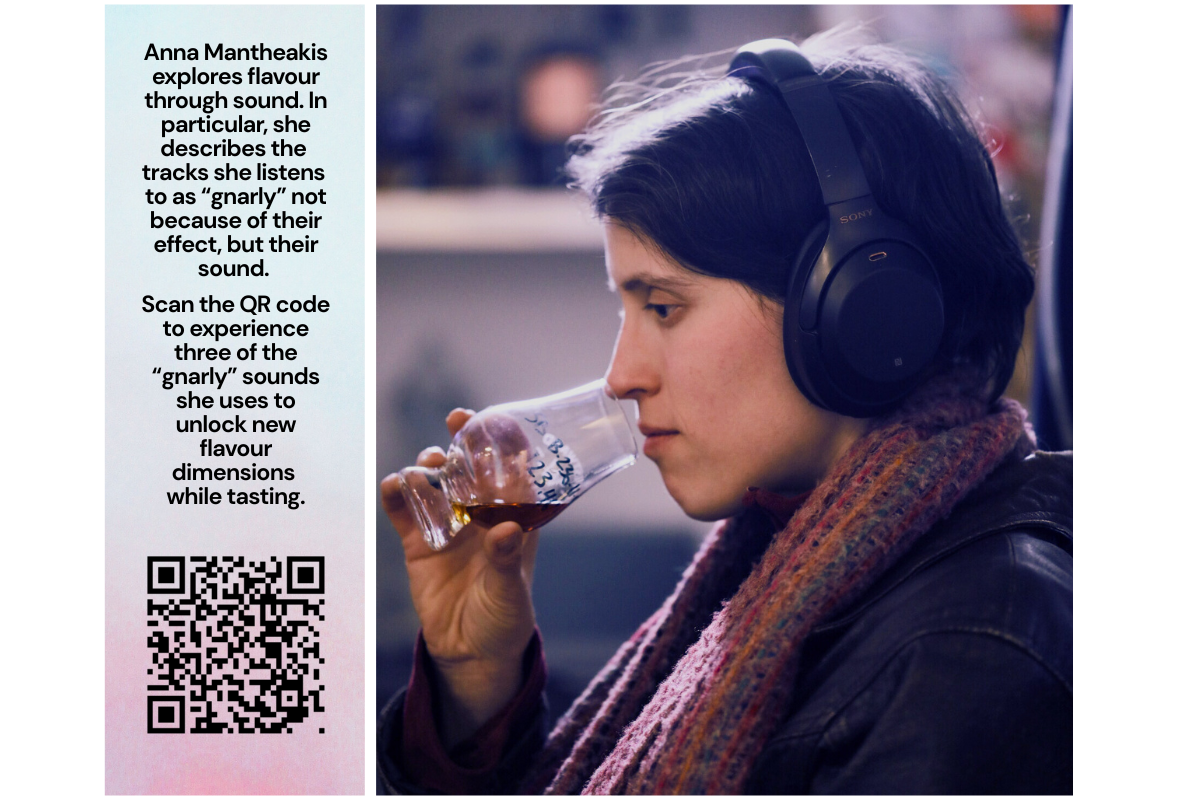
Anna Mantheakis: Pinball Wizard
Distillery colleagues gave her an affectionate nickname, Anna Mantheakis said in a podcast: Pinball Wizard, from The Who song of the same name. The sharp, articulate and visionary distiller and artist (chromaticaromatic.com) is by no means a “deaf, dumb and blind kid,” but while creating, tasting or blending spirits, she wears big over-ear headphones to silence the world, replacing ambient noise with idiosyncratic sounds. In her particular form of synesthesia, sounds radically influence how she experiences flavour and texture.
For example, the sound of a refrigerator motor allows her to experience Sherry-finished Scotch as toasty nuts just out of the oven. “They are not pleasant sounds. I don't get to choose,” Mantheakis says wryly. As the former lead distiller at Westward, she developed whiskies using her unique methods.
She recently used the sound of flavour to help develop Four Corners Gin, individually distilling and evaluating native North American botanicals that are non-traditional in spirits. Tasting many of them for the first time, “I would change my sound,” she says. “It might distort the flavour; it might enhance the flavour. Then I can start writing down notes and describing it.”
Later, in tasting and blending sessions with co-creators Christian Krogstad (Aviation Gin) and plant expert Dr. Elizabeth McElligott, “if they pointed out an herbal note, or said something tastes like seaweed … I’d flip through different sounds to tune into what they’re picking up.”
Over the years, Mantheakis has built up a lexicon of her own sound distortions. She describes using her synesthesia “almost like applying a filter” to tasting, the way traditionalists might add a few drops of water to heighten or transform aroma or flavour. Her unique talent can lead to innovative product development (Four Corners Gin was named Best New Spirit at the American Distilling Institute 2024 International Spirits Competition) and to communication and collaboration.
“One of the biggest advantages of neurodiversity is that you expand the conversation to include many perspectives,” she says. The result is innovation instead of sameness; an expanded appreciation of flavour instead of narrow definitions of quality.
Originally, as a wine student and winemaker, she wore headphones to block outside noise, which distorted what she was “supposed” to taste. Silence wasn’t the solution. “Only when I loosened up and started playing with sounds, just playfully wandering around different soundscapes, did I find what really helps me,” she says.
For anyone who’s trying to “hack their own senses,” Mantheakis suggests playing with high-pitched, high-frequency and low-frequency sounds while tasting to see what transpires. The formality of flavour wheels and common lexicons might be useful for consistency, but “Playfulness helps you forget the rules … Once you've done that, you can write your own rules.” That’s the sound of innovation.
Ben Branson: Seedlip, Sylva and Seasn Savant
Through his UK-based charity The Hidden 20% (hidden20.org) and high-profile podcast of the same name, Ben Branson has been open about his diagnosis at age 39 in 2022, as a person with autism and ADHD. More recently, from connecting with neurodivergence experts last year, “I learned about synesthesia’s commonality amongst autistic people and related to so much,” Branson says, noting he has not been formally diagnosed with synesthesia.
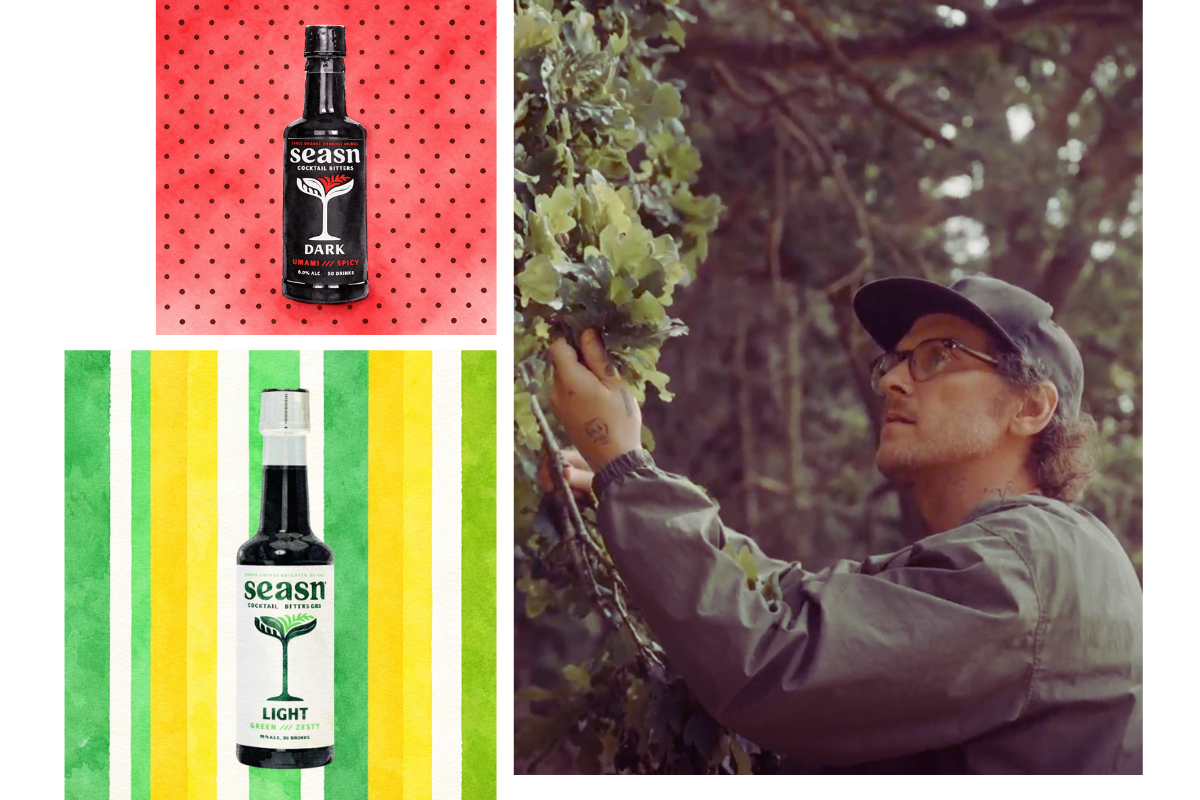
He experiences flavours, ingredients and drink profiles as colours, and for most of his life had no idea others didn’t taste and smell the way he did. For instance, the flavours of the clear, non-alcoholic spirit Seedlip Spice register as “the colour of the forest floor in autumn and our farm’s fields when they’re freshly plowed.” He describes his new non-alcoholic bitters, zesty Seasn Light and spicy Seasn Dark, as “electric neon green with stripes of white and yellow” and “bright, burning Post-box red with chocolate brown polka dots,” respectively.
His gift for asking what he calls “stupid questions” has already led to industry-shaking innovations. “Why do spirits have to contain alcohol?” queries a decade ago birthed Seedlip, and “Why use a barrel for maturation?” wondering led to his venture Sylva Labs, which is making dark non-alcoholic liquids by extracting flavour from various woods and grain compounds,” Branson says. His unique sensory perceptions are colouring the future of drinks.
Samantha Staniforth: A Unique Vantage
When Samantha Stanforth reads books or listens to music, “entire scenes play out in my mind in extraordinary detail. That’s hyperphantasia, though I didn't have a name for it until recently.” While Staniforth says she has not been formally diagnosed with this form of synesthesia, over a decade in spirits, including at storied brands like The Macallan and BenRiach, taught the American that her thought process around tasting was “distinctly different from how others described their experiences.”
Tasting in colours that merge into elaborate visual scenes is “not a metaphor,” she says, such as simply describing berry flavours as a red-fruit note. “It's what my brain actually does with that sensory input.” It led her to wonder why the industry forces people into formal tasting frameworks, when they are likely processing very different experiences. She found that blind-tasting often led consumers to prefer products they’d sworn off, such as non-age-statement whisky. “It became clear the traditional approach was creating barriers rather than opening doors,” she recalls.
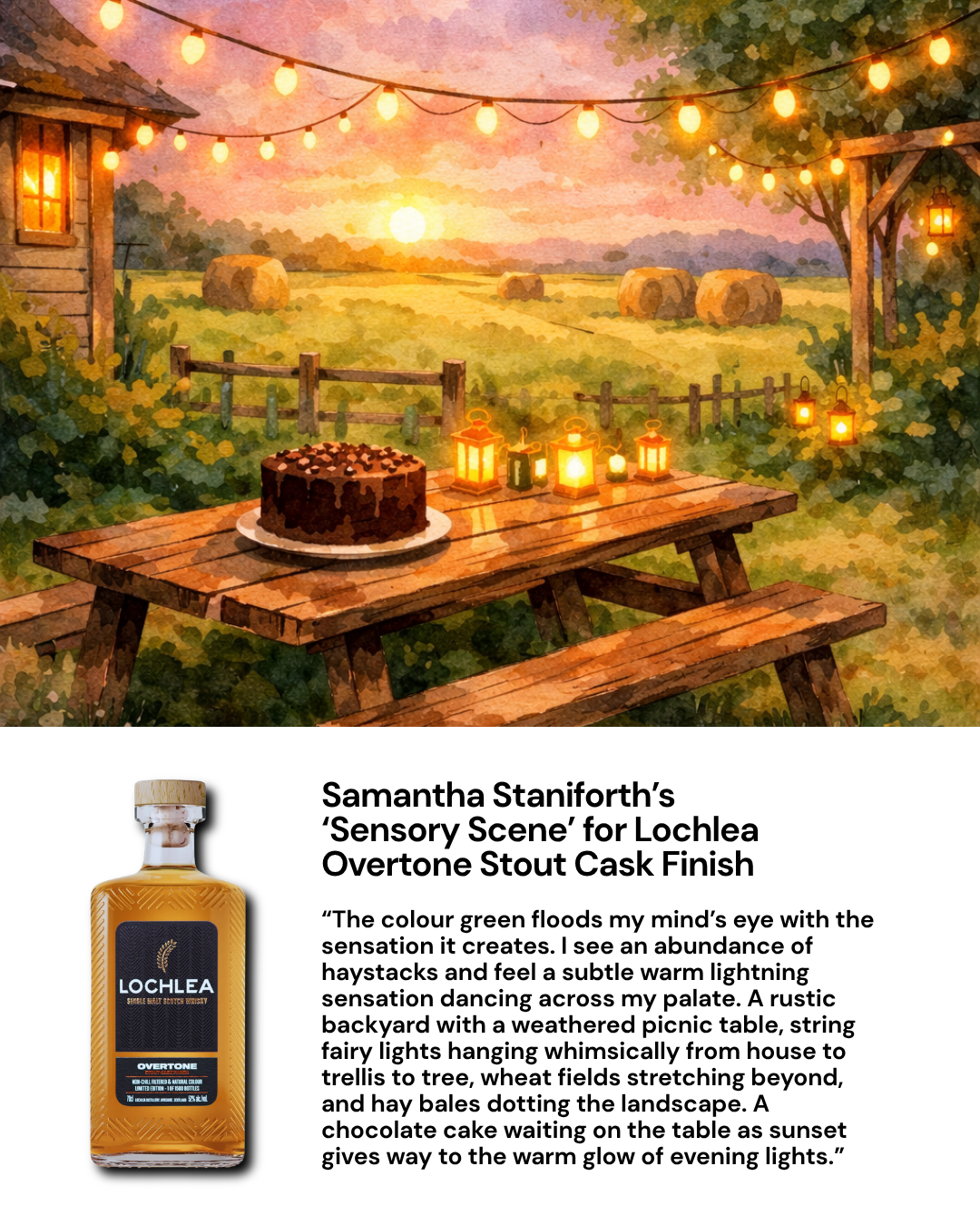
Today, at her Speyside-based company, Vantage Creative, she creates environments for each guest to explore their unique palate. At a holiday-season event, four whiskies were complemented by aroma jars and small bites, leaning into common seasonal profiles. “The idea is to engage multiple senses simultaneously, because we don't experience flavour in isolation. Our brains integrate smell, taste, texture, temperature, even visual cues and memories into what we perceive as ‘flavour,’” she says. I am among generations of drinks pros formally taught that “granny’s basement” is not a valid beverage alcohol descriptor: too subjective, not universal. Yet Staniforth might indeed ask, "What memories does this evoke for you?" or "What does this remind you of?" Valuing sensory exploration over standardized tasting takes some of the snobbery out of wine and spirits, helping make them more accessible — to women, to globally influenced palates, to the generation we’ve been told does not want to drink.
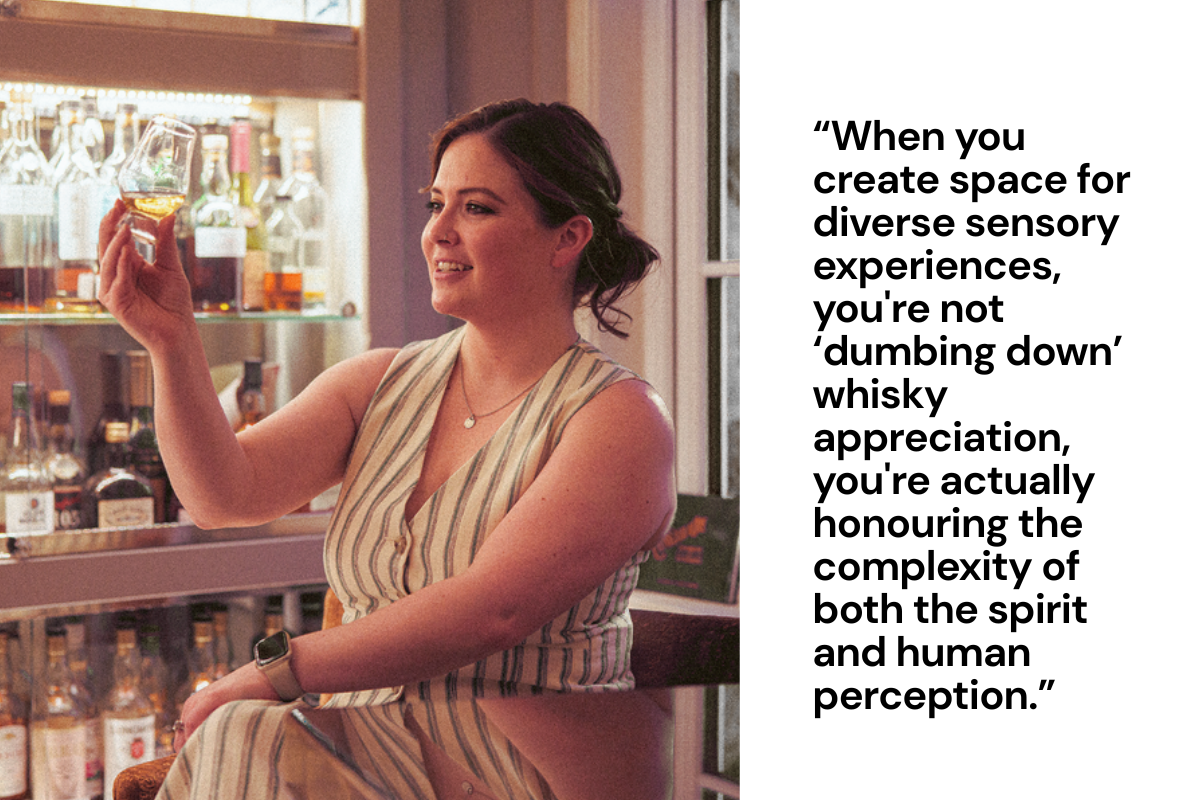
“When you create space for diverse sensory experiences, you're not ‘dumbing down’ whisky appreciation,” says Staniforth. “You're actually honouring the complexity of both the spirit and human perception.”