taste of the year
Drawn entirely from one chosen harvest, vintage Champagne offers a taste of a year that will never unfold in quite the same way again.
Champagne’s prestige has never depended on nature making things easy. This is a northern wine region shaped by considerable variation, where frost, rain, heat and the timing of a single storm can change the course of a growing season. Its greatness lies partly in what its producers have learned to create from those differences.
At the center of that achievement is assemblage, the art of blending. A Champagne may bring together different grape varieties, vineyards, villages and parcels, each contributing something to the finished wine. For multi-vintage Champagne, the cellar master can also draw from reserve wines held back from previous harvests. These wines expand the available palette, adding depth, maturity or freshness while helping preserve the distinctive style of the house.
Consistency, in this context, does not mean making Champagne taste generic or interchangeable. It means maintaining a recognizable identity while the raw materials change from year to year. The weather may alter the grapes, but the cellar master understands how to assemble them so the voice of the house still comes through.
Vintage Champagne places a different boundary around that same art. The producer can continue blending grape varieties, vineyards, and base wines, but every component must come from the year printed on the label. There are no reserve wines from earlier harvests to draw upon. One growing season must provide the complete palette.
Rather than guiding several years toward a shared house expression, vintage Champagne asks what one particular harvest can contribute. Its weather, ripeness, acidity, challenges, and small peculiarities remain visible, shaped but not erased by the decisions made in the cellar.
“Vintage Champagne reveals what becomes possible when one remarkable year is allowed to stand on its own.”
the difference a year makes
Where non-vintage or multi-vintage Champagne demonstrates what can be achieved by bringing different harvests together, vintage Champagne reveals what becomes possible when one year is deemed remarkable enough to stand on its own. Its character belongs to a particular season, captured once and never reproduced in quite the same way again.
The date on the bottle records the year the grapes were grown, not when the Champagne was released. By the time we taste it, that growing season has already passed through several layers of interpretation. The fruit has been pressed, fermented, selected, and blended. A second fermentation has created the bubbles, while years resting on the lees have transformed the wine’s aroma and texture.
Vintage Champagne is therefore not an untouched snapshot of a growing season, but a producer’s interpretation of what that season made possible. Even so, it can never be recreated. The following year may bring the same vineyards, grape varieties and cellar team, but never the exact same combination of rainfall, sunlight, temperature, flowering, ripening and harvest conditions. Once the bottles from that vintage are gone, its particular expression disappears with them.
vintage, by design
Dom Pérignon offers a useful case study because it is made exclusively as vintage Champagne. There is no non-vintage Dom Pérignon establishing a fixed profile from one release to the next. Each wine must find a balance between the character of the harvest and the signature of the house.
Dom Pérignon bears the name of Pierre Pérignon, the Benedictine monk appointed cellarer of Hautvillers Abbey in 1668. Although history has made him almost synonymous with Champagne, he did not invent sparkling wine. His more meaningful contribution was his pursuit of quality through careful vineyard management, gentle pressing and, most importantly, blending. He recognized that wines from different grapes and sites could be assembled to create something more complete than any one component could offer alone.
The modern Champagne bearing his name began with the 1921 vintage, released in 1936. The 2018 release became just the 49th white Dom Pérignon vintage in nearly a century, meaning roughly as many harvests were passed over as were ultimately bottled. Those absences are as important as the declarations. A year becomes Dom Pérignon only when the cellar team believes it can express both the singular character of the harvest and the consistent vision of the house.
This makes every release finite in two ways. Only a limited amount can be made from a single harvest, and the natural conditions that shaped it will never occur in precisely the same combination again.
three windows into one vintage
Dom Pérignon complicates the idea of vintage further through its concept of Plénitude: successive windows during a wine’s long evolution on the lees. The initial Dom Pérignon Vintage release represents its first Plénitude. It arrives only after at least eight years of development in the cellar, when the house believes the wine has reached its first state of harmony.
A portion of the same vintage may remain on its lees for much longer. At around 15 years, it can emerge as Plénitude 2, with greater intensity, breadth and maturity. The distinction is more than age alone. Rather than simply holding back bottles of the original release, Dom Pérignon keeps the wine in contact with its lees and disgorges it at a later stage, allowing the same vintage to follow a different developmental path.
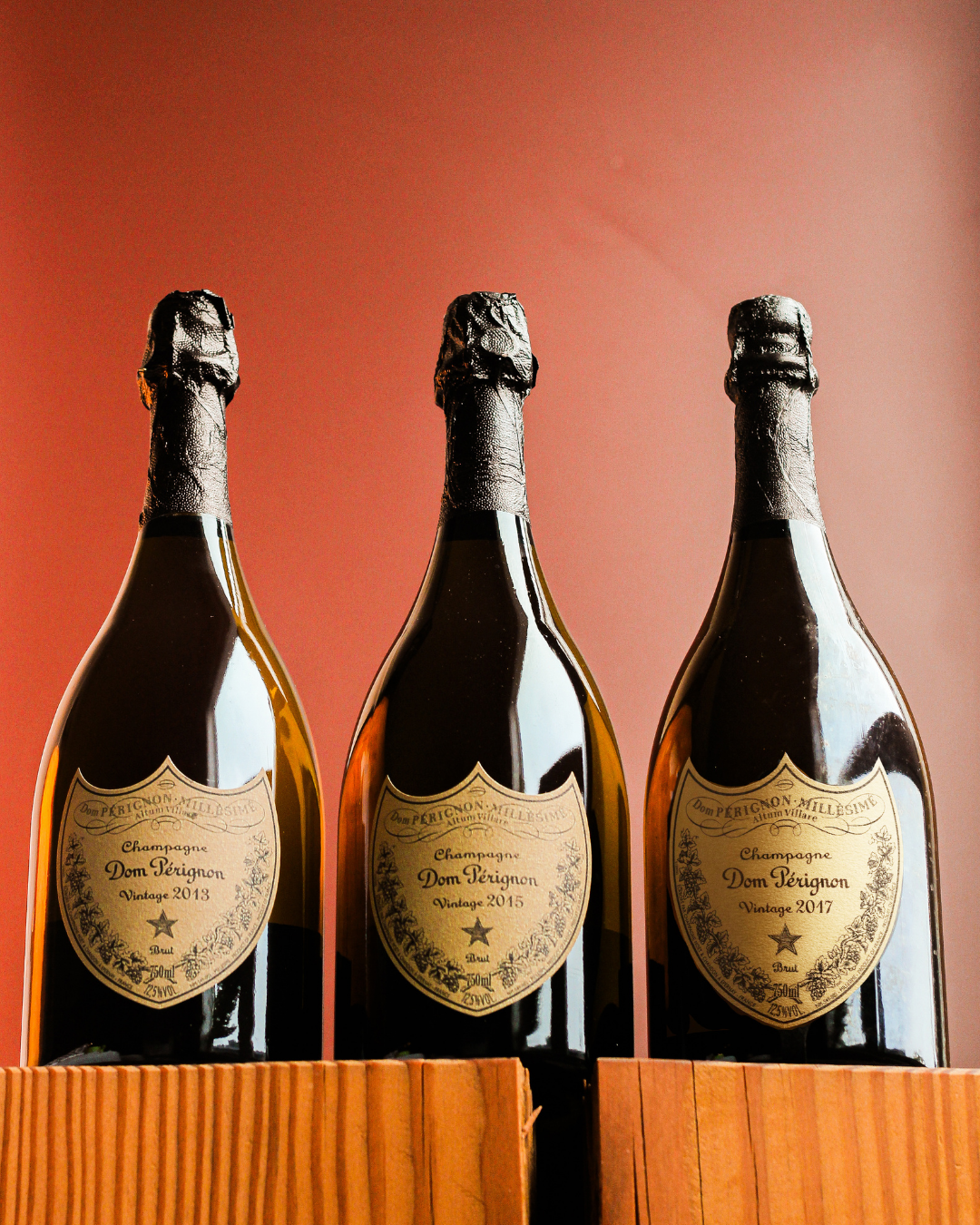
The 2013, 2015, and 2017 wines examined below are all initial vintage releases at their first Plénitude. This gives us a relatively consistent point of comparison. The producer, overarching philosophy and stage of maturation remain similar. The year is the major variable.
anatomy of a vintage
Tasting vintage Champagne side by side is not as simple as matching a weather report to a list of flavours. Sunshine does not literally place peach in a wine, nor does rain automatically make it taste mineral.
Climate first affects the grapes: how quickly they ripen, how much sugar they accumulate, how much acidity they retain, how thick their skins become and whether the fruit reaches harvest healthy. Those differences can influence the wine’s structure, concentration and broad fruit character. Winemaking and maturation add other dimensions.
To follow that chain from season to finished wine, it helps to establish a shared vocabulary. The primer that follows defines the climatic and winemaking terms used throughout the three vintage profiles. From there, we can trace how 2013, 2015, and 2017 moved from weather, through wine, and ultimately into the glass.
the language of vintage
acidity
Provides mouth-watering freshness and structure. A high-acid wine may feel linear, taut or energetic, while lower acidity can contribute to a broader, softer impression.
autolysis
The breakdown of yeast cells during maturation on the lees. It contributes aromas and textures like brioche, pastry, toast, cream and nuts.
concentration
The density and intensity of flavour. It should not be confused with sweetness.
phenolic bitterness
Comes from grape-derived compounds and may resemble citrus pith, tea or gentle herbal bitterness. In the right proportion, it provides shape and length rather than reading as a flaw.
reduction
Results from limiting exposure to oxygen during winemaking. In Champagne, it can appear as flint, smoke, struck match or other mineral and savoury impressions.
ripeness
The maturity of the fruit, not necessarily the sweetness of the finished Champagne. Riper wines may suggest peach, apricot, yellow apple or tropical fruit versus citrus, green apple or tart pear.
2013: the late year
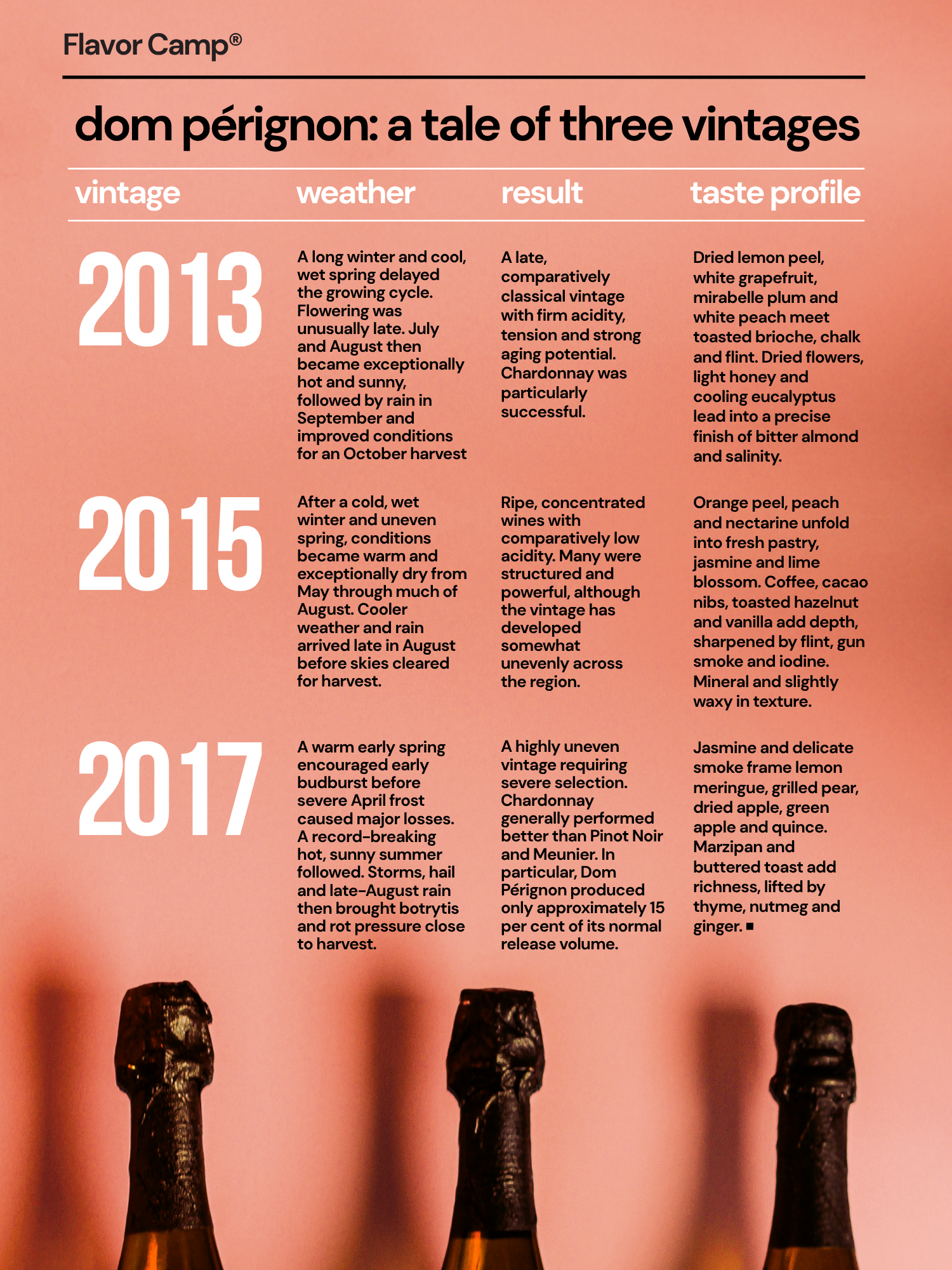
The 2013 growing season began with a cold, wet winter followed by an unusually rainy spring. Vine development started approximately two weeks behind schedule and never fully recovered the delay. Flowering came exceptionally late, affecting the formation of some grape clusters.
Then the season changed direction. July and August became remarkably hot, dry and sunny, helping the fruit advance after its slow beginning. Heavy rain returned in September, but easterly winds helped keep the grapes healthy until harvest. Dom Pérignon began picking on September 28 and continued until October 15, a notably late harvest in a period increasingly defined by earlier ones.
The year produced a combination of summer ripeness and late-season acidity. In flavour language, that translates less as simple fruitiness than as a tension between body and precision. Dom Pérignon’s profile for the wine moves from eucalyptus and mint into mirabelle plum, white peach, citrus peel, and white florals, followed by pepper, cardamom, licorice, toasted brioche and salinity.
These descriptors cross several families, but the structure holds them together. The stone fruit reflects ripeness achieved during the hot summer, while the wine’s acidity and saline finish preserve the tension of its long season. The profile feels detailed rather than lush, with freshness providing the frame.
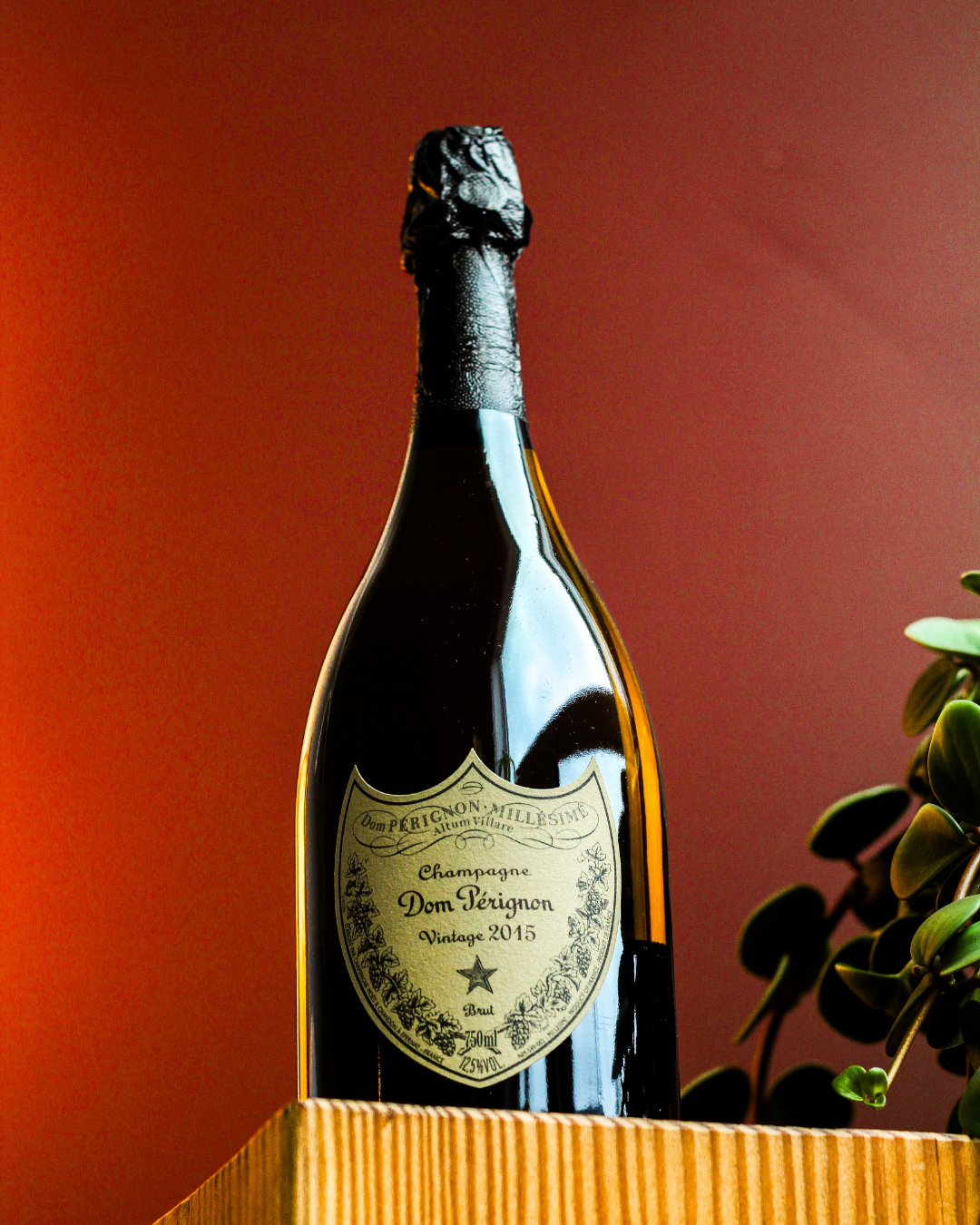
2015: the generous year
The 2015 season followed a different path. After a cold beginning, warm and dry conditions settled over Champagne from May through much of August. The growing season became one of the warmest and driest recorded in the region at the time.
Heat and drought accelerated sugar accumulation and produced small, concentrated berries in many vineyards. Chalk soils, which can retain water from winter and spring, helped support vines through the dry period. Cooler conditions and rain arrived toward the end of August before the weather cleared again. Dom Pérignon began harvesting healthy grapes in sunshine on September 7.
2017: the year of extremes
If 2013 was late and 2015 was warm, 2017 was turbulent. A warm early spring encouraged the vines to wake quickly, leaving tender new growth exposed when severe frost arrived in April. Depending on the subregion, significant portions of the potential crop were lost before summer began. The weather then swung in the opposite direction. Conditions became exceptionally hot, dry and sunny through July, accelerating ripening and concentrating the surviving fruit. Storms and hail followed in August, then heavy rain near harvest created intense disease and rot pressure. Pinot Noir and Meunier were particularly affected, while Chardonnay generally emerged in better condition.
Producing Dom Pérignon from the year required severe selection. The resulting release was the smallest assemblage in the wine’s history, reportedly representing only about 15 per cent of a normal volume. The final blend contained 61 per cent Chardonnay and 39 per cent Pinot Noir, making it one of the most Chardonnay-led white Dom Pérignons produced.
Its flavour language is as contradictory as the season. The house describes petrichor, jasmine and candied zest, followed by an interplay of bitterness and acidity, sweetness and tension, opulence and edge. Other profiles find dried orchard fruit, citrus pith, toast, hazelnut and cocoa. We perceive notes somewhere in the middle of these two.
Nevertheless, bitterness is an especially useful term for this vintage. It does not mean unpleasantly bitter. It describes a structural quality resembling citrus peel or pith that counters the wine’s ripe fruit and creamy texture. The result is not a simple expression of a hot year. It is a wine shaped by concentration, scarcity and the need to balance powerful components.
what remains, and what changes
These three wines share a vocabulary. Salinity, reduction, citrus, ripe fruit, toast, spice and tactile tension recur in different proportions. Those repeated characteristics help us recognize the house.
What changes is the arrangement.
The late 2013 season places acidity and precision around its ripe stone fruit. The warm, dry 2015 presents greater breadth, generosity and a deeper register of fruit and roasted flavour. The extreme 2017 combines concentrated ripeness with bitterness, tension and a more unusual aromatic profile.
Vintage Champagne gives us the opportunity to taste those differences rather than correct them. The producer still shapes the final wine, but it must work with what one year provided. It cannot reach into another harvest to restore acidity, add breadth or replace what frost, drought or rain removed.
These three champagnes speak with a recognizable voice, but they do not tell the same story. What repeats is the signature of the house. What changes is the taste of the year.
And once that vintage is gone, the story can be revisited, but it can never be made again.