Maximalism Meets Malt
Tartan tradition evolves with a new design-led dram culture
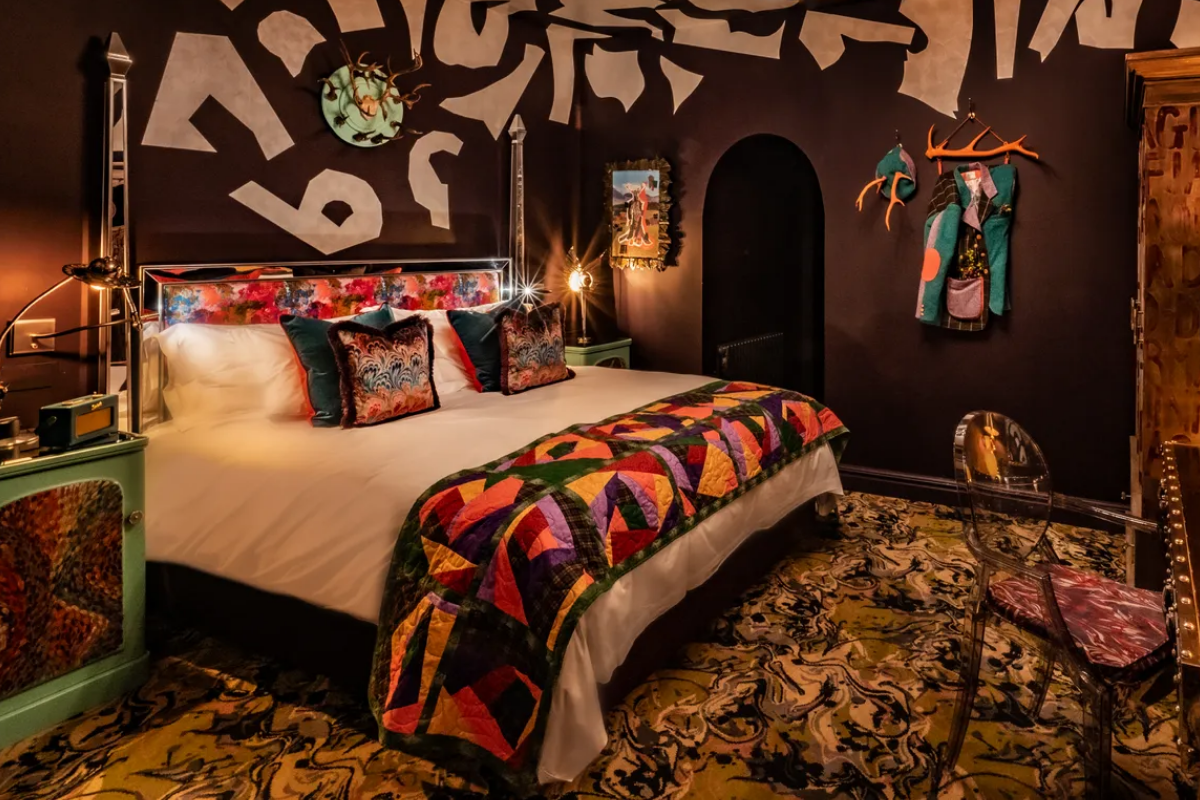
Ardbeg House Premium Suite
What do you expect to find in a Scottish hotel? Scotch behind the bar, of course, and probably tartan somewhere in sight. The famous pattern has long become shorthand for Scottish identity, both at home and abroad. That association did not happen by accident. Following the Jacobite rebellion, tartan was banned, only deepening its status as a symbol of Highland culture. Decades later, the Highland Revival of the Victorian era recast tartan, stags, and whisky as emblems of the establishment, embraced by the royal family and the military alike. By the 19th century, as the British Empire opened vast export markets, the image of the tartan-clad Scottish soldier became a powerful tool in whisky marketing, projecting both Highland exoticism and loyalty to the Crown. Bars from Canada to South Africa followed suit, donning tartan and proudly displaying branded merchandise alongside their bottles of Scotch.
The romanticized image of tartan, stags, and whisky has been studied extensively, often reinforcing a narrow view of Scottish identity. For someone on a nostalgia trip to Scotland, perhaps tracing distant ancestral heritage, maybe that’s alright. But for visitors looking for style, fun and engagement, it all begins to smell a bit musty, stale and tired. Personally, I don’t think that’s what we want to present to visitors. Happily, others increasingly seem to agree. Over the last couple of years, bold, energetic launches of hotel bars have brought a new sense of style to Scotland’s finest destinations. With it, new visitors are invited to discover the fabulous flavours of whisky and mixology found up and down the country.
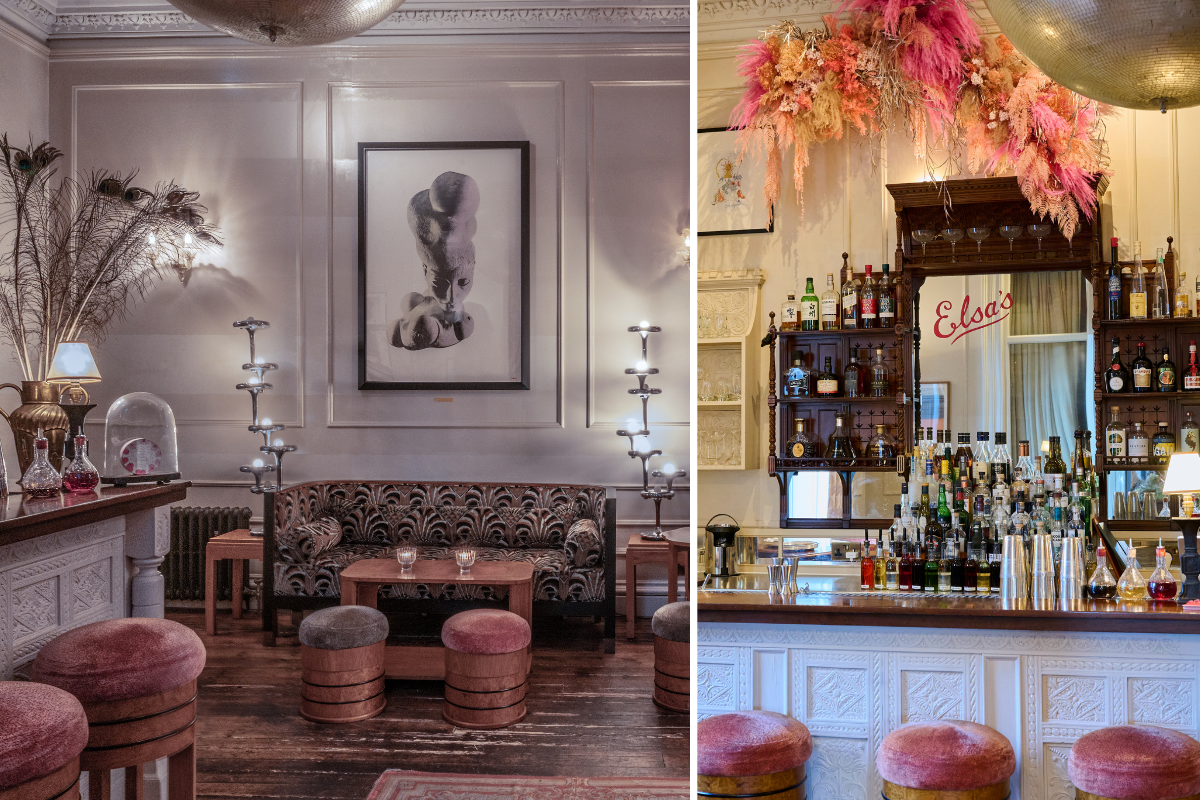
Left: Elsa’s Bar
Right: Elsa’s Room
The Fife Arms
The Fife Arms is a quintessential Highland hotel with a difference, and possibly my favourite place to spend a weekend. Relaunched in 2019, it received a completely new look from Swiss art dealers Iwan and Manuela Wirth, who cofounded both the international gallery Hauser & Wirth and the hospitality company Artfarm (who better to reinvent the Highland bar?). Today, the hotel has plenty of tartan and opulence, a plush whisky bar named Bertie’s, and hot-pink Art Deco elements in Elsa’s Bar, named after the iconic Elsa Schiaparelli.
For General Manager Rachael Henley, Elsa's is a key element of the hotel: "The bar's playfulness encourages people to relax, stay longer, and return to the space throughout their stay," she explained.
"There's usually an initial moment of surprise, especially given the Highland setting, but guests quickly understand the intention behind the space." The invitation to savour the lively atmosphere of the bar is clear and contrasts with the quieter setting of their whisky bar. “The Schiaparelli-inspired design, use of colour, and focus on cocktails feels purposeful rather than foreign.” The theme continues to the menu, which offers a Shocking Pink cocktail that links to the surrounding land through a homemade, locally foraged elderflower liqueur.
The Fife Arms is famous for its design, but that doesn’t mean they compromise on heritage. The hotel has a strong sense of place in both looks and offerings – another cocktail on the list at Elsa’s is inspired by Frances Farquharson, an American-born, Braemar resident, friend of Schiaparelli’s and editor at both Vogue and Harper’s Bazaar in the mid-20th century.
Rachael is convinced that that adds to guest experience in a palpable way: “Heritage and a strong sense of place are at the heart of what we do, and the design adds another layer, drawing on local artists and craftspeople and keeping the hotel closely connected to its community.”
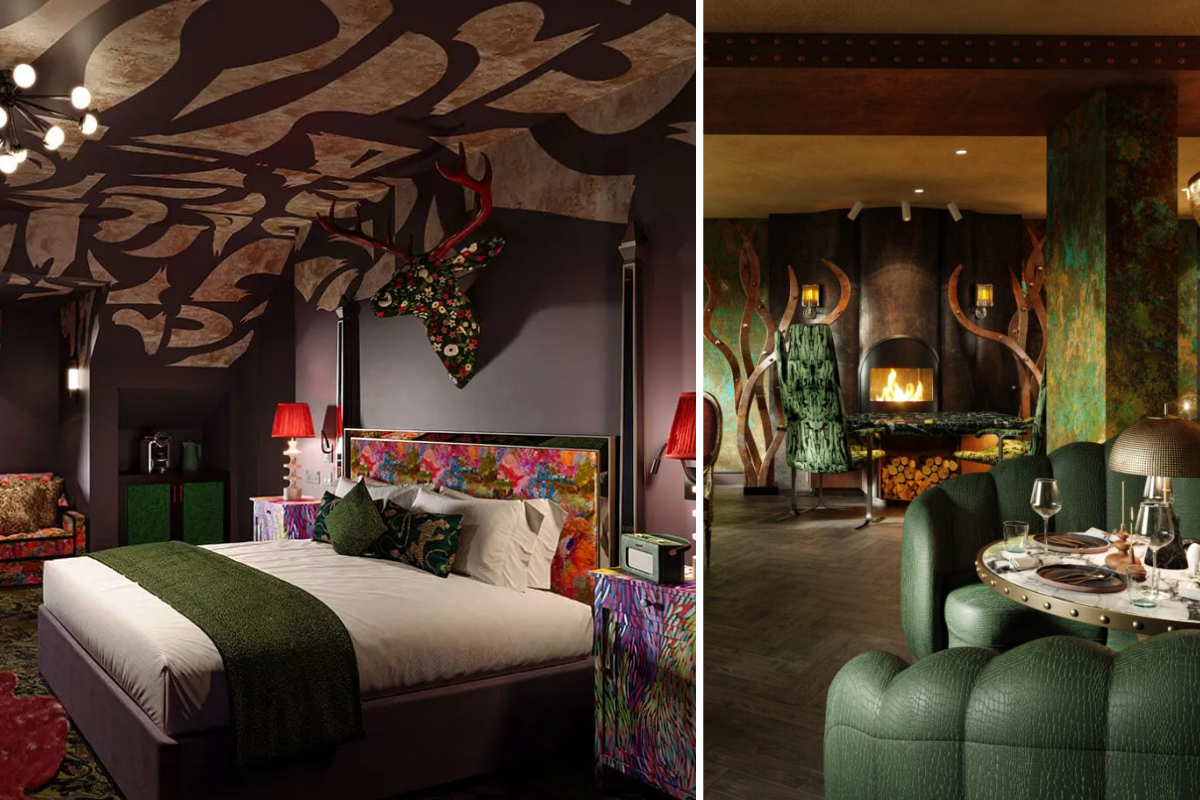
Ardbeg House
Ardbeg House
Ardbeg House was perhaps the biggest opening on the Scottish hospitality scene in 2025. Surrealist, stylish and fabulously decadent, it has been described as Ardbeg come to life on the whisky island of Islay. It stands in great contrast to the typical hotels of Scotland’s Hebridean islands–stereotyped as slightly tired, damp and faded affairs. That’s deliberate: “With the bar in particular, we wanted to reimagine everything,” Corporate Affairs & Hospitality Director of The Glenmorangie Company, Ellie Goss, told me. The whisky company worked with Interior Storymakers to bring their ideas to life. “We’ve tried to create something truly outstanding and unusual a bold celebration of Islay, of the mend and make do attitude of living on an island.” That has meant a layered, richly saturated palette of rich charcoal, tobacco browns and deep greens – all colours associated with the smokey, earthy, loud flavour notes of Ardbeg whisky.
The biggest shock? “People love walking into the bar and see the upturned boat as a chandelier – it brings about a smile,” Ellie explained. Thinking of the Scandinavian tradition of church ships, the suspended boat-come-chandelier prompts me to think of the hotel as something akin to a place of worship. For Ardbeg’s enormous group of dedicated fans, who travel from across the world, I’m probably not far off the mark. But they’re not the only target group the company were designing for – “We wanted to appeal to the local community, fans of Ardbeg, whisky drinkers and people who just want to experience something new,” Ellie said. It’s safe to say that that has been achieved, with many visitors promising to return. “We have been overwhelmed by the positive reaction to the experience, be it visitors who might be whisky fans or just highland fans.”
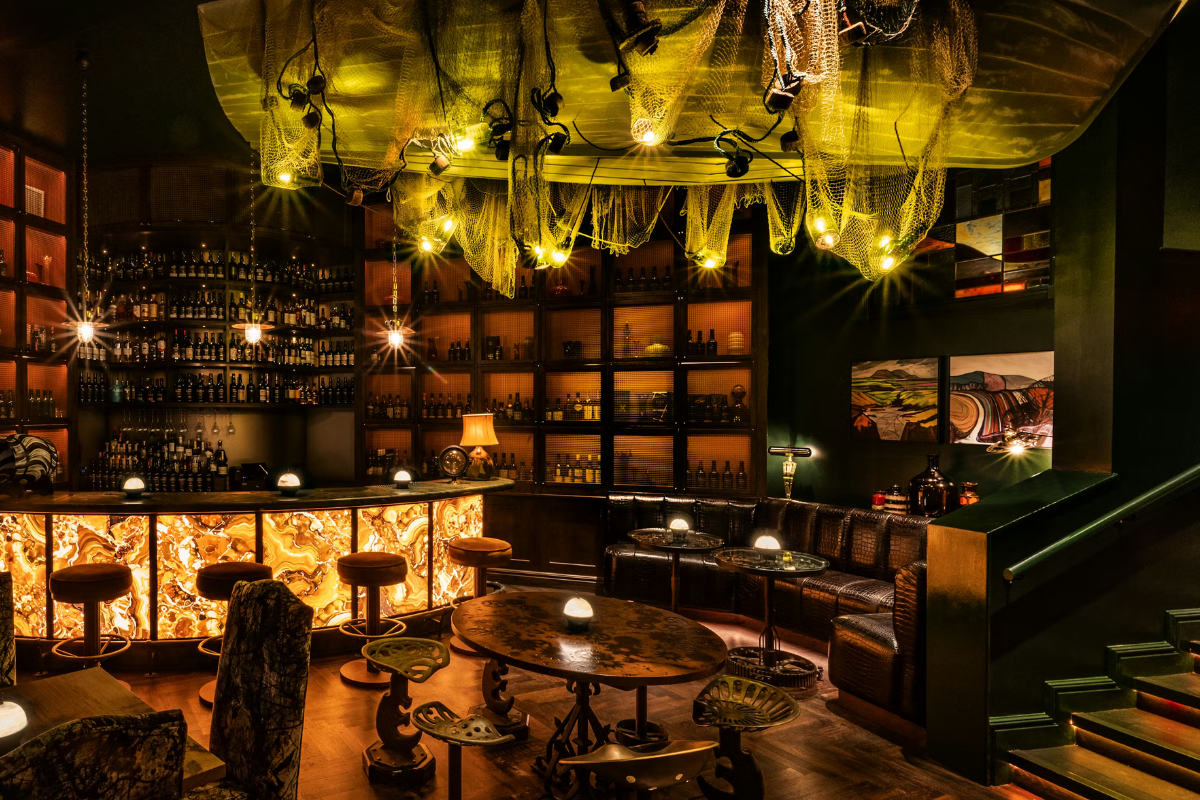
When Tradition Changes Its Pattern
Hotel bars are no longer add-ons, squeezed into the corner in the last stages of the design process. Rather, they lie at the heart of guest experiences at the best hotels. Colour palettes set the tone for all of this – and boldness is certainly the trend of the day. As place and storytelling have become integral to the world of spirits, so too have they become part of design. New thinking invites different experiences – bringing different people around the bar to learn about flavour. Rachael Henley sums it up elegantly: “Guests don’t just stay at The Fife Arms; they engage with it, which tends to resonate with travellers looking for something distinctive rather than purely traditional.” If you’re looking for plain old tartan wallpaper on your next visit to Scotland, that time may soon be past.