
Blue: The Flavour We Can’t Agree On
In a world where colour signals flavour, blue breaks the pattern.
A SIP Spirits study of 550+ Canadians found it was the only label colour without a clear flavour consensus. Red, green, orange, yellow, and brown labels all triggered strong flavour expectations. Respondents instinctively linked them to spice, herbs, fruit, or roasted notes with remarkable consistency. Blue, however, refused to settle into a single flavour category.
Instead, it scattered across the sensory map. Some respondents imagined sweetness or confectionery notes, others expected grainy youthfulness, and some pictured something coastal or smoky. In short, blue didn’t mean one thing. It meant possibility.
Which makes it the most interesting colour of all.
For this edition of the Conversation List, we leaned into the ambiguity. These are spirits that wear blue, are named blue, or feel blue in character. Think of this less as a verdict and more as a conversation with one colour, many hues.
Tromba Blanco
The Conversation Starter
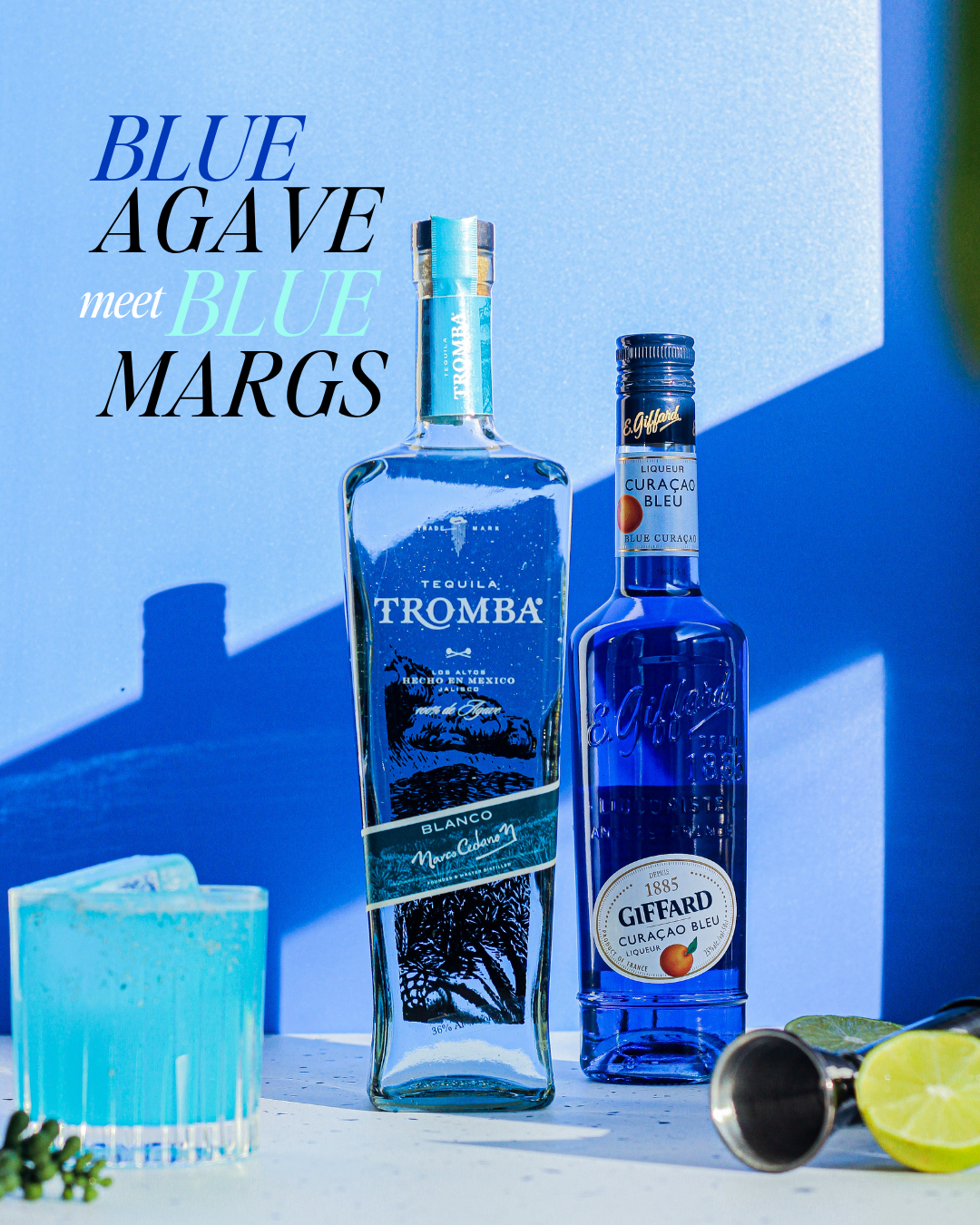
A gringo and a master distiller walk into a bar… turns out they weren’t joking about the tequila. Tromba Blanco takes its name from the skies above Jalisco’s agave fields. “Tromba means rainstorm,” explains Brand Director Michael Fortier, referring to the powerful summer storms that sweep across the Highlands. These sudden downpours bring the water that the blue Weber agave needs to thrive. For Tromba, the name reflects both the landscape of tequila production and the natural forces that sustain it.
Behind the Bottle
Canadian entrepreneur Eric Brass founded Tromba alongside master distiller Marco Cedano, former master distiller for the Don Julio family. The goal was to create an additive-free tequila rooted in traditional Mexican craftsmanship but designed with modern drinkers in mind. Fortier notes the blue label and tall tapered bottle were intentionally chosen to create a premium, inviting look that stands out on crowded shelves.
The Blueprint: What Blue Represents
For Tromba, blue represents both the plant and the rain that nourishes it. “The colour blue is an homage to the life-giving water our tequila is named after and the blue weber agave plants it nourishes,” says Fortier. The brand’s deep blue label echoes these origins while also signalling the bright, refreshing style of the blanco tequila inside.
Flavour Focus
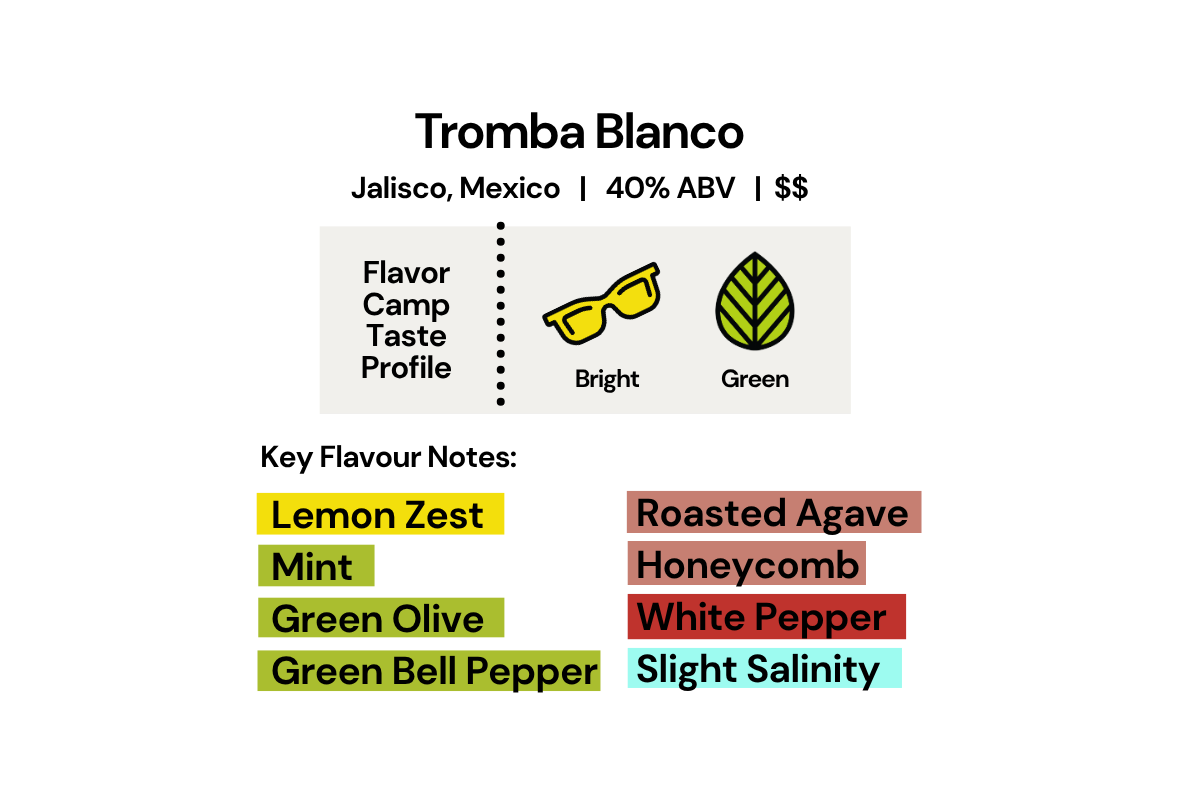
Tromba Blanco is crafted in small batches to showcase the vibrant character of blue agave. “For starters, who doesn’t love a blue margarita,” says Fortier, adding that blue has always symbolized “refreshment and brightness.” The tequila reflects that idea with aromas of roasted agave, mint, and citrus, followed by white pepper spice and subtle sweetness on a lively palate.
Giffard Blue Curaçao
Who knew the bluest drink behind the bar would be all about orange?
Blue curaçao might be the most recognizable colour in cocktail culture. One splash can transform a drink from ordinary to electric. Produced by the historic French liqueur house Giffard, this vivid ingredient brings both citrus flavour and visual drama to the glass. Behind the neon hue lies a classic curaçao recipe built around bitter orange peel.
Behind the Bottle
Giffard has been crafting liqueurs in Angers, France, since 1885, when pharmacist Émile Giffard created a mint liqueur to help locals cool down during a heatwave. The family-run company has since become a respected producer of fruit liqueurs and cocktail ingredients. Their Blue Curaçao balances vibrant colour with real citrus character, ensuring it delivers both flavour and spectacle.
The Blueprint: What Blue Represents
Despite its colour, blue curaçao has nothing to do with blue fruit. The flavour comes from the dried peels of laraha oranges, a bitter citrus grown on the Caribbean island of Curaçao. The striking blue colour is purely cosmetic, added to give cocktails visual impact. The result is a liqueur that turns familiar drinks into bright, unmistakable showpieces.
Flavour Focus
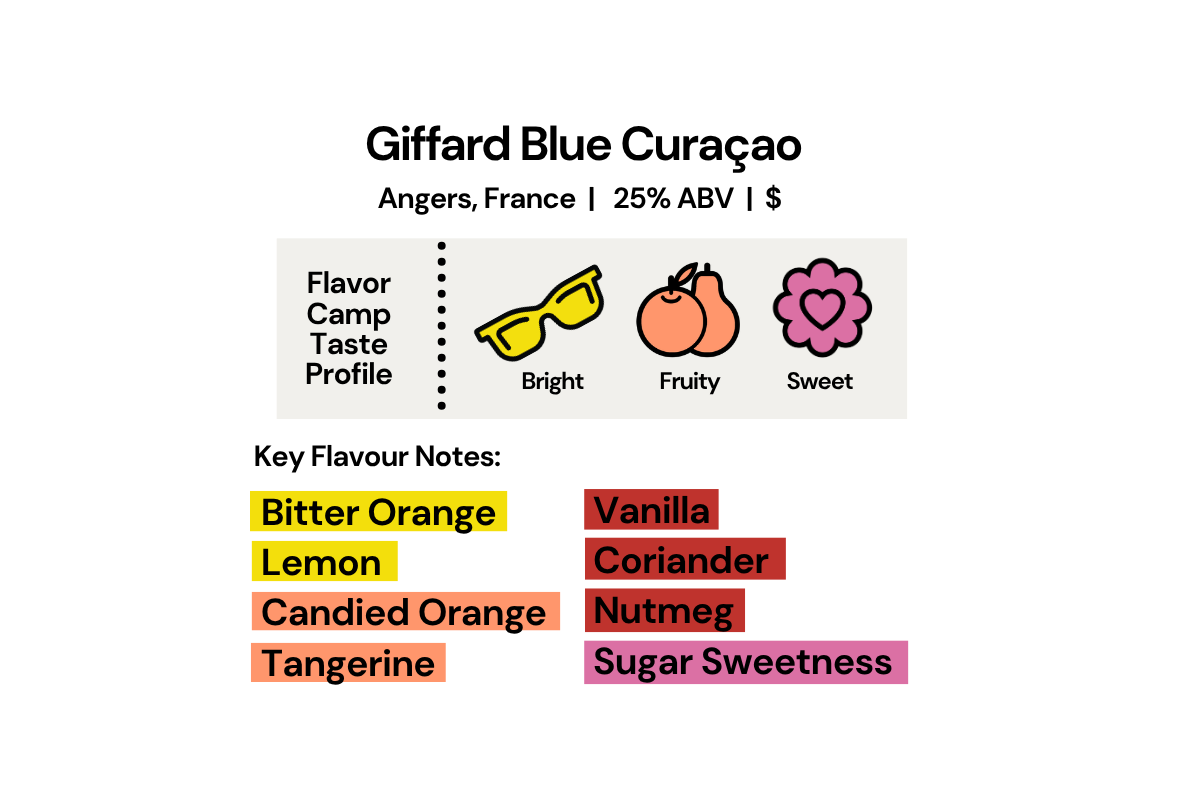
Beneath the electric colour is classic curaçao flavour. Expect bright, bitter orange peel, candied citrus, and gentle sweetness with subtle herbal notes. The liqueur adds citrus intensity while contributing colour to cocktails. Paired with tequila, rum, or vodka, it creates drinks that are pleasing for the eyes and palate. Try it in a blue Margarita or Corpse Reviver No. Blue.
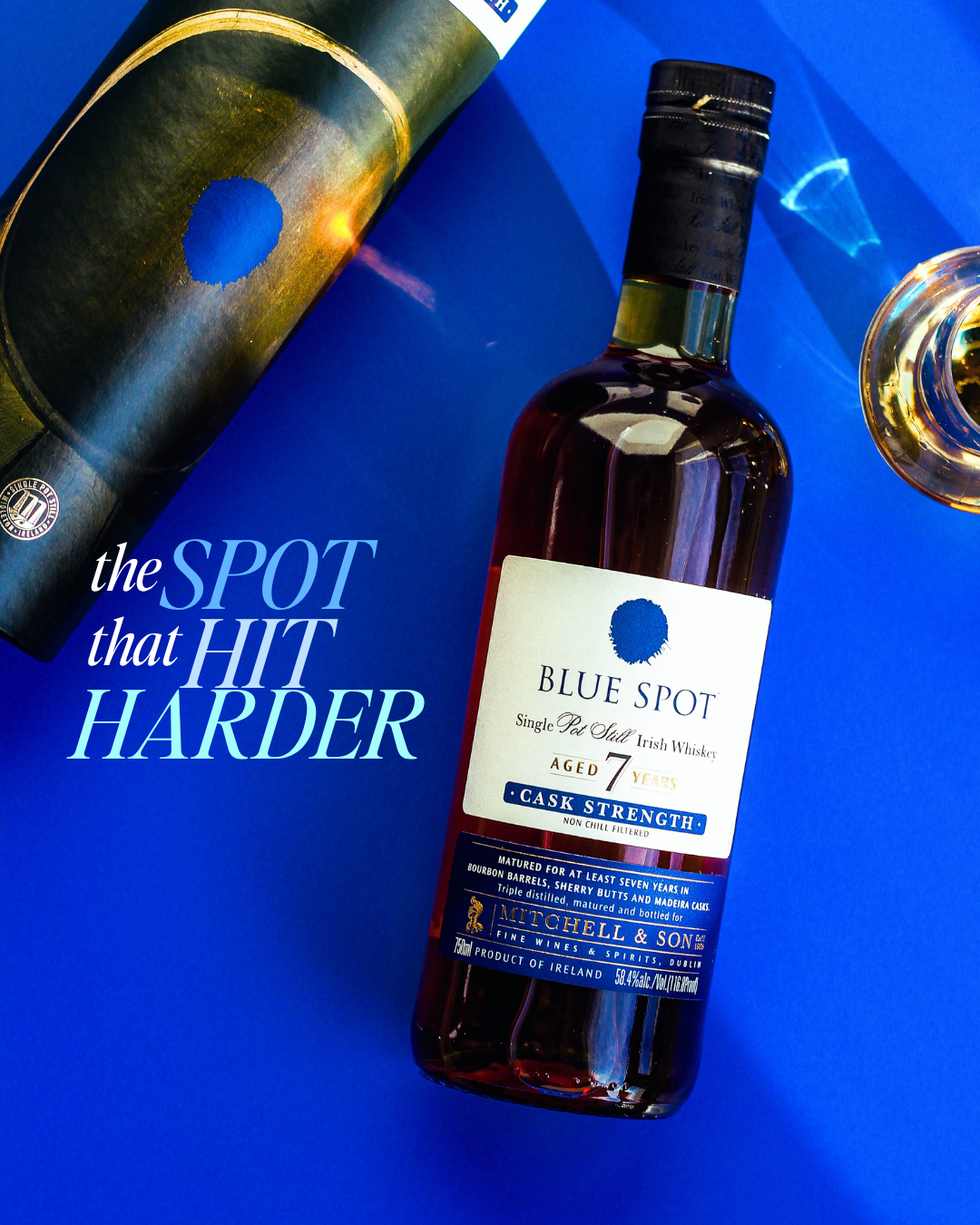
Blue Spot
Is Blue Spot a return to tradition, or a reminder that Irish whiskey doesn’t have to play it safe?
Blue Spot Irish Whiskey belongs to the historic Spot range, a line of single pot still Irish whiskeys once identified by coloured paint on casks in Mitchell & Son’s Dublin warehouses. Reintroduced in 2020 after a long absence, it marks the return of the “Blue” designation within the lineup, reconnecting the modern range to one of its earliest colour-coded styles.
Behind the Bottle
Blue Spot sits within a long-running partnership between Mitchell & Son and Midleton Distillery, where the Spot range is produced today. It’s not simply another age or cask variation, but a shift in how the style is presented. Where much of Irish whiskey leans toward softness and accessibility, this expression is bottled at cask strength (59.4% ABV), allowing the whiskey to show more intensity and structure than is typical for the category.
The Blueprint: What Blue Represents
The Spot series began as a practical warehouse system. In the 19th century, Dublin wine merchant Mitchell & Son marked their maturing whiskey casks with coloured paint to denote age: Blue for seven years, Green for 10, Yellow for 12, and Red for 15. What started as simple inventory control evolved into one of Ireland’s most iconic whiskey families. Today, in partnership with Midleton Distillery, that colour-coded legacy lives on, with Blue Spot reimagined as a modern cask strength expression.
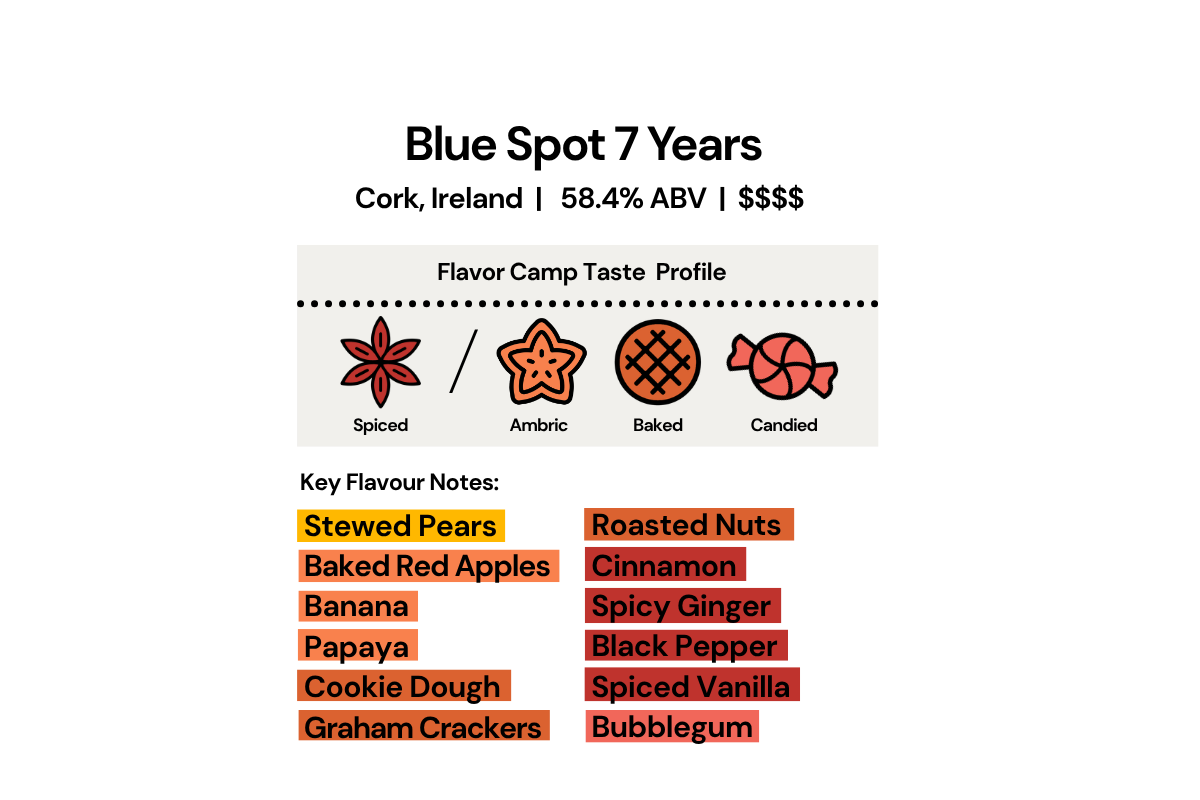
Flavour Focus
This whiskey puts single pot still character front and centre. A mash of malted and unmalted barley builds creamy texture and a distinctive spice, shaped further by 7+ years in Bourbon, Sherry, and Madeira casks that add dried fruit and sweetness. At cask strength, that unmalted barley spice is amplified, giving the whiskey a sharper, more assertive edge, with tropical warmth, baked richness, and confectionary notes rounding it out.
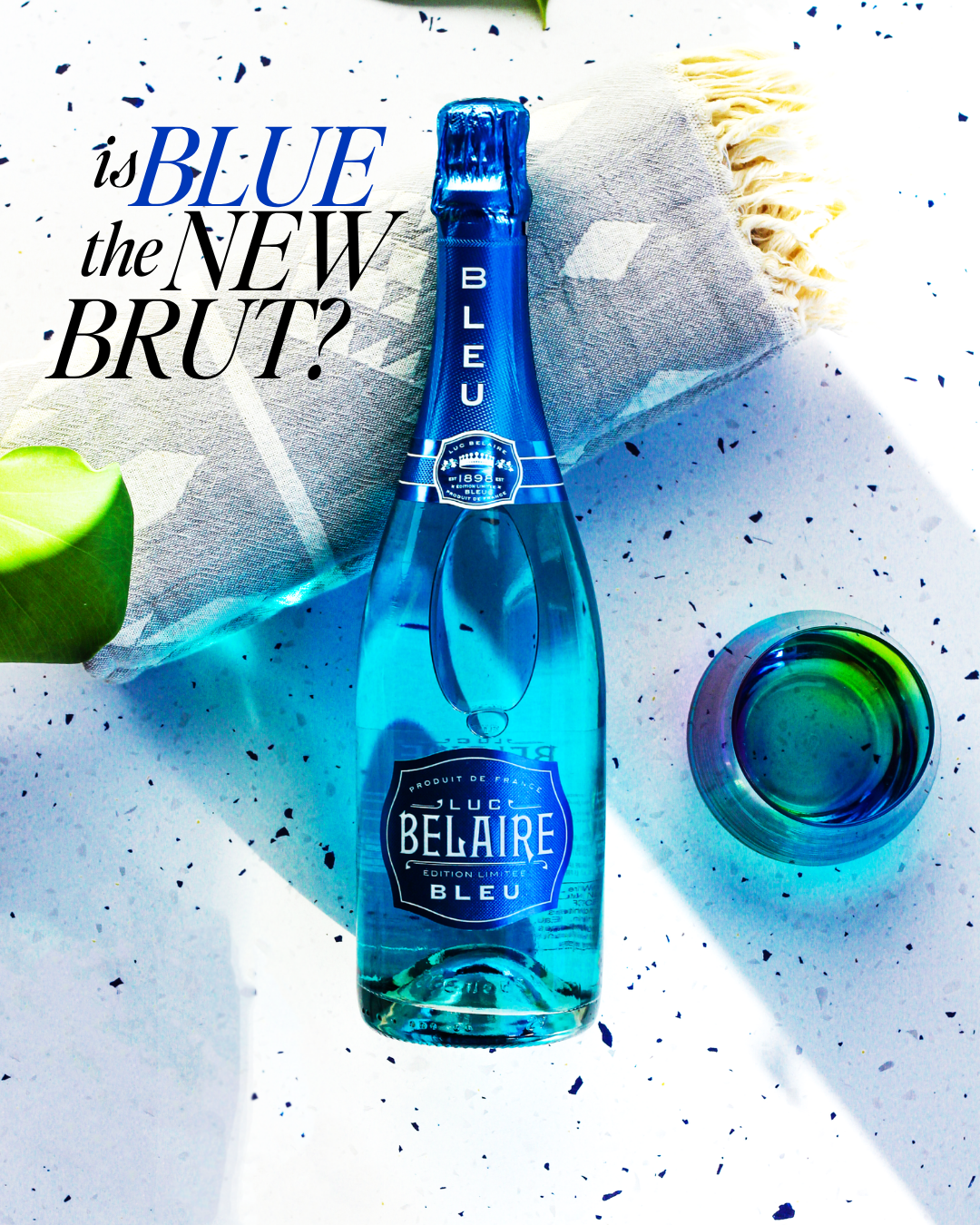
Luc Belaire Bleu
French wine is famous for tradition. So what happens when it turns bright blue?
Ugni Blanc and Colombard are better known as the grapes behind Cognac, quietly powering one of France’s most famous spirits. Belaire Bleu gives them a very different stage. Produced in France and inspired by the glittering waters of the Côte d’Azur, this vibrant sparkling cuvée transforms those classic varieties into something far more playful. The result is a wine that blends old-world roots with unapologetically modern flair.
Behind the Bottle
Luc Belaire wines are crafted by a sixth-generation father-and-son winemaking team working with a historic French maison that traces its roots back more than 120 years. Fruit is sourced from respected vineyards in Burgundy and Provence, two regions known for their long-standing winemaking traditions. The result are heritage-driven sparkling cuvées with a modern aesthetic for today’s drinking culture.
The Blueprint: What this Colour Represents
Sparkling wine has long been wrapped in ceremony, from strict glassware etiquette to centuries-old traditions. Belaire Bleu takes a different approach. Its sapphire hue draws inspiration from the brilliant waters of the French Riviera, transforming the wine into something visually expressive and wholly unpretentious. The colour makes the glass part of the experience, turning every pour into an instant conversation starter.
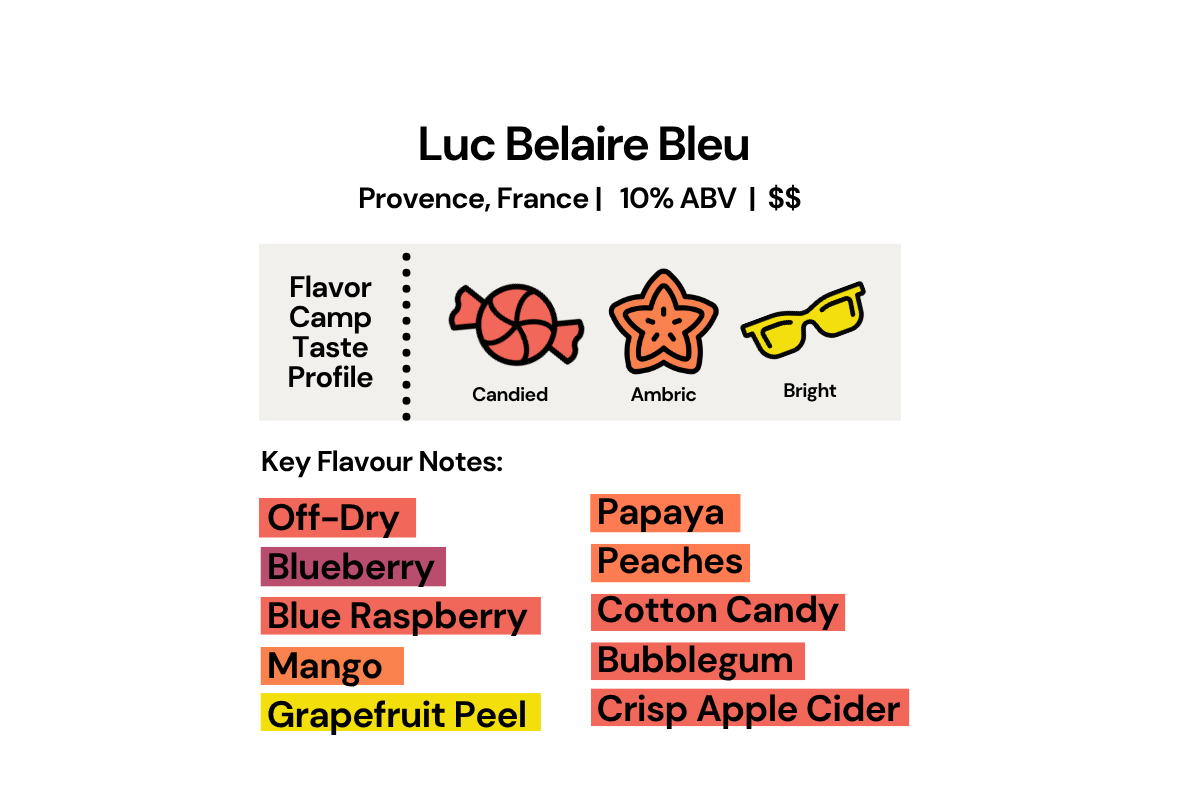
Flavour Focus
Aromatically, Belaire Bleu leans toward fresh berries and tropical fruit with a soft confectionery quality that recalls the bright sweetness of childhood candies. On the palate, the wine is fruit-forward and gently off-dry, with a light, creamy mousse. A lift of fresh acidity keeps the sweetness in check, creating a sparkling wine that feels playful, nostalgic, and cocktail-ready.
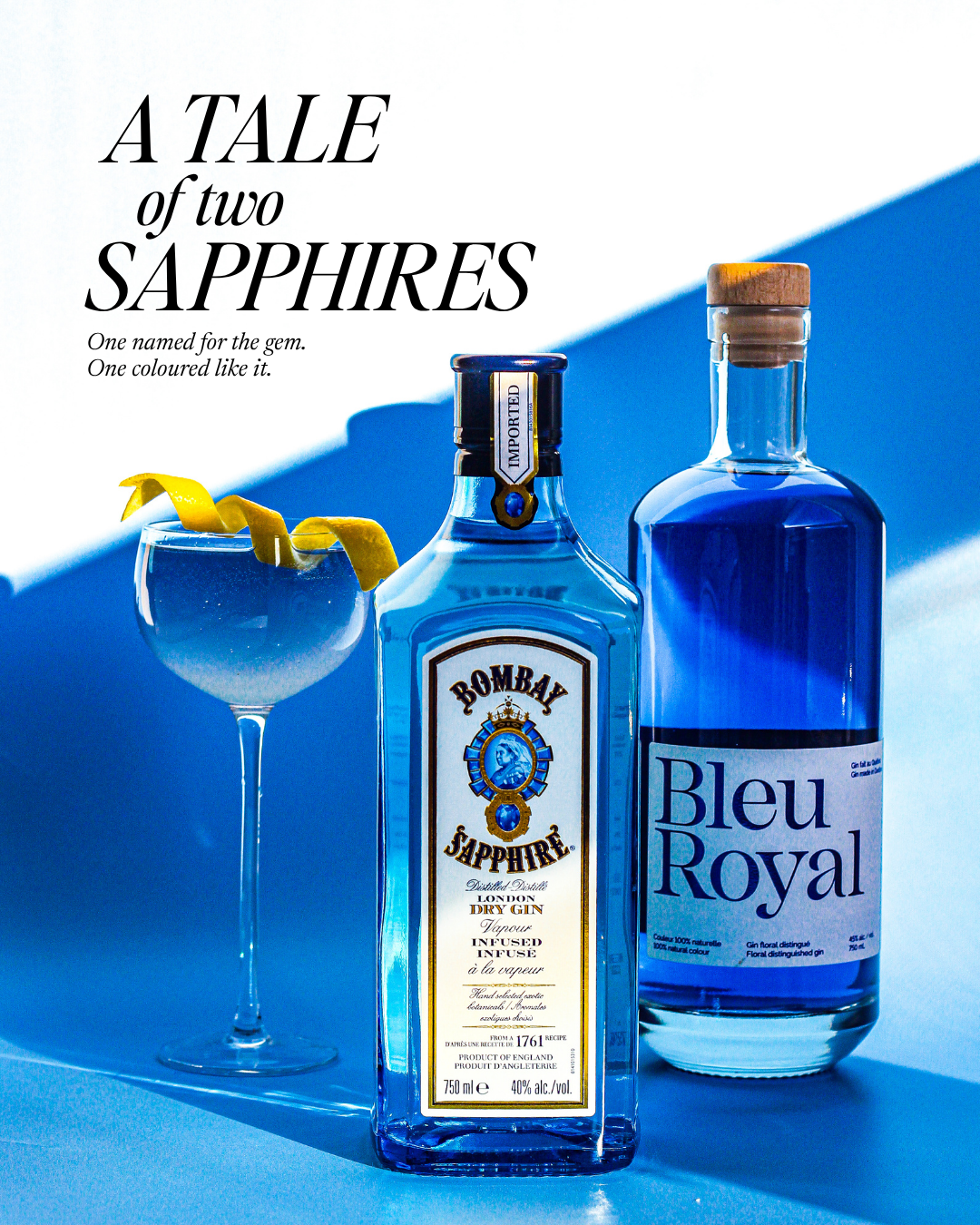
Bombay Sapphire
This blue bottle helped bring gin back during the vodka boom.
Few spirits bottles are as instantly recognizable as the luminous blue glass of Bombay Sapphire. The name references Bombay’s historic spice routes and the famed Star of Bombay gemstone, symbols of rarity and refinement. Introduced during the vodka-dominated bar culture of the late 1980s, the bold blue bottle helped gin stand out again. As West Coast Portfolio Brand Ambassador Mike Norbury explains, “the blue bottle helped signal that gin could be distinctive and premium at a time when clear vodka bottles dominated the shelf.”
Behind the Bottle
The iconic bottle colour was not originally about flavour. It was about visibility. In the late 1980s, vodka dominated cocktail culture, and most spirits sat in clear bottles. Bombay Sapphire introduced its striking blue glass to create contrast on crowded back bars. The result was immediate recognition and a stronger sense of identity. It proved that packaging could help reshape drinkers' perceptions of gin.
The Blueprint: What Blue Represents
Bombay Sapphire’s deep blue glass does more than catch the eye. Colour shapes expectation. Blue suggests clarity, elegance, and freshness, subtly preparing drinkers for a lighter style of gin. That perception aligns closely with the spirit itself. As Norbury explains, “vapour infusion lets the botanicals express themselves without becoming heavy or resinous,” which is why Bombay Sapphire often feels brighter and more refined than traditionally macerated gins.
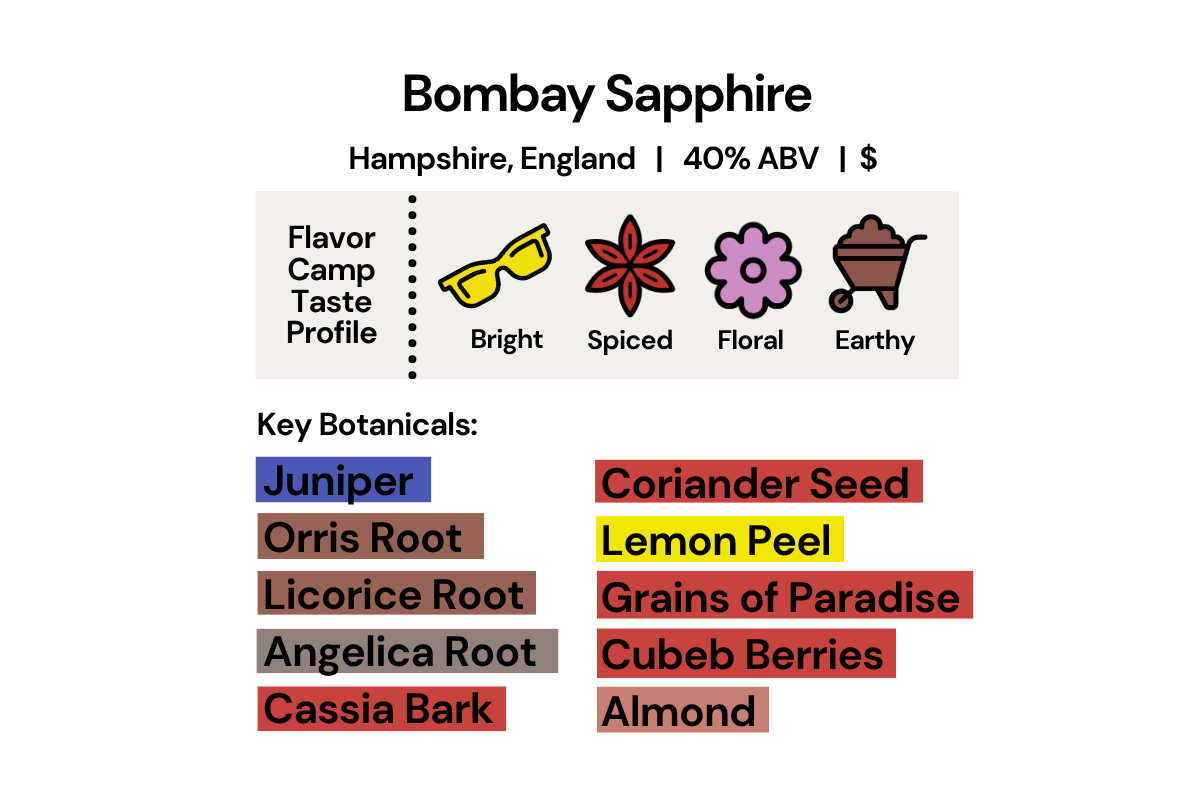
Flavour Focus
Bombay Sapphire contains ten botanicals. Rather than steeping botanicals in spirit, the distillery uses vapour infusion. “The vapour passes through the botanicals and gently lifts their essential oils,” says Norbury. The result is a profile that feels lifted and aromatic, with bright citrus, subtle florals, peppery spice, and a clean, balanced juniper backbone.
BleuRoyale Gin
Part floral gin, part mood ring, this spirit is designed to transform before you even sip.
Some gins borrow colour from their bottles. BleuRoyal puts it directly in the glass. Produced in Montréal by BluePearl Distillery, this striking sapphire-hued gin immediately catches the eye. Beneath the theatrical colour is a classic London Dry–inspired structure, where juniper, spice, and florals meet a distinctly modern idea: a gin designed to surprise before the first sip.
Behind the Bottle
BleuRoyal was the first release from Montréal’s BluePearl Distillery, a project built around blending traditional gin structure with modern visual identity. The intense colour was designed to immediately stand out on shelves and signal a playful, contemporary vibe. It’s a gin that reflects Québec’s growing craft spirits scene, where innovation often sits comfortably beside classic production methods.
The Blueprint: What Blue Represents
BleuRoyal’s vivid blue comes from butterfly pea flower, a botanical long used across Asia as a natural colourant. The flower contains anthocyanins, pigments that react to acidity. Add tonic or citrus, and the drink transforms from deep sapphire to bright fuchsia, turning a simple gin and tonic into a small piece of cocktail theatre.
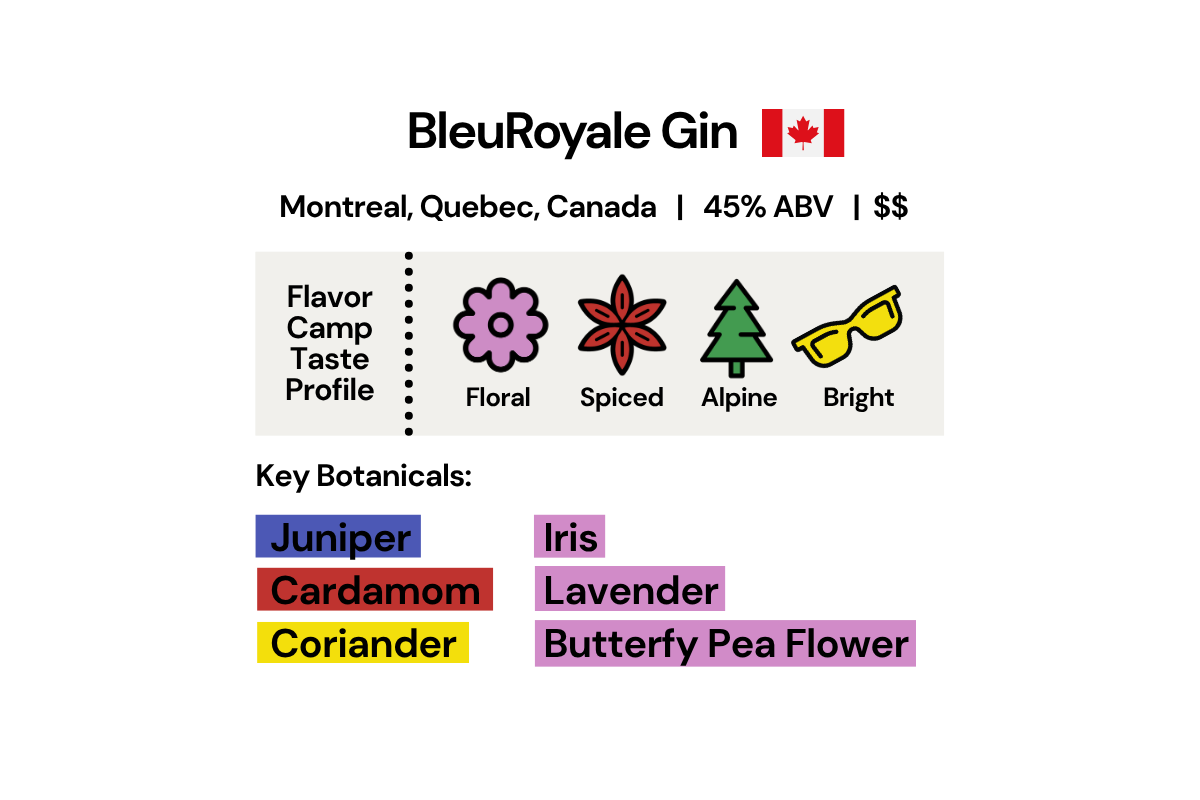
Flavour Focus
Despite its dramatic appearance, BleuRoyal drinks like a refined floral gin. Juniper forms the backbone, supported by coriander and cardamom, while wildflowers, including lavender, iris, and butterfly pea, add soft aromatics. The profile leans bright and gently floral with citrus and spice, creating a gin that works equally well in a Vesper Martini, a French 75, or a colour-shifting Gin and Tonic.
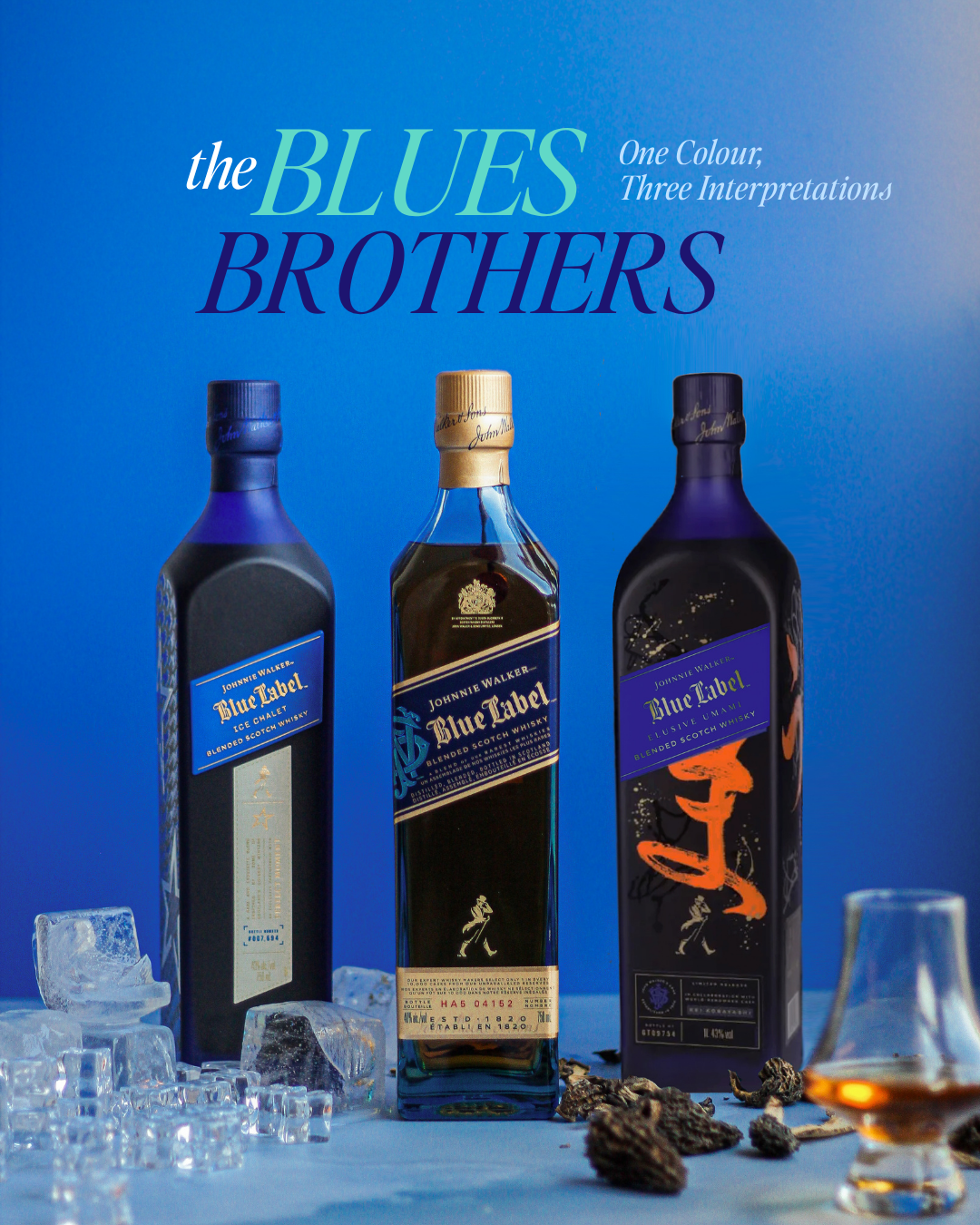
Johnnie Walker Blue
Can a colour define flavour, or does Blue Label prove that prestige is its own category?
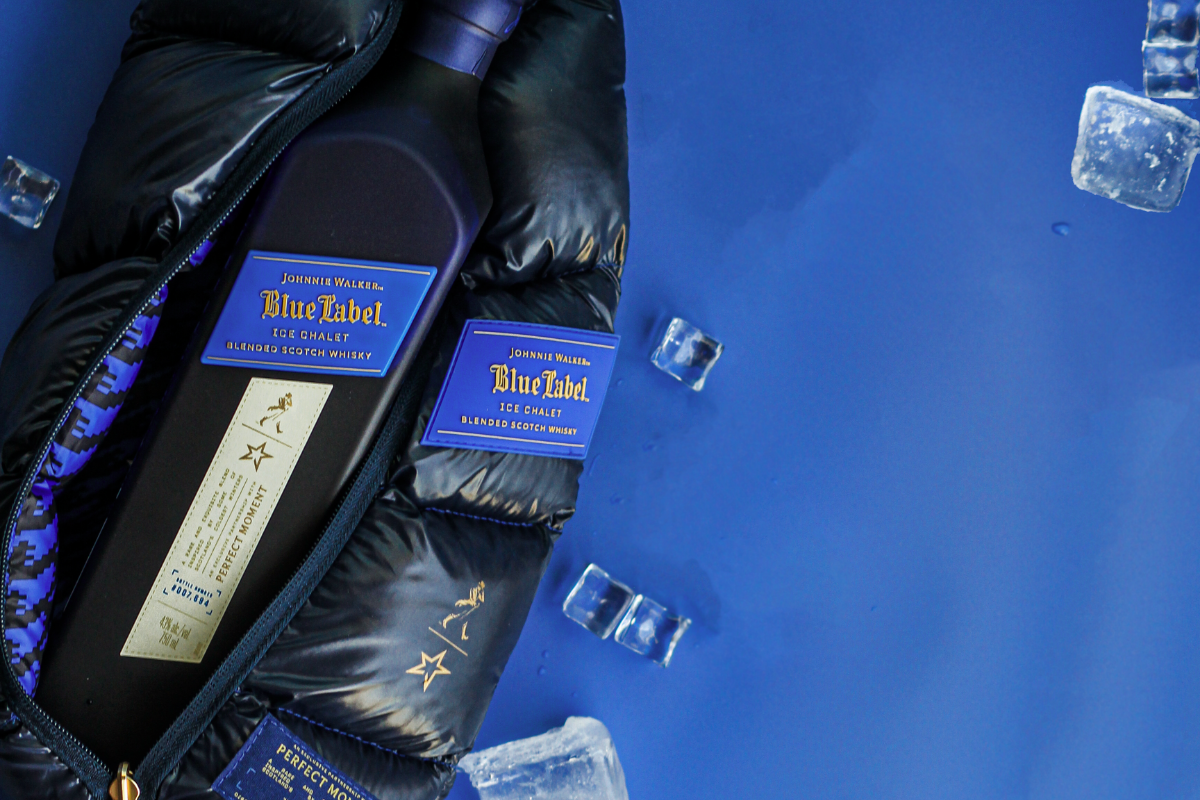
Few Scotch brands have built their identity around colour quite like Johnnie Walker. What began in the 19th century as a grocer’s blend evolved into a global icon with a simple visual code: coloured labels marking different tiers of flavour, rarity, and blending style. At the top sits Blue Label, crafted from exceptionally scarce casks. In recent years, the house has extended that idea with limited releases like Elusive Umami, drawn from one in 25,000 casks, and Ice Chalet, selected from one in 10,000.
The Blueprint: What the Colour Represents
Johnnie Walker Blue Label sits at the top of the brand’s colour system, where blue has come to signal its most elevated offering. First released in 1992 as “Oldest” and renamed in 1994, it was designed to reflect the style of earlier Scotch blends rather than a specific age. The use of blue leans into long-standing associations with prestige, but here it functions more as a marker of position within the range than a direct indicator of flavour or maturity.
Johnnie Walker Blue Label has evolved from a single flagship blend into a platform for creative expression. While the original focuses on recreating the depth of historic Scotch blends, newer releases like Ice Chalet and Umami explore flavour and context in different ways. Together, they show how “blue” has shifted from a marker of status to a canvas for interpreting rarity, environment, and taste.
Behind the Bottles
Johnnie Walker’s colour labels were originally designed to signal a clear progression in style and price, moving from lighter, more accessible blends to rarer, more complex ones. Red Label sits at the entry point, followed by Black, Double Black, Green, and Gold, each adding depth through age or cask influence. Blue Label, as formerly mentioned, sits at the top of this system, positioned not by age but by selection, representing the rarest and most complex expression within the range.
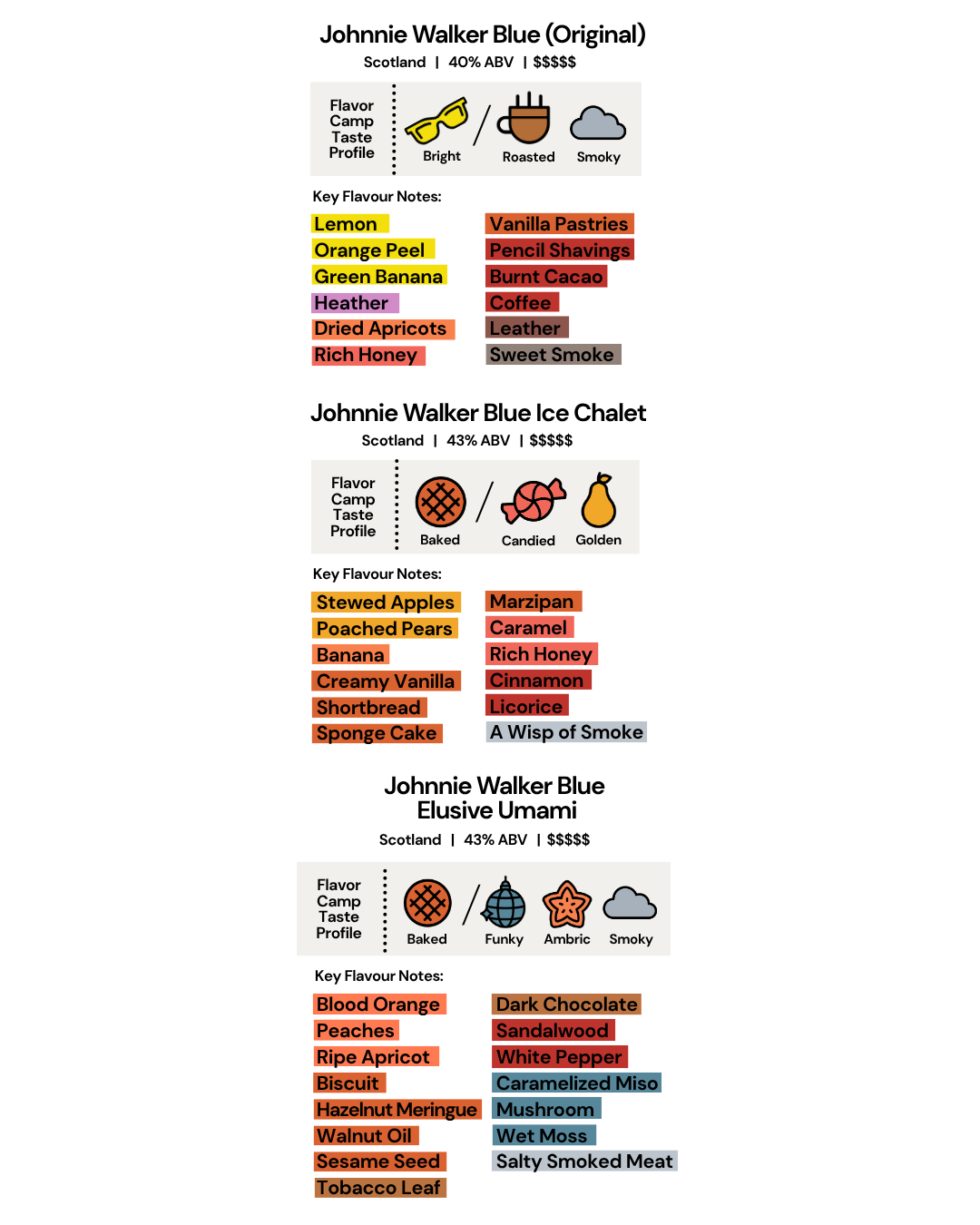
Flavour Focus
Original Blue Label
Designed to echo the style of early 19th-century Walker blends, the flagship expression balances honeyed sweetness, soft smoke, dried fruit, and polished oak. It’s about seamlessness rather than intensity.
Ice Chalet
A winter-inspired limited release designed for après-ski, featuring a high proportion of whiskies from northern and high-altitude distilleries like Brora and Dalwhinnie. Expect brighter, more honeyed and lightly fruity notes layered over the classic Blue Label structure.
Elusive Umami
Developed with chef Kei Kobayashi, this experimental release explores savoury depth within Scotch whisky. Layers of umami richness, smoke, and subtle sweetness create a profile that mirrors the elusive fifth taste.