
For Natasha Motsi and Karl Mudzamba, the founders of 77 Spirits, expanding Canada's understanding of rum begins by looking beyond the places, producers and perceptions that have long defined the category.

Rum has a geography problem.
Mention the spirit and certain places immediately come to mind. Jamaica, Barbados, Guyana and Trinidad have all helped shape rum's identity, developing distinctive production traditions that continue to influence how the category is understood.
Yet sugarcane grows across vast stretches of the world, from Africa and Asia to Central and South America. Wherever it grows, generations of producers have found ways to transform it into spirits that reflect their local ingredients, environments and traditions.
For Natasha Motsi and Karl Mudzamba, the Zimbabwean-born couple behind Canadian independent bottler 77 Spirits, that diversity is precisely what makes rum so interesting. It's also what makes its relatively narrow representation in Canada so frustrating.
They consider rum among the world's most versatile spirits, capable of expressing remarkable complexity both fresh from the still and after years of maturation. Yet they believe its reputation among Canadian drinkers remains stubbornly associated with sweetness and tropical cocktails.
Their ambition is to challenge that perception, one carefully selected bottling at a time.
An Unconventional Beginning
Motsi and Mudzamba's journey into the spirits industry began as an enthusiastic pursuit of knowledge.
Originally from Zimbabwe, they spent eleven years living in New Zealand before moving to Canada in 2011. Their interest in rum developed through years of tasting, visiting distilleries, attending festivals and studying the category through books and online communities. Eventually, Mudzamba became interested in contributing to the industry rather than simply participating in its conversations.
Recognizing that Canadian consumers had limited access to many of their favorite international rums, the couple initially explored importing established brands. Several discussions came close to becoming commercial relationships, but ultimately fell through. They eventually recognized the difficulty of convincing established producers to entrust their brands to an inexperienced importer.
Rather than abandoning the idea, they founded 77 Spirits in 2017. A few years later, their attention turned toward independent bottling, a business model that would give them greater control over the spirits they brought to market.
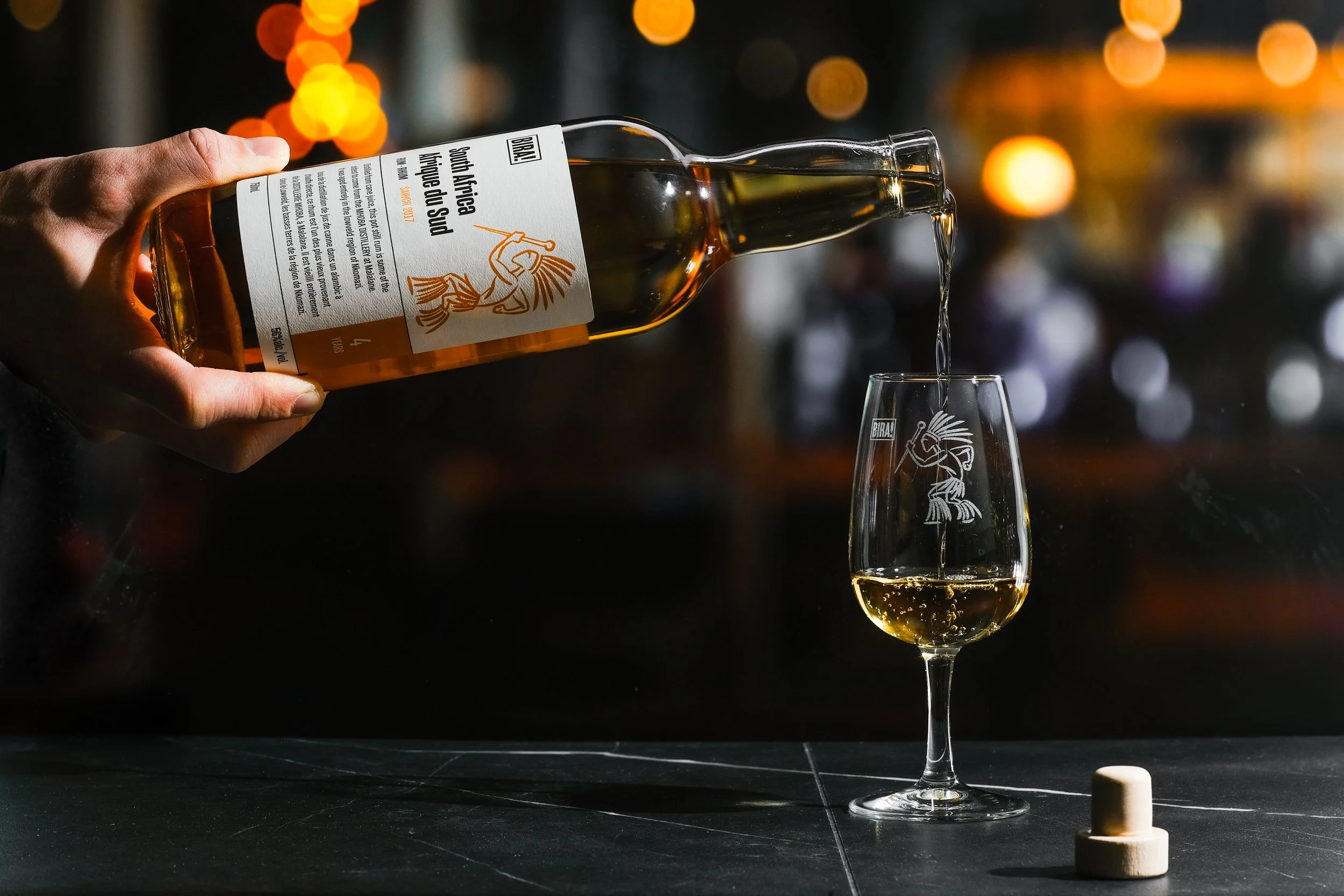
Their flagship brand, BIRA!, emerged from that decision.
Unlike conventional spirits brands that produce their own liquid, independent bottlers source spirits from existing distilleries and release them under their own labels. This allows them to select individual expressions, explore unusual production styles and introduce consumers to producers they might otherwise never encounter.
For Motsi and Mudzamba, the appeal extended beyond commercial independence. They could finally build a portfolio around their own curiosity.
Where There's Sugarcane
The independent rum market is already populated by bottlings from established Caribbean producers. Motsi and Mudzamba recognized that competing within those familiar origins would do little to advance their broader objective. Instead, they deliberately looked elsewhere. Their reasoning begins with a straightforward observation: "where there’s sugar cane, there’s usually rum."
It's a deceptively simple statement with significant implications.
Rum's diversity is shaped by far more than geography alone. Raw materials, fermentation techniques, still designs and maturation conditions all influence the resulting spirit, while local traditions determine how those variables are brought together. A sugarcane spirit distilled in one region can bear little resemblance to one produced thousands of kilometers away, even when both begin with similar agricultural ingredients. For BIRA!, discovering those differences is central to the selection process.
The couple identifies distilleries whose spirits might offer something distinctive, then requests samples from producers willing to supply bulk rum. They taste prospective selections together, proceeding only when both agree on the liquid. Approved samples undergo laboratory testing before the spirit is transported to Rock Spirits in St. John's, Newfoundland, for bottling. Whenever possible, the couple also visits the distillery itself.
These encounters provide insight into how the spirit is made, but perhaps more importantly, who is making it. Production methods can be explained through technical specifications, but the traditions and decisions behind them often require a more personal understanding. For 77 Spirits, that context is inseparable from the finished product.
Authenticity Without Intervention
There is another defining characteristic of the BIRA! portfolio: the spirits are bottled without added colouring, chill filtration or adulteration. The intention is to preserve the character of the original distillate, allowing its raw materials, production techniques and maturation history to remain recognizable. It's a position that also reflects the couple's frustration with how rum is often perceived. Within the category, sweetness can be particularly misleading. Aromatic compounds associated with ripe fruit, vanilla and caramel can create an impression of sweetness even without residual or added sugar. Meanwhile, differing regional production and labeling conventions mean consumers aren't always equipped with the information needed to distinguish between those sensations.
For Motsi and Mudzamba, transparency offers a way to encourage more thoughtful exploration. Their objective isn't necessarily to establish a hierarchy between production methods. Rather, it's to demonstrate that rum deserves the same attention to provenance, production and individuality routinely afforded to whisky and Cognac. The resulting bottlings are intended to speak for the distilleries that produced them. And while BIRA! selects, imports and presents each release, Motsi and Mudzamba are careful not to position themselves as the principal creators. They see their responsibility as honoring the original producers and communicating the significance of their work.
The distinction matters. Independent bottling can introduce a spirit to an entirely new audience, but that opportunity also carries an obligation to represent its origins accurately.
The Cost of Curiosity
Finding unusual rum is one challenge. Convincing consumers and retailers to embrace it is another. As a Black-owned and minority-owned Canadian spirits business, 77 Spirits has encountered significant barriers to distribution, particularly when competing for shelf space against larger, more established brands. Limited marketing resources have forced the couple to reconsider how best to reach potential customers.
Initially, they concentrated on expanding distribution. Over time, however, they discovered that meaningful growth often came from investing in relationships with existing retail partners. Masterclasses, tastings and educational events became essential tools for introducing unfamiliar spirits to consumers. Their experience illustrates a broader problem for independent producers and importers. When a product falls outside established consumer expectations, getting it onto a shelf is only the beginning.
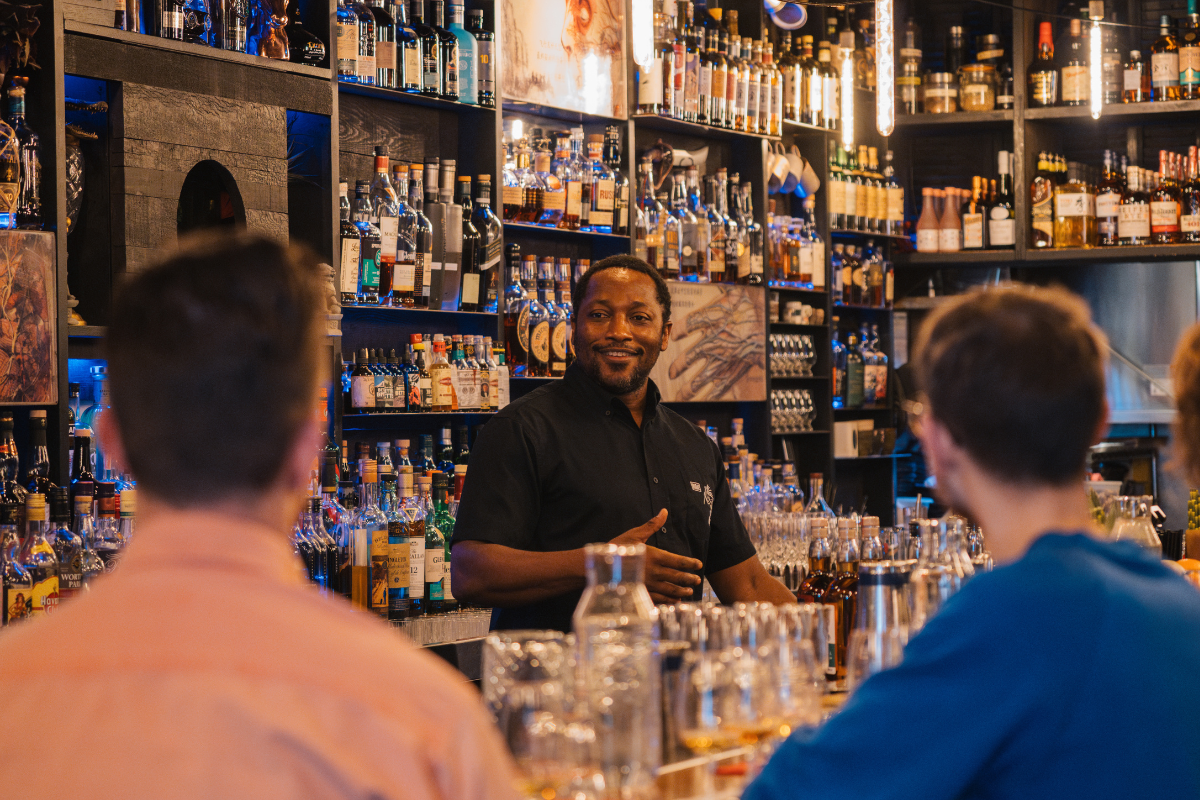
Someone still needs to explain why it deserves attention.
Financing compounds these difficulties. Inventory can tie up capital for months, and the financial risk remains with the importer until a bottle is sold. When asked what support would make the greatest difference, their answer was simple: "The most meaningful support for small brands like ours is access."
Access to retailers, bars and consumers who are willing to explore something less familiar.
It's a practical concern, but also one that reflects the company's broader purpose. The opportunity to introduce more distinctive spirits depends on creating the conditions in which consumers can actually discover them.
A Bigger Picture of Rum
By August 2025, BIRA! had developed a portfolio of five sugarcane spirit expressions, while 77 Spirits had expanded its importing activities to include Bedford Park, an independent bottler specializing in rum and whisky.
The couple was also considering a more accessible, economically priced spirits brand, alongside opportunities to expand into other Canadian provinces and international markets. Yet their commitment to limited releases remains central to the company's identity.
They envision creating bespoke bottlings for individual retailers, bars and spirits clubs, allowing each release to reflect both the character of its original producer and the audience for which it has been selected. It's a business model built around the idea that spirits don't need to be standardized to be successful. And perhaps that's the larger lesson in the 77 Spirits story.
Rum's diversity has never been limited to a handful of countries, production methods or flavor profiles. What remains limited is our exposure to that diversity. Motsi and Mudzamba aren't attempting to replace the established traditions that made rum famous. They recognize their importance, while questioning why so much of the category remains unfamiliar to Canadian consumers.
Through BIRA!, they're creating opportunities to encounter spirits from producers and places that might otherwise remain overlooked. The result is an invitation to reconsider what we think we know about rum, beginning with the realization that its familiar expressions represent only a fraction of the story.