
For Salvador “Chava” Peribán, understanding mezcal means looking beyond its most recognizable characteristic to discover the extraordinary diversity of flavors, traditions and people behind the spirit.
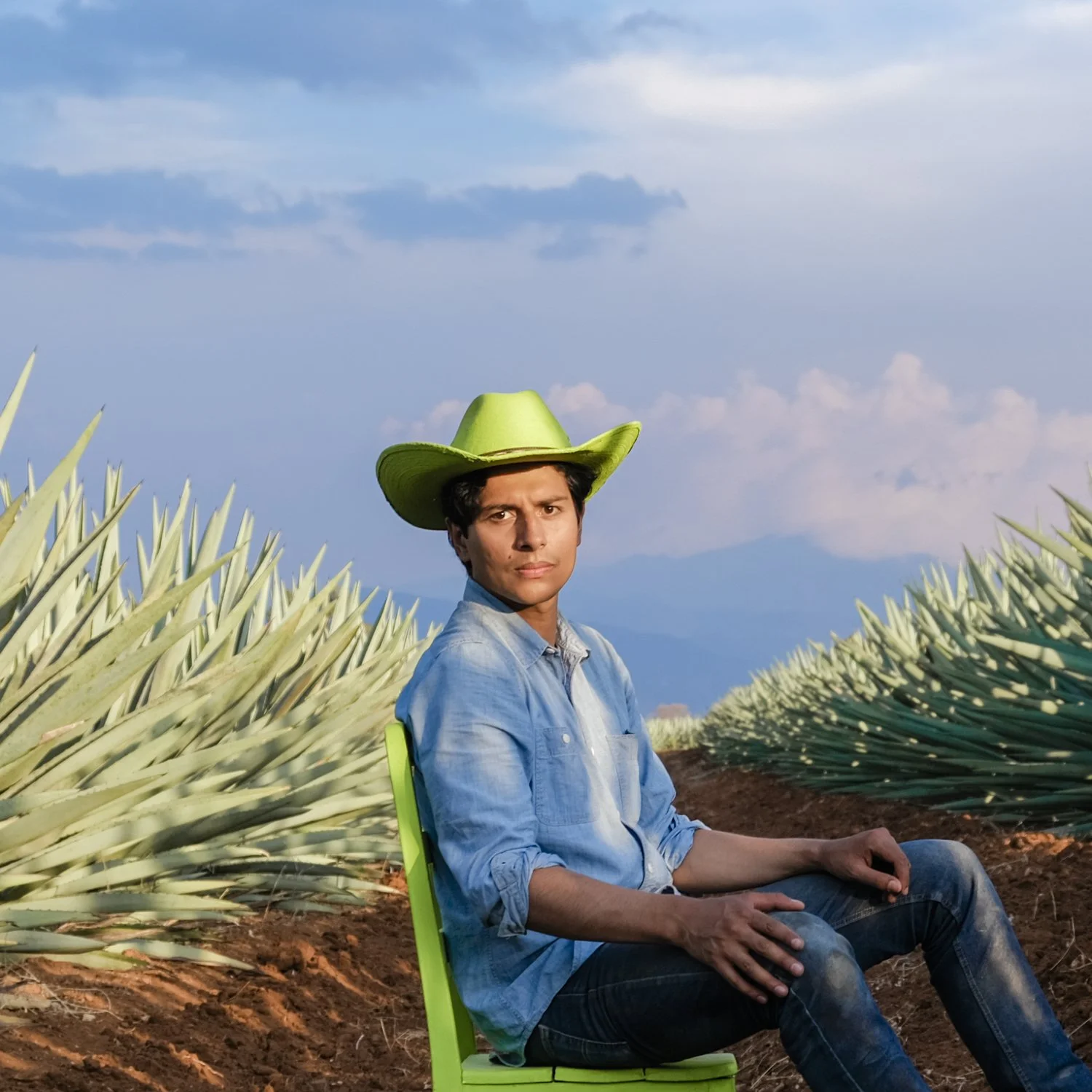
For many drinkers, mezcal can be summed up in a single word: smoky.
It's an association that Salvador “Chava” Peribán believes may have helped introduce the spirit to international audiences in the first place. When mezcal began gaining traction in markets like the United States, many of the expressions arriving were intensely smoky. For drinkers already familiar with the aromas of barbecue, smoked salmon and other smoke-associated delicacies, there was something recognizable, even sophisticated, about the experience.
Peribán suspects this was something of a happy accident. Smoke provided an accessible introduction to spirits that could otherwise be extraordinarily complex and unfamiliar. But what once helped mezcal capture attention may now be limiting how people understand it.
“I think now we should be looking at the wider range of what mezcal and agave spirits can offer,” he explains.
Today, Peribán wants drinkers to appreciate the remarkable diversity of agave spirits, from intensely smoky expressions to those with barely perceptible smoke, or none at all.
Smoke Is an Ingredient, Not the Story
Unlike the carefully measured phenolic levels associated with peated Scotch whisky, the influence of smoke in traditional mezcal production remains difficult to quantify. Peribán, who has worked with combustion systems used in agave production, compares the process to a chef seasoning a dish by instinct.
“In mezcal, smoke is still very much like adding salt to a dish by heart. A chef knows how much salt to add through years of experience, even if they can't explain exactly how it's interacting with the final dish. And no chef is going to tell you that the most important thing about their dish is that it's salty. It's something so well integrated into the final expression that it almost doesn't need to be mentioned.”
The analogy speaks to the balance between technical precision and inherited knowledge in traditional mezcal production. While the science of smoke continues to evolve, producers have spent generations refining their methods through observation, intuition and experience, often making decisions that are difficult to isolate or quantify.
Wood selection, moisture content, cooking duration, the arrangement of agaves within the pit and even the materials used to cover them can influence the resulting spirit. Yet the precise contribution of each variable remains an area ripe for further exploration.
In Guerrero, for example, Peribán describes producers Floriberta Barranca and Faustino Castro, who insist on using a particular type of palm to cover their agaves during cooking. They believe it contributes a specific flavor that is important to their expression.
It's one small decision among countless others that distinguish producers, regions and individual batches. Even seemingly minor variations in technique can contribute to the character of a spirit, reflecting not only the available materials but also the preferences and traditions of the people making it.
Learning to Appreciate the Unexpected
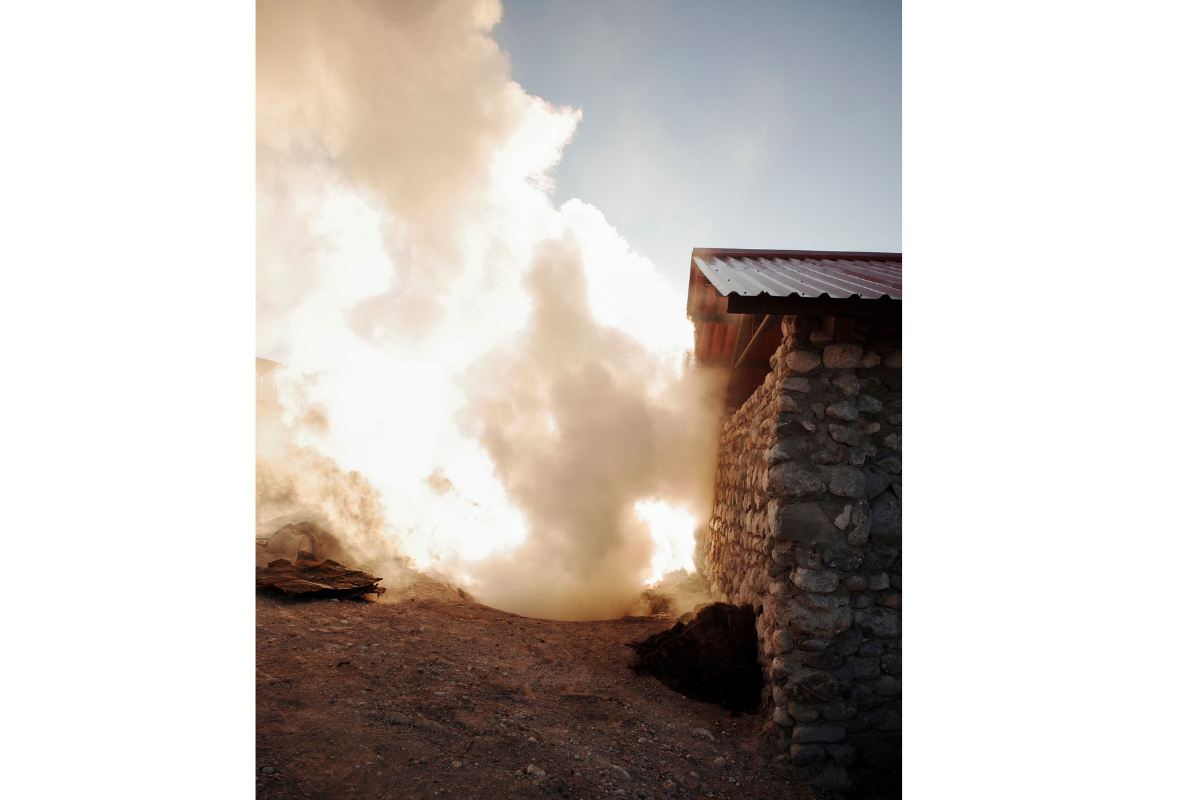
One of Peribán's most memorable encounters with smoke came through a bacanora producer who experimented with an unusual combination of woods. Rather than producing the heavy, earthy character often associated with smoky spirits, the result was remarkably fresh, with an almost minty quality.
“This is not smoke that you will think of traditionally as something heavier,” he explains. “This is almost like fresh smoke.”
The choice of wood seemed to complement and amplify the agave's existing characteristics rather than obscure them. It's an example of why Peribán believes our understanding of smoke deserves to be more deeply explored.
Within mezcal education, he observes an almost contradictory reaction to the word itself. As educators attempt to move the conversation beyond smoke, describing a mezcal as smoky can sometimes feel practically forbidden. Yet rejecting smoke entirely would be just as reductive as allowing it to define the whole category.
“I think we haven't spent that much time focusing on and exploring the vocabulary, or even the range of smoke, because a lot of the specialists working in this right now are trying to move away from the idea of mezcal as a smoke bomb. But we should acknowledge that smoke is part of the whole expression, that there's huge value to it, that people like it, and that there are things to be said about it.”
The People Behind the Flavor
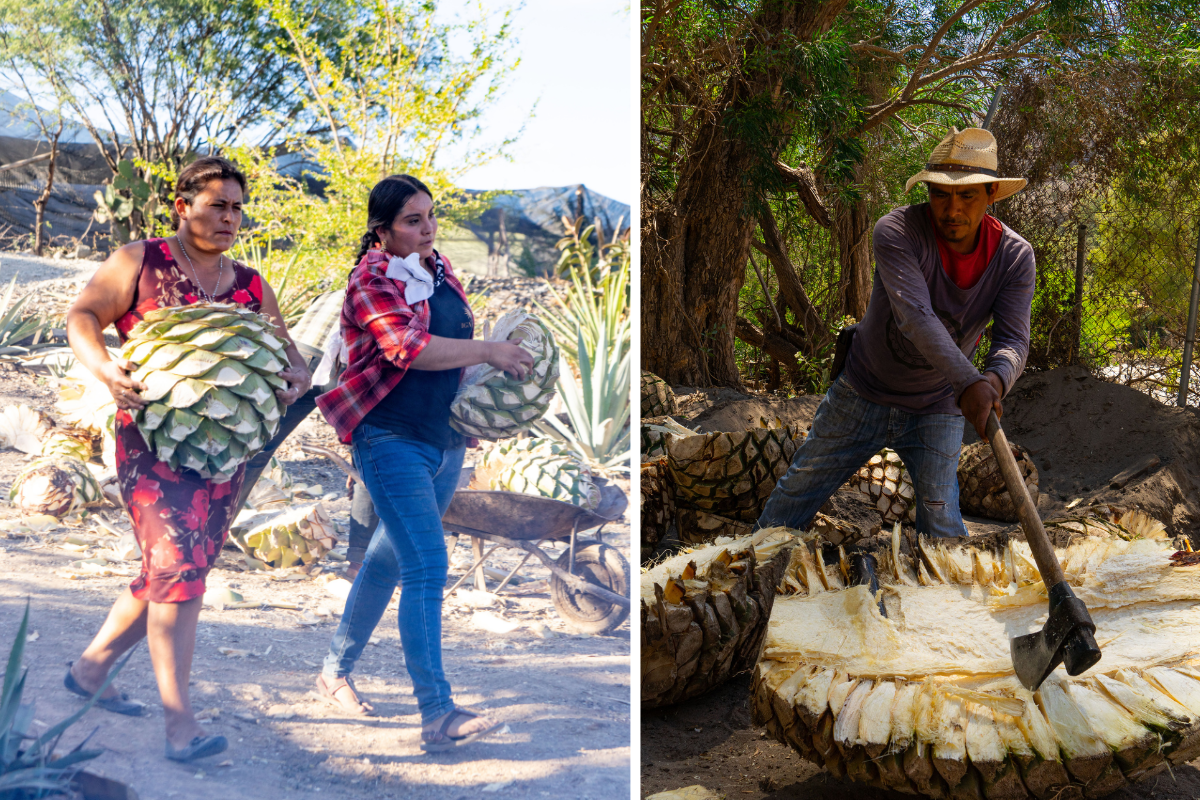
Through his Heritage Mezcal podcast and his work as Creative Director of Maguey Melate, Peribán has dedicated much of his career to exploring the people and cultural traditions behind Mexico's agave spirits. His approach begins with a fundamental belief: the remarkable range of mezcal expressions is a reflection of the cultures behind them.
“I profoundly believe that mezcal is a consequence of culture. Everything that makes it so complex, even the things we might consider inefficient, comes from traditions passed down through generations in the communities that make it.”
The labor-intensive methods, seemingly unconventional decisions and deeply personal production techniques are rarely the result of commercial optimization. They reflect traditions sustained across generations. Understanding a producer's community, celebrations, food, beliefs and relationship with the surrounding environment can reveal as much about their spirits as examining the equipment used to make them.
That philosophy also informs Maguey Melate, a subscription club introducing members to small-batch, non-certified agave spirits that they might otherwise never encounter. Members receive two bottles every two months, selected from producers and expressions that rarely, if ever, enter conventional retail channels.
Peribán's responsibility, however, is not simply to find spirits that everyone will enjoy. He recalls selecting an especially obscure expression from Tamaulipas whose challenging flavor profile proved divisive among members. Although it wasn't particularly successful, he believed the spirit represented something worth experiencing.
“There are at least a hundred different bottles that you can go and find that are delicious,” he explains. “But I think our job is more to be like, the picture of mezcal is bigger than what you think it is.”
For Peribán, there's a difference between curating a collection of delicious spirits and representing the full spectrum of what agave can offer. Some expressions might be immediately appealing, while others challenge expectations, introduce unfamiliar flavors or require more patience to appreciate.
It's an ongoing negotiation between the story and the liquid. A compelling cultural history alone isn't always enough, but neither is universal appeal. What matters is that each spirit has something distinctive to communicate, even if it isn't necessarily something everyone will enjoy.
Turning the Kaleidoscope
Despite years spent exploring agave spirits, Peribán's curiosity is expanding rather than narrowing. His interests now extend to Mexican brandy, fruit distillates, sugarcane spirits and the wider possibilities presented by the country's extraordinary agricultural diversity. He recently purchased 2,500 liters of wine to experiment with brandy production.
Rather than viewing agave as an isolated category, he increasingly sees it as one piece of a much larger picture of Mexican spirits. That curiosity also shapes the advice he offers to people beginning their own mezcal exploration.
He compares tasting to looking through a kaleidoscope, where each adjustment reveals new shapes and patterns.
“I would encourage them to think of the tasting glass as a kaleidoscope.”
At first, smoke may dominate the picture. But with each turn, another pattern emerges. Herbal notes, fruit, acidity, texture and intensity begin to reveal themselves.The goal is not to dismiss the smoke, but to recognize that it was only the first thing you noticed.
Peribán encourages drinkers to return to a spirit, consciously redirecting their attention toward different sensations. Sometimes, that means moving beyond aroma and flavor altogether to consider how intensity, alcohol and texture interact with the body.
Ultimately, appreciating mezcal isn't about learning to look past the smoke. It's about learning to recognize smoke for what it is: one part of a much larger and infinitely more interesting expression of flavor.